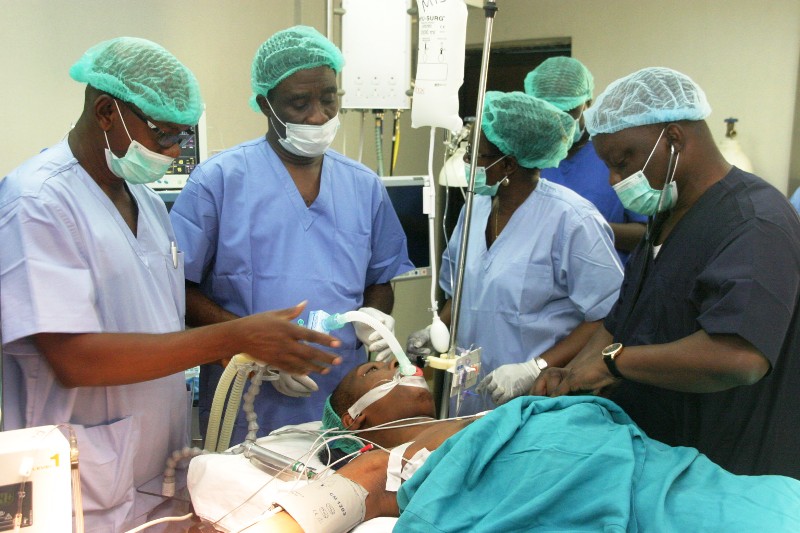
Nigeria’s health sector presents a troubling paradox today: modest policy progress on paper, but persistent dysfunction in practice. The result is a system many citizens experience as effectively “comatose”—unable to deliver consistent, affordable, and life-saving care. Nowhere is this failure more stark than in the country’s life expectancy, which has become a grim barometer of systemic decay.


A Nation Where Life Is Shorter Than It Should Be
With an average life expectancy of about 54.9 years, Nigeria ranks among the lowest globally, according to recent UN data. This figure is not just a statistic—it is a verdict. It reflects preventable deaths from diseases, poor maternal care, malnutrition, and weak emergency response systems.
In a country with vast human and natural resources, dying before 55 is not fate—it is policy failure.

The Anatomy of a “Comatose” Health Sector
At the heart of Nigeria’s healthcare crisis lies a web of structural weaknesses:
1. Chronic Underfunding
For decades, Nigeria has failed to meet the 15% health budget benchmark agreed under the Abuja Declaration. Government spending hovers around 4–6%, far below what is required. Even when budgets increase, actual releases and implementation remain inconsistent.
This chronic neglect translates into:
- Dilapidated hospitals
- Shortages of drugs and equipment
- Overreliance on out-of-pocket payments
2. Human Capital Flight (“Japa Syndrome”)
Nigeria’s healthcare system is bleeding talent. Poor pay, unsafe working conditions, and limited career opportunities are driving doctors and nurses to seek employment abroad.
- Nigeria has roughly 1 doctor per 10,000 people
- Brain drain continues to weaken service delivery nationwide
The consequence is simple: fewer hands to save more lives.
3. Inequality and Access Gaps
Healthcare in Nigeria is deeply unequal:
- Urban elites access private or foreign care
- Rural populations rely on under-equipped primary centres
Reports show no Nigerian state reached even 30% health preparedness in 2025, exposing the country’s vulnerability to epidemics and emergencies.
4. High Cost of Care and Poverty Link
Healthcare financing is heavily out-of-pocket. Many families must choose between:
- Poor local treatment
- Or catastrophic spending (even medical tourism)
This has pushed households deeper into poverty and discouraged early care-seeking, worsening outcomes.
5. Weak Infrastructure and System Fragmentation
Nigeria’s health system suffers from:
- Inadequate facilities and obsolete equipment
- Fragmented governance and poor coordination
- Heavy dependence on imported drugs, worsened by inflation and currency instability.
Public Health Crises as Symptoms
Recurring outbreaks—cholera, Lassa fever, malnutrition—highlight systemic fragility rather than isolated incidents. For instance, Nigeria recorded hundreds of Lassa fever cases with a high fatality rate in early 2026.
These are not just health events; they are warning signals of a system struggling to function.
Signs of Reform—But Not Yet Revival
To be fair, there are efforts underway:
- Increased health budgets and funding commitments
- Expansion of primary healthcare centres
- Health insurance reforms under the NHIA Act
There are even modest improvements in public perception and maternal mortality indicators.
Yet, these gains remain incremental and fragile—far from the systemic overhaul required.
Editorial Verdict: A System in Urgent Need of Resuscitation
Nigeria’s health sector is not beyond repair—but it is undeniably in critical condition.
A functioning health system should:
- Extend life expectancy
- Protect citizens from financial ruin
- Respond effectively to crises
Nigeria’s system currently struggles to do all three.
The Way Forward
If Nigeria is to move from “comatose” to functional, the following are non-negotiable:
- Radical funding reform: Meet or exceed the Abuja 15% target
- Retention of health workers: Competitive pay, better conditions
- Universal health coverage: Reduce out-of-pocket burden
- Primary healthcare revival: Especially in rural communities
- Accountability and governance reforms
Conclusion
A nation’s health sector is its moral compass. When citizens die prematurely from preventable causes, it signals a deeper governance failure.
Nigeria’s low life expectancy is not just a health issue—it is a national emergency.
Until healthcare becomes a true priority rather than a budgetary afterthought, the country risks remaining trapped in a cycle where illness is common, care is scarce, and life is tragically short.