Ebola Patient Arrived in Nigeria on Ethiopian Airlines Flight ET333 – Aviation Source Says
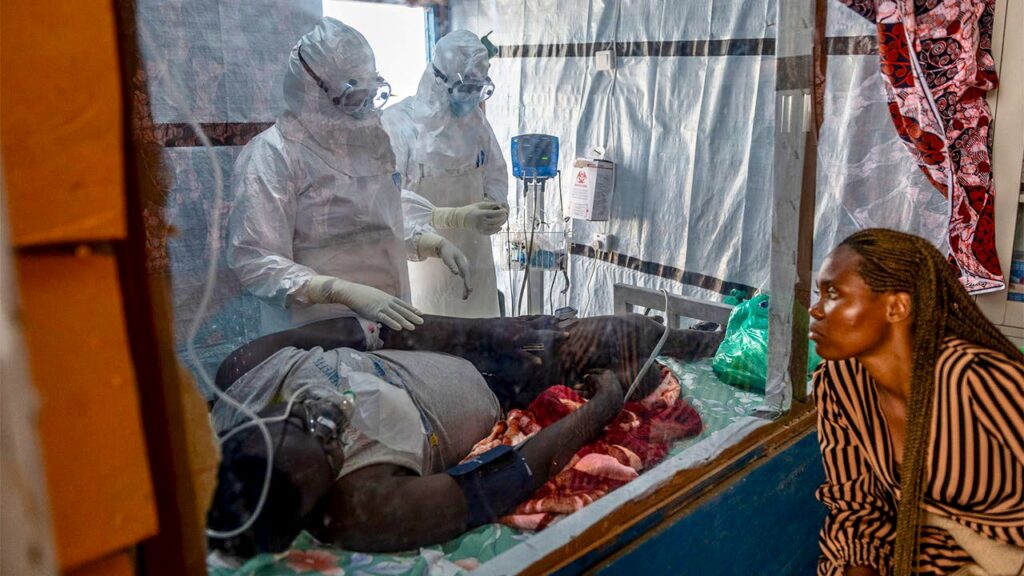
Fresh details have emerged about the travel history of the confirmed Ebola virus disease patient in the Federal Capital Territory (FCT), with an aviation official reportedly disclosing that the woman arrived in Nigeria on October 3, 2026, aboard Ethiopian Airlines Flight ET333.


According to a report by Vanguard, the patient landed at the Nnamdi Azikiwe International Airport, Abuja, following her international journey from Uganda.ikiwe International Airport, Abuja, following her international journey from Uganda.

The aviation official, who spoke on condition of anonymity because she was not authorised to comment publicly on the matter, disclosed the flight details as health authorities intensified efforts to trace individuals who might have been exposed to the virus.
The development comes amid questions surrounding the origin of the infection, with the Ugandan government reportedly requesting detailed travel and clinical records from Nigerian authorities.
Uganda has maintained that the patient did not contract the virus within its territory, arguing that there are no reported Ebola cases in the country.
The request is expected to help clarify the patient’s movements, medical history and possible exposure before she was diagnosed in Nigeria.
The Coordinating Minister of Health and Social Welfare, Professor Muhammad Pate, had earlier confirmed the Ebola case in Abuja, disclosing that the female patient recently returned to Nigeria from Uganda and subsequently received treatment at a private hospital in the FCT before the infection was formally diagnosed.
She has since been transferred to a designated isolation facility, where she is receiving medical care.
FG Intensifies Contact-Tracing
Following confirmation of the case, a multi-agency response involving the Federal Ministry of Health, the Nigeria Centre for Disease Control and Prevention (NCDC) and the FCT Health and Environmental Services Secretariat has commenced contact-tracing operations.
Public health authorities have reportedly identified 44 close contacts, including healthcare workers, other patients at the hospital, caregivers and individuals linked to the woman’s movements.
The identification of these contacts is a key part of efforts to determine whether anyone else may have been exposed and to monitor those considered at risk.
The Federal Government has also placed health facilities and port health surveillance units across the country on high alert as authorities strengthen screening and monitoring measures.
The reported flight details could assist investigators in establishing the patient’s movements and identifying people who may have had contact with her during the journey or after her arrival in Abuja.
However, the reported arrival date and flight information do not, on their own, establish where the patient contracted the virus. Health authorities will need to assess her travel history, possible exposure and clinical records to determine the likely source of infection.
Further updates are expected as Nigerian and Ugandan authorities continue to establish the circumstances surrounding the case.