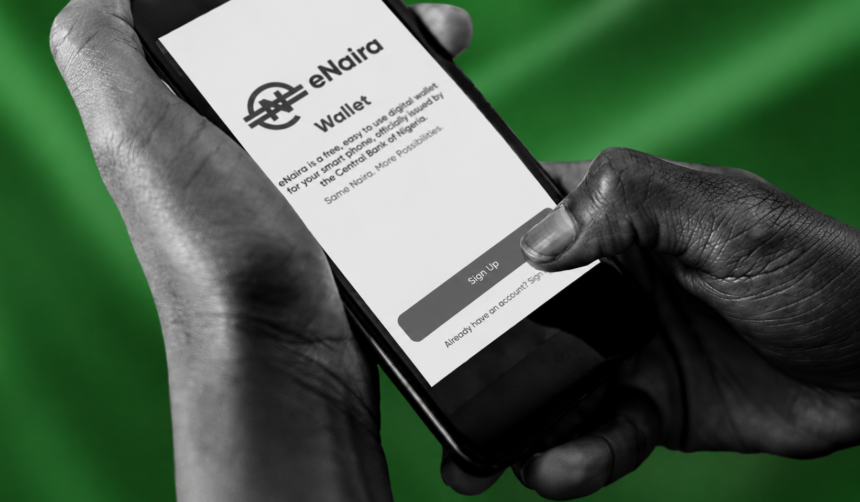
FG May Pay Salaries, Pensions Through eNaira as CBN Unveils New Digital Currency Roadmap

The Federal Government may in the coming years begin paying salaries, pensions, and social welfare benefits through the eNaira platform as part of a new strategy by the Central Bank of Nigeria (CBN) to transform the country’s digital currency into a mainstream payment channel.

The proposal is contained in the Nigeria Payments System Vision 2028 (PSV2028), a policy roadmap released by the apex bank to modernise Nigeria’s payment ecosystem and accelerate the adoption of digital financial services.
Under the plan, the CBN intends to transition the eNaira from its current pilot phase into a core payment infrastructure supporting both government and private-sector transactions.

According to the document, government-to-person (G2P) payments, payroll processing, offline transactions, and support for micro-enterprises have been identified as priority use cases for the digital currency.
The move could see federal salaries, pensions, conditional cash transfers, and other public-sector disbursements routed through the eNaira platform in an effort to improve payment efficiency, expand financial inclusion, and increase the adoption of the digital currency.
“The transition of the CBDC from pilot to core payment rail through defined use cases” is among the key objectives outlined in the roadmap, the CBN stated.
Launched in October 2021, the eNaira became Africa’s first Central Bank Digital Currency (CBDC). It was introduced to reduce transaction costs, enhance remittance flows, deepen financial inclusion, and support the country’s cashless policy. However, despite regulatory backing and public awareness campaigns, adoption levels have remained below expectations.
To address this challenge, the CBN said it would review the current CBDC framework and align it more closely with market realities and operational requirements.
A major feature of the proposed expansion is the introduction of programmable-money capabilities. According to the bank, these features could allow funds to be programmed for specific purposes, set spending deadlines, split payments automatically, and create sub-wallets for designated uses.
“The ‘programmable money’ feature of digital currency could have additional features such as time-limits, purpose-specific usage, splitting payments, sub-wallets, etc.,” the document stated.
The apex bank also noted that the eNaira could strengthen Nigeria’s financial market infrastructure by supporting settlements for banks, financial institutions, and tokenised financial assets such as bonds and securities while reducing transaction costs and improving speed.
CBN Governor Olayemi Cardoso, in the foreword to the PSV2028 document, said the initiative is aimed at consolidating Nigeria’s position as a leading digital payments market.
“PSV2028 sets clear strategic priorities: modernising payments infrastructure, strengthening regulatory and supervisory frameworks, accelerating the adoption of digital financial services, and fostering deeper collaboration across stakeholders,” he said.
Similarly, the CBN’s Deputy Governor for Economic Policy, Muhammad Abdullahi, said the vision would support broader adoption of digital currencies and emerging payment technologies within a robust regulatory framework.
The document revealed that while millions of eNaira wallets have been created and transactions worth approximately ₦22 billion processed through the platform, everyday usage remains limited due to weak merchant adoption, inadequate integration with banking and fintech applications, and the absence of active cross-border CBDC payment corridors.
To improve uptake, the CBN plans to reposition the eNaira as a preferred platform for government payments, remittances, and trade settlements. It also intends to open application programming interfaces (APIs) to fintech companies to encourage innovation and integration.
In addition, the apex bank disclosed plans to launch bilateral CBDC corridor pilots with key trade and remittance partner countries to facilitate cross-border transactions.
The latest push comes amid growing global interest in central bank digital currencies, with more than 130 countries reportedly researching, piloting, or developing their own digital currency systems as alternatives to cash and privately issued digital assets.
If implemented, the initiative could mark a significant shift in how government payments are made in Nigeria and potentially reshape the country’s digital payments landscape over the coming years.