” How Iran Built a Special Unit to Hunt Mossad Agents. Mossad Ran It.” (The Enemy Within)
February 28th, 2026. 60 minutes. That is how long it took to erase the entire senior military command of the Islamic Republic of Iran. The Supreme Leader dead. Every general of the Islamic Revolutionary Guard Corps dead. The architects of 30 years of proxy warfare across the Middle East buried under the rubble of a single compound in Thran.
The operation struck more than 30 aim points simultaneously. It knew exactly where every person would be. Not approximately, not in general terms, exactly. The world spent the next 48 hours asking one question. How did Israel know? How does any intelligence service reach that deep into the most protected command structure in the Middle East? Not once, but operation after operation, year after year, each strike more precise than the last.
And why, in the days that followed, did Iran say almost nothing, no explanation, no named culprit, just silence. There is an answer. It is not classified. It is not a theory. It was spoken out loud on camera by a former president of Iran himself more than a year before the bombs fell and what he described is one of the most extraordinary intelligence penetrations in the history of modern espionage.
Iran built a special unit to hunt MSAD agents operating inside the country. A dedicated, highly classified team. Its sole purpose to find Israeli spies and eliminate them. The man who ran that unit turned out to be a MSAD agent himself. So did 20 of his operatives. Every single one of them. The hunters were the hunted.
And by the time Tehran figured that out, they were already gone. If you want to understand how Israel dismantled the most dangerous intelligence apparatus in the Middle East from the inside, subscribe and hit the bell. We cover the operations the world is still trying to explain. New video every day. But to understand what happened on February 28th, 2026, you have to go back, not to the strike itself, not even to the months of planning that preceded it.
You have to go back to the moment when Iran looked at what MSAD was doing inside its borders and made a decision that would ultimately cost it everything. By the mid200s, Israel’s intelligence operations inside Iran had reached a scale that Iranian security services could no longer explain away. It was not just the nuclear scientists.
It was the pattern. Beginning in 2007 with the death of nuclear physicist Ardashir Husseinpur, initially attributed to a gas leak, later assessed by multiple intelligence analysts as a MSAD operation. A systematic campaign of targeted killings had begun working its way through the Iranian nuclear establishment. Each operation was precise.
Each one demonstrated knowledge that could only come from deep inside the Iranian system. Someone was telling the Israelis who to target, where to find them, and when they would be vulnerable. Inside the Islamic Revolutionary Guard Corps, the question was not whether MSAD had penetrated Iranian institutions. That was no longer seriously in dispute.
The question was how deeply and where. The IRGC’s intelligence arm and Iran’s Ministry of Intelligence, two separate and frequently competing bureaucracies, each with its own networks, its own methods, and its own institutional pride. Both understood that something had gone badly wrong. Iranian agents were being rolled up.
Operations were being compromised. Men who should have been untouchable were dying on Iranian streets in broad daylight. The response, as it took shape in the years following 2007, was institutional. Iran would build something new, not simply a counter inelligence department within the existing structure. Those had already been penetrated.
Or at least that was the working assumption. What was needed was a dedicated unit separate from the existing chains of command with its own access and its own mandate.
A team whose entire purpose was to find MSAD’s agents inside Iran and eliminate them before they could do further damage. Highly classified, tightly compartmented, access restricted to an absolute minimum of personnel.
The logic was sound, the execution was catastrophic. Because the most important decision in building any new intelligence unit is not its structure, its budget or its mandate. It is the choice of who runs it. And the man chosen to lead Iran’s new anti-MsAD unit, the man given access to the most sensitive counter intelligence files in the Islamic Republic, the man who would know the identities of every suspected Israeli asset, every compromised channel, every weak point in the Iranian security architecture was already working for the other side.
This is not speculation. This is not an analytical conclusion drawn from pattern analysis or circumstantial evidence. This is what Mahmud Amadinad, the former president of Iran, who held office from 2005 to 2013, stated directly and on the record in an interview with CNN Turk in October of 20124. His words were unambiguous.
Iran established a unit to counter MSAD operations inside the country. The man who headed that unit was an Israeli agent and he was not alone. 20 additional members of that same unit were also working for MSAD. Ahmed is a complicated figure. His tenure as president was marked by confrontation, by the violent suppression of the 2009 protests that followed his disputed re-election and by a brand of populist politics that made him enemies across Iran’s factional landscape.
He is not a neutral witness and he is not a reliable one on every subject. But on this specific claim, the penetration of the anti-mad unit, he was not speaking as a politician making a partisan argument. He was speaking as a former head of state, describing a security failure so severe that it had, in his assessment, shaped every major intelligence disaster Iran had suffered in the decade that followed.
And critically, no Iranian official publicly denied it. In a system that reflexively contests any narrative that makes the Islamic Republic look weak, the silence around Ahmedad’s claim was itself a form of confirmation. The unit by design sat at the intersection of everything Iran most needed to protect.
Its personnel would have had visibility into ongoing counter intelligence investigations. They would have known which Iranian officials were under suspicion of foreign contact. They would have known the technical methods Iran used to detect surveillance, the human methods it used to identify informants, and the procedural methods it used to verify loyalty.
They would have known, in short, exactly what an Israeli intelligence service would need to know in order to operate inside Iran without being caught. And the man at the top of that structure, the man with the broadest access and the deepest visibility, was feeding all of it to the enemy. Consider what that means in practice.
Every time Iranian counter inelligence got close to a real MSAD asset, the unit’s commander knew about it. Every time a surveillance operation began to narrow in on a genuine lead, that information passed through a channel that ran directly to Tel Aviv. every name that appeared in an investigation file, every technical method that was deployed, every procedural step that Iran’s security services took to protect their most sensitive operations.
All of it was visible to a man who was reporting it to the other side. It was not simply that Iran failed to find MSAD’s agents. It was that Iran’s best tool for finding them was itself the problem. The search was being conducted by the spy. How long this had been going on, Akmadina did not specify.
When exactly the recruitment had occurred, which service had run the operation, what the precise mechanism of contact had been. None of this was disclosed. What was disclosed was the end point. The unit head was identified as a double agent in 2021. And by the time that identification was made, he and all 20 of his operatives had already left Iran.
They were living in Israel. Every single one of them had gotten out before the net closed. That detail, the timing of the escape, is not a footnote. It is the center of the story because it means that the moment Iranian counter intelligence got close enough to the truth to act on it, someone knew. Someone inside the system knew that the investigation had reached a critical point and the entire network evacuated before a single arrest could be made which raises a question that Ahmedad did not answer and that Iranian authorities
have never answered publicly. Who warned them? His name has never been published. Not by Ahmedad who described him only in functional terms. Not by any Iranian official who have maintained an absolute public silence on his identity. Not by any Western intelligence source who are not in the business of confirming the names of people who are presumably still alive and still useful.
The man who ran Iran’s anti-mad unit is known to the Iranian security services, known to MSAD, and known to no one else. He is the most consequential unnamed figure in the intelligence history of this conflict. And the fact that his name has been so thoroughly suppressed on both sides tells you something important about how seriously both sides regard what he knew.
The answer to what he took with him points back into the Iranian system itself, into a layer of penetration that did not end with the escape of 21 men to Israel. It points towards something that was still running, still in place, still invisible to the people tasked with finding it. And that is exactly where this story goes next.
To understand what 21 men carried out of Iran in 2021, you have to understand what their jobs had given them access to. The unit commander and his 20 operatives were not peripheral figures in the Iranian security apparatus. They were not clerks or administrators with incidental access to sensitive files. They were the people whose specific professional purpose was to map the full extent of MSAD’s presence inside Iran.
To do that job, they needed to know everything. And so they did. They knew the identities of every Iranian official who had come under suspicion of foreign contact, everyone who had been flagged, everyone who had been investigated, everyone who had been cleared. They knew which surveillance methods the IRGC used to monitor its own personnel.
They knew which communication channels were considered secure and which had already been compromised. They knew the procedural logic of Iranian counter intelligence from the inside out, not as an abstraction, but as a living operational system with specific weaknesses, specific blind spots, and specific gaps that a foreign intelligence service could exploit without ever being detected.
When those 21 men arrived in Israel, they did not simply bring files. They brought a complete operational map of how Iran looks for spies. And that map was worth more than any individual piece of intelligence they could have carried because it did not just tell MSAD what Iran knew. It told MSAD exactly where Iran would never look.
The implications of that transfer took time to fully materialize. Intelligence services do not immediately deploy everything a new source provides. They analyze. They verify. They build new operational frameworks around the knowledge they have acquired carefully so that the knowledge itself is not exposed by the operations it enables.
But in the years between 2021 and 2026, the results of what those 21 men brought with them became visible operation by operation, strike by strike, in a sequence of events that Iranian officials would later describe as a catastrophe without precedent in the history of the Islamic Republic. But first, it is essential to understand what had already been possible while the unit’s commander was still in place.
still sitting inside Tehran, still drawing a salary from the Islamic Republic, and still reporting everything he learned to the other side. The first demonstration came not with a killing, but with a theft. And not just any theft. The most audacious intelligence operation conducted on Iranian soil in the modern era.
On the night of January 31st, 2018, 3 years before the unit’s exposure, at a time when its commander was still fully operational and still providing MSAD with a continuous map of Iranian counter intelligence, fewer than two dozen MSAD agents entered a warehouse in the Shorabad industrial district of southern Thran. The warehouse was unremarkable from the outside.
It looked like a storage facility for a light industrial operation, located in a neighborhood where no one would notice unusual activity. That was precisely why the Iranian Ministry of Defense had chosen it. Inside, behind two sets of reinforced iron doors, sat 32 massive safes, each nearly 3 m tall, containing the most sensitive documents in the history of Iran’s nuclear program.
The complete archive of the AMA project, blueprints, production plans, warhead designs, records of secret tests, the full documented history of Iran’s military nuclear ambitions going back to 1999. Only a handful of people in Iran knew the archive existed at that location. The MSAD team knew. They knew which warehouse.
They knew which safes contained the most critical material. They knew the security rotation that the guards did not work around the clock specifically to avoid drawing attention to the building’s importance. The team had 6 hours and 29 minutes before the morning shift arrived. They used a jamming device to override the alarm system. They cut through the iron doors.
They opened the safes, not all 32, but the specific ones that held the most incriminating material. A selection that could only have been made with prior knowledge of the archives contents. They took 100,000 documents and 183 compact discs, half a ton of material, and then they left Thrron the same night, splitting into multiple groups across different routes without a single member of the team being caught.
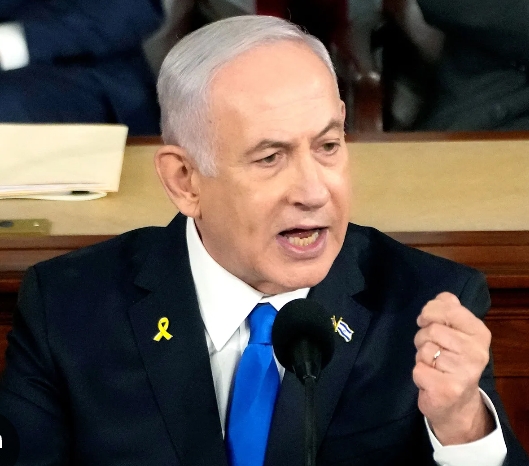
When Iranian security forces arrived at 7:00 in the morning and discovered the break-in, they launched a manhunt involving thousands of personnel. It produced nothing. The material was already in Israel. 3 months later, Israeli Prime Minister Benjamin Netanyahu stood before cameras in Tel Aviv and revealed the operation to the world, displaying documents that proved Iran had systematically lied to the international community about the military dimensions of its nuclear program.
Within days, then President Donald Trump announced the withdrawal of the United States from the 2015 nuclear agreement. The theft of that archive did not just humiliate Iran. It reshaped the diplomatic landscape of the entire region. The operation was later given a name inside MSAD, Operation Stealing the Reality.
It won Israel’s highest intelligence prize, and its success depended at its foundation on human intelligence from inside the Iranian system. intelligence that told MSAD not just that the archive existed, but where it was, what it contained, and exactly when and how it could be reached without triggering the security apparatus that surrounded it.
The unit designed to find MSAD’s agents had been telling MSAD which of its agents were safe and where the doors were left unlocked nearly 3 years after the archive operation on November 27th, 2020. The consequences of that sustained penetration became even more visible. Musen Fakri, the man Netanyahu had publicly identified in his archive presentation as the director of Iran’s military nuclear program, the scientist whose handwriting appeared on documents ordering the concealment of Iran’s weapons research.
The figure that Western and Israeli intelligence had assessed as the single most important individual in Iran’s nuclear establishment was killed on a road outside Thran in an operation of extraordinary technical and human complexity. The weapon used to kill Fakrid was a modified machine gun weighing approximately 1 ton smuggled into Iran in components over a period of 8 months and assembled inside the country.
It was mounted in a vehicle parked along the road where Fakrid’s convoy would pass. It was operated remotely. The trigger man was outside Iran at the moment of the assassination. The weapon included a self-destruct mechanism designed to destroy evidence after the operation. The entire team involved, more than 20 people, including both Israeli operatives and Iranian nationals recruited to participate, had been running surveillance on Fakrazad’s movements for months before the strike.
8 months of preparation, a ton of equipment smuggled in pieces across international borders. Iranian citizens recruited and managed inside the country. All of this conducted without detection in a security environment where the organization specifically tasked with detecting exactly this kind of operation was itself compromised from the top.
Iran’s intelligence minister at the time acknowledged that a member of Iran’s own armed forces had been involved in the assassination. That admission made on state television confirmed what the operational complexity of the strike had already implied. Msad had not simply tracked Fakrazad from the outside. It had people inside.
People who knew his schedule, his roots, his habits, and his security arrangements well enough to plan an operation that required 8 months of undetected presence on Iranian soil. Inside the IRGC, the Fakrazad assassination produced a reaction that was simultaneously furious and deeply frightened. furious because the target was among the most protected individuals in the Iranian system.
Frightened because the operation had demonstrated beyond any remaining doubt that protection meant nothing if the people responsible for providing it were being watched by the enemy. The question was no longer whether Iran had been penetrated. The question was how far the penetration went and whether the tools Iran was using to answer that question were themselves part of the problem.
In 2021, that question got a partial answer. The unit commander was identified. The network was exposed and before Iran could act, every member of it was gone. Iran declared victory. Senior officials announced the dismantling of the Israeli spy network as a landmark achievement. The language was triumphant. But underneath the official narrative, a far more uncomfortable reality was taking shape.
One that no press release could address and no arrest could resolve. Because the escape of 21 people in the precise window between their identification and their arrest had required a warning. And the source of that warning had not been caught, had not been identified, was in all probability still in place, watching, reporting, and waiting.
And within 4 years, the proof of that would arrive in a form that no Iranian official would ever be able to explain away. The proof arrived from the sky. In July of 2024, Iran’s intelligence minister, Ezel Katib, made a public announcement that was intended to project strength. The Mossad infiltration network, he declared, had been dismantled.
The threat had been neutralized. The Islamic Republic security services had done their job. He described it as the defining achievement of his ministry under the Rayi administration. The moment when Iran had finally closed the wound that had been bleeding for years. It was the worst possible moment to declare victory.
Because while Katib was speaking, MSAD was already several years deep into building the next generation of networks. networks constructed with full knowledge of every method Iran used to detect them, every procedure it used to verify loyalty, every technical system it used to monitor its own personnel. The men who had escaped in 2021 had handed over not just intelligence files, but a complete operational blueprint of Iranian counter intelligence.
and MSAD had spent 3 years studying that blueprint, finding every gap and building through every one of them. The results became visible in September of 2024, not through a single strike, but through a sequence of events so precisely orchestrated that they left no room for alternative explanations. On September 17th, 2024, thousands of pagers belonging to Hezbollah operatives across Lebanon simultaneously exploded.
The devices had been compromised during the manufacturing process itself. Miniaturized explosive charges embedded into the hardware before it ever reached Hezbollah’s hands. The detonations killed dozens and wounded more than 3,000 people across 2 days of coordinated attacks, crippling Hezbollah’s operational communications network in a single afternoon.
The following day, the same operation extended to handheld radios. More explosions, more casualties, more confusion. This operation, the most sophisticated supply chain attack in the history of modern intelligence, had required years of preparation, penetration of international commercial networks, and the ability to move compromised hardware through multiple layers of Hezbollah’s procurement system without detection.
It was not an operation that could be improvised. It had been built patiently, invisibly in the precise spaces where Iranian and Hezbollah counter intelligence had been assured there was nothing to find. 10 days later, on September 27th, Israeli Air Force jets delivered more than 80 heavy munitions onto Hezbollah’s underground command headquarters in the Daha suburb of southern Beirut.
Hassan Nazallah, the secretary general of Hezbollah, the man who had led the organization for 32 years, who had survived every previous Israeli attempt to reach him, was killed along with every senior commander present at the meeting. The reinforced concrete structure built specifically to survive aerial bombardment was driven into the earth.
The French newspaper Lip Parisian, citing a Lebanese source, reported that Israel had been informed of Nzalla’s presence in that specific location by an Iranian mole. Not a Lebanese source, an Iranian one. Someone inside the Iranian security apparatus, the apparatus that had just finished announcing the defeat of MSAD’s penetration network 3 months earlier, had told Israel exactly where Nazalla would be and exactly when he would be there.
Inside Thrron, the immediate public response was controlled fury, statements of revenge, tributes to the fallen, the machinery of official mourning activated with practiced efficiency. But inside the IRGC’s counter intelligence division, the reaction was not grief. It was arithmetic. And the arithmetic did not produce a comfortable answer.
Hania had been killed in July in a secured Tyrron guest house, a building protected by IRGC security in a room that a device had been placed in weeks or months before his arrival. Someone with access to that facility had known which room he would occupy. Now, Nazalla had been killed at a meeting that by every protocol Hezbollah operated under should have been known to an absolute minimum number of people.
And according to reporting from one of Europe’s most established newspapers, the location had been passed to Israel by someone inside Iran. The chilling conclusion was unavoidable. The network that had been declared dismantled in July was not dismantled. The penetration that had been announced as defeated was not defeated.
MSAD still had eyes inside the most sensitive layers of the Iranian security system. Eyes that had watched Hania arrive in Thran. Eyes that had known where Nazalla would shelter. Eyes that had been operating without interruption through every arrest, every purge, every announcement of victory. Former intelligence minister Ali Unessi, who had served under President Katami and later as an adviser to President Rouhani and who knew the structure of Iranian intelligence from the inside, had said in 2022 that Msad had infiltrated so many government.
departments that all of Iran’s top officials should fear for their lives. At the time, the statement had been treated as the dark hyperbole of a man speaking out of turn. By the autumn of 2024, it read as precise and literal description. Senior adviser to Kam Ali Larijani acknowledged in November of 2024 that the problem of infiltration had become very serious in recent years and that there had been instances of negligence going back years.
That acknowledgement from one of the most senior figures in the Iranian system, a man not given to public admissions of weakness was its own form of confirmation. The Islamic Republic knew it had a problem it could not solve. It did not know how deep the problem went, and it was about to find out. On the morning of June 13th, 2025, Israel launched what would become known as Operation Rising Lion, a coordinated strike on Iran’s nuclear infrastructure, its air defense systems, its ballistic missile arsenal, and its military.
command structure. The operation was the largest single intelligence and military action ever conducted against Iran, and its execution revealed in granular operational detail the full depth of what MSAD had built inside the country over the previous decade. Before a single Israeli aircraft crossed into Iranian airspace, teams of agents recruited by MSAD and operating inside Iran destroyed anti-aircraft batteries from the ground.
A ProPublica investigation published afterward described how roughly 70 commandos, Iranian nationals, and others recruited from neighboring countries had positioned themselves near carefully selected air defense targets on the night of June 12th. At 3:00 in the morning on June 13th, they opened fire with drones and missiles on a list of batteries that covered the approaches to Thran.
Every single battery on MSAD’s list was destroyed 100%. in areas where Israeli aircraft had never previously operated. The operation did not stop there. Israeli cyber warriors sent a fabricated message to senior Iranian military leaders directing them to an emergency meeting in an underground bunker. The bunker was then struck by a precision munition.
Dozens of senior military figures were killed. The message had been convincing enough, specific enough, credible enough in its framing and its apparent origin that Iran’s most senior commanders had followed it to their deaths. Israeli intelligence had also identified the precise locations where Iranian nuclear scientists were sleeping, not their offices, not their laboratories, their bedrooms.
Air strikes targeted those locations directly. The level of human intelligence required to produce that kind of targeting, the sustained patient cultivation of sources with access not just to professional schedules but to the private domestic routines of protected individuals was not something that could be assembled in months.
It had been built over years through networks that Iranian counter intelligence had spent years and significant institutional resources trying to find and had never found because the people tasked with finding them had spent years pointing the search in the wrong direction. After the strikes, Iran arrested scores of people on espionage charges.
It executed at least two individuals convicted of cooperating with MSAD. It ordered senior officials to stop using internet connected smartphones. It asked members of the public to report any buildings rented to unfamiliar companies or individuals. In the previous 2 years, the Islamic Republic was conducting in public the kind of desperate security sweep that intelligence services conduct when they have lost control of their own perimeter and do not know where the holes are.
MSAD director David Barnea speaking at an award ceremony after the June strikes stated that Israel had very strong operational capabilities inside Iran and that the MSAD was not letting up. Not a warning about the future, a description of the present. In Thran, that statement landed in rooms full of people who had spent years telling themselves and each other that the penetration problem had been solved.
Rooms full of people who had believed the announcements, trusted the arrests, accepted the declarations of victory. Those rooms were now very quiet, and the question that was being asked in those rooms quietly, carefully, with the particular caution of people who understood that asking the wrong question too loudly could itself become dangerous, was not about June of 2025.
It was about something much older, something that had been there from the beginning, something that might still be there now. What followed from that silence was not action. It was the particular paralysis of a system that has begun to suspect it cannot trust its own ability to investigate itself. Every new probe into penetration required trusting someone with access to the investigation.
Every new counter inelligence review required someone to lead it. And the history of the past decade had made one thing very clear. The person appointed to that role was the most dangerous appointment the Islamic Republic could make. The question was not new. It had been sitting at the edge of every internal Iranian security review for the better part of a decade.
But it had never been asked with this degree of urgency, this weight of accumulated evidence, this particular combination of recent disasters pressing down on every conversation. The question was simple. If the unit built to find MSAD’s agents was itself run by a MSAD agent, and if that agent escaped with a complete map of Iranian counter intelligence methods, then what exactly had the replacements built in his wake? The new unit, the new leadership, the new procedures designed to correct the failures of the old ones, all of it had been constructed by people.
who did not know what had been handed to the enemy. All of it had been built inside a system whose fundamental vulnerability had not been addressed because the people responsible for addressing it did not fully understand what had been lost. There is a principle in intelligence work that analysts call the second order problem.
It is not enough to know that your system has been penetrated. You have to know what the penetration gave the other side because that determines not just what they know but what they can do next. how they can predict your counter measures, how they can remain invisible while you believe you are searching effectively. The second order problem of the anti-mad unit was this.
The man who ran it had not simply passed intelligence files to Israel. He had passed Iran’s entire counterintelligence methodology which meant that every new system Iran built to replace him was built inside a framework that Israel already understood completely. This is what made the declaration of victory in 2024 so catastrophic in retrospect.