How Mary-Brenda Akoda Won NLNG’s $100,000 Prize With AI That Could Transform MRI Scans

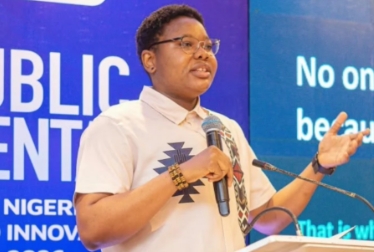
At 28, Nigerian AI researcher Mary-Brenda Akoda has made history as the first woman and youngest/millennial recipient of the US$100,000 Nigeria Prize for Science and Innovation for GenScan AI, a medical technology designed to make MRI scans dramatically faster without requiring new hardware.
By Newsmediang

At a time when long waiting times, limited medical infrastructure and the high cost of advanced diagnostic equipment continue to challenge healthcare delivery, Nigerian artificial intelligence researcher Mary-Brenda Akoda is betting on technology to make existing resources work harder.

Her innovation, GenScan AI, also known as Gen-MRI/C-MORE, is an artificial intelligence-powered medical imaging solution designed to accelerate Magnetic Resonance Imaging (MRI) scans by up to 90 per cent without requiring hospitals to purchase new MRI hardware.
The breakthrough has earned Akoda the US$100,000 Nigeria Prize for Science and Innovation, sponsored by the Nigeria LNG Limited (NLNG).

At 28, Akoda has also made history as the first woman and youngest/millennial recipient of the prestigious award.
Her journey to the intersection of artificial intelligence and medical imaging, however, did not begin in a hospital or laboratory. It began with an attempt to solve an entirely different Nigerian problem: access to energy.
A First-Class Computer Science graduate of Goldsmiths, University of London, Akoda later obtained a Master of Research in Artificial Intelligence and Machine Learning from Imperial College London, where she was a Google DeepMind Scholar. She also previously worked with Microsoft, including its Mixed Reality and AI Research Lab in Cambridge.
In this exclusive interview, Akoda speaks about her journey from renewable energy entrepreneurship to advanced medical AI, the personal experience that inspired Gen-MRI, the challenge of making AI-generated medical images clinically reliable, its potential impact on Nigeria’s healthcare system and her ambition to build a global medical AI company from Africa.
INTERVIEW
Q: Can you introduce yourself and tell us a little about your background?
A: My name is Mary-Brenda Akoda and I am the founder of GenScan AI, a medical AI company on a mission to enable faster medical imaging and diagnosis.
I am an AI research scientist, an alumnus of Imperial College London, a Google DeepMind Scholar and a former Microsoft engineer.
I am 28 years old.
Q: How did you get into the AI space?
A: I did my first degree in Computer Science, specialising in Artificial Intelligence and Machine Learning, at Goldsmiths, University of London.
But before that, I was running a solar startup. We partnered with factories in Asia to design and bring small solar-home solutions to people in southern Nigeria.
At the time, around 2017 and 2018, there were reports of kerosene explosions wiping out entire families. Naturally, I wanted to be part of the solution.
I had just returned from the African Leadership Academy in South Africa. They select about 100 of the top young people from across Africa, between the ages of 16 and 19. While there, I built biogas generators to provide cooking gas.
When I returned to Nigeria, I started the solar company with a little investment from my mother.
During a short break I had with the factories around the Chinese New Year period, I decided to upskill. I subsequently completed a Strategic Management and Innovation specialisation at Copenhagen Business School.
It was a five-month, four-course specialisation, but I completed it in five days with a 96 per cent average.
I wouldn’t advise anyone to do that because I was seeing things in my vision by the end of those five days. But I had that particular window of time.
Part of the capstone project focused on artificial intelligence and its integration. That made me realise that AI was an area where I could make the most impact.
That inspired me to pursue my degree specialising in AI and machine learning at Goldsmiths University of London, which I did while running the solar startup remotely.
I also worked with Microsoft across three teams. The first two were in software engineering, while the third was with Microsoft’s Mixed Reality and AI Research Lab in Cambridge.
Soon afterwards, the UK government awarded me the Global Talent Visa, formerly known as the Tier 1 Exceptional Talent Visa.
I was also sponsored by Google DeepMind as the only international Google DeepMind Scholar at Imperial College London. That was where I conducted the postgraduate AI research that eventually led to GenScan AI and Gen-MRI.
Q: What inspired you to develop Gen-MRI?
A: About three years ago, an elderly loved one suffered a stroke.
If you’ve, God forbid, experienced that with a family member, you understand that every second counts. The difference between life and death can come down to how quickly a patient gets diagnosed.
In his case, the queues were long. Usually, you need a CT or MRI scan. His condition deteriorated, and soon after, he passed away.
That experience, together with another personal experience I had involving delayed diagnosis, opened my eyes to how slow and overburdened the healthcare system can be.
MRI is incredibly powerful, but it is extremely slow. It can take anywhere from 15 or 20 minutes to an hour, and sometimes even an hour and a half.
A patient has to lie still, sometimes while in pain, inside an enclosed space. It is also noisy. If the patient moves, the images can become blurry and the scan may have to be repeated.
To prevent patients from moving, hospitals sometimes sedate them. But that comes with health risks, particularly for children and infants.
So we started asking: how can we make MRI faster without compromising diagnostic quality?
Q: Why did you choose MRI as the starting point?
A: MRI was the most obvious imaging modality to start with.
High-quality MRI scanners are extremely expensive, costing anywhere from over $1.5 million to $3.5 million or more, depending on the make and specifications.
That means clinicians can only see a limited number of patients because the scanners themselves are limited.
CT scans are faster, but they involve radiation. A study by the University of California, San Francisco, also highlighted concerns about the cancer risks associated with CT radiation exposure.
Radiologists have told us that, sometimes, the reason for prescribing a CT instead of an MRI is simply because CT is faster. But faster does not necessarily mean safer.
If we can make MRI significantly faster, then we can potentially move some of that workload from CT to MRI.
Q: Why was it important for you to bring this technology to Nigeria?
A: Nigeria is home.
Ideally, we would want Nigeria to be among the first countries to adopt this technology. We want Nigeria to be a priority and not an afterthought.
For too long, we have seen innovations developed elsewhere, with Nigeria only considered later.
That is not what I want to do. Nigeria is home, and I want the country to benefit from this technology.
That’s also why we reached out to the Chief Medical Director of Asilpo Diagnostic Centre.
I had previously led Nigeria’s first AI research into diabetic retinopathy detection in collaboration with an ophthalmologist at the University of Calabar Teaching Hospital.
The Chief Medical Director of Asilpo Diagnostic Centre had tested the software I developed during that research and was impressed by it.
So when I reached out about collaborating on a Gen-MRI pilot at the diagnostic centre, it was essentially a natural partnership.
Q: What prompted you to apply for the Nigeria Prize for Science and Innovation sponsored by NLNG?
A: Interestingly, it was my mother who sent the advert to me.
When she sent it, I was actually flattered that she thought of me.
We are currently in the process of fundraising, and as a caring mother, she also looks out for opportunities and shares them with me.
She has an organisation called YoungRise, which works with young people by sharing opportunities and helping them upskill. She is also a professor of history.
She came across the opportunity through her work with young people and sent it to me.
When I looked at the criteria, I saw that it specifically mentioned AI, ICT and digital technology.
I am both an AI research scientist and a software engineer, so it felt like a perfect intersection.
I thought, why not?
Q: Did you believe you were going to win the NLNG prize?
A: I believed there was a chance.
I couldn’t say I was 100 per cent certain because when you look at previous winners, you see professors and joint winners, and you begin to wonder whether those factors might count against you.
But yes, I believed I had a chance.
Q: During the development of Gen-MRI, were there misconceptions or concerns about whether the technology would actually work?
A: There was always the possibility that it wouldn’t work.
But at the end of the day, it takes one eureka moment to dispel those doubts.
There was a lot of research involved. At the time I built the system, one of the biggest questions was: how do we ensure that the AI isn’t hallucinating?
You don’t want an AI system inventing pathology that wasn’t present in a patient’s data.
That was the key challenge.
When the eureka moment came, we were able to overcome that challenge and then validate the system.
At Imperial College London, we validated it on more than 8,800 MRI images.
In that validation, we achieved up to 99.7 per cent similarity to conventional MRI.
We then took it a step further with a qualitative assessment.
Because when you have a quantitative assessment, people can always ask, “What about the 0.3 per cent?”
Even though that difference may not be visible to the human eye, we wanted an independent expert assessment.
We presented the images to a consultant radiologist at Buckinghamshire Healthcare NHS Trust in the UK for an independent blinded assessment.
He was not told which images were conventional MRI images and which were Gen-MRI accelerated images.
In all the cases he assessed, he scored the Gen-MRI images as diagnostically equivalent to the conventional MRI images.
He was actually impressed that he could not distinguish between the conventional and Gen-MRI images.
And this was despite Gen-MRI achieving up to 10 times acceleration, which can translate to up to a 90 per cent reduction in scan time.
Q: So what was that validation experience like for you?
A: My heart was in my mouth.
You’ve done all this work, and then you ask yourself: is this going to hold up when experts look at it?
But more importantly, when a consultant radiologist looks at it.
At the end of the day, the reason we built this technology is to enable faster diagnosis.
If a radiologist cannot make a clinical diagnosis from the images, then we have failed.
So it was extremely validating when the assessment came back showing that the images were diagnostically equivalent to the conventional scans.
Q: What would change for the average Nigerian patient if this technology becomes available?
A: Nothing about the patient’s basic experience would change, except that they would spend significantly less time inside the scanner.
For example, instead of spending 20 minutes undergoing a particular brain scan, the patient could potentially spend as little as two minutes.
The technology is designed to make existing MRI scanners work more efficiently and produce clinically useful images much faster.
Q: Has Gen-MRI already been tested in real-life clinical settings?
A: There is an important distinction.
GenScan AI is the company, while Gen-MRI is the technology.
What I described earlier as retrospective validation means that we took historical patient data and applied the process to those existing scans.
In terms of prospective pilots, which is what I believe you’re asking about, that means deploying the technology live within the clinical workflow.
That is what we are currently working towards with our clinical partners.
The system is software, but it is classified as software as a medical device. That means it needs regulatory approval before it can be widely deployed.
So we are currently working through that process with our clinical partners.
Q: What is happening with the planned Nigerian pilot?
A: As I mentioned earlier, we have Asilpo Diagnostic Centre on board.
The Chief Medical Director has issued a letter of intent towards the clinical pilot.
He was already familiar with my previous work, so he has been a supporter of me as a research scientist, as well as of the company and the technology.
Following our winning the Nigeria Prize for Science and Innovation, the Honourable Minister of Education has also pledged to bring the Minister of Health on board.
The chairman of the committee of Chief Medical Directors of federal tertiary medical institutions in Nigeria is also issuing a letter of intent towards a national pilot.
So we are getting support.
It is still at the beginning stages, but we are moving forward with these partners.
Q: What safeguards have you put in place to ensure that the AI doesn’t produce misleading images or affect diagnosis?
A: That’s why we have put safeguards in place.
One of the major challenges we addressed was ensuring that the AI does not simply hallucinate information but remains consistent with the patient’s actual data.
As I explained, we retrospectively validated the system on more than 8,800 MRI images while I was at Imperial College London.
That work has also led to peer-reviewed publications at top conferences.
We have subsequently conducted an early independent blinded assessment by a consultant radiologist at Buckinghamshire Healthcare NHS Trust.
The radiologist scored the Gen-MRI images as diagnostically equivalent to conventional MRI images in all the cases assessed.
That is important because the potential reduction in scan time can be as high as 90 per cent, while the images remain clinically useful.
Q: What do you want policymakers to understand about this invention?
A: Basically, that it could save lives.
When I gave the example of stroke, I was speaking about a problem that applies worldwide.
According to the World Stroke Organization, someone suffers a stroke somewhere in the world every two seconds.
There have also been reports highlighting the burden of stroke in Nigeria.
MRI is not only relevant to stroke. It is also important in areas such as cancer diagnosis, neurological conditions, accidents and traumatic brain injuries.
For cancer, delays in diagnosis and treatment can have serious consequences.
The problem is particularly relevant in Nigeria because MRI scanners are limited.
As I explained, high-quality scanners cost millions of dollars.
So rather than simply saying we need to spend millions buying more scanners, we should also ask: how can we make the existing scanners do more for Nigerians?
That’s the potential Gen-MRI offers.
It could help existing MRI infrastructure serve more patients and give people faster access to diagnosis and, ultimately, treatment.
Q: Beyond the prize money, what do you want Nigerians to remember about this invention? And where do you see GenScan AI in the next five years?
A: What I want Nigerians to remember is that this technology was created with a very simple purpose: to help people get diagnosed faster.
I want people to remember that we don’t always have to wait for new infrastructure before we solve problems. Sometimes, we can take the infrastructure we already have and use technology to make it work significantly better.
In five years, I want GenScan AI to be recognised as a global medical AI company that was built from Nigeria but serves patients around the world.
I want us to demonstrate that world-class medical technology can be researched, developed and validated by African scientists and deployed to solve problems both in Africa and globally.
Most importantly, I want the technology to translate into real patients spending less time waiting, clinicians being able to see more patients, and people getting the diagnoses and treatment they need faster.
That, ultimately, is the impact I want GenScan AI to have.
A Nigerian Innovation With a Global Ambition
For Akoda, the US$100,000 prize is more than recognition for an impressive piece of artificial intelligence research. It represents an opportunity to push an African-developed medical technology closer to the patients who inspired it.
Her story also offers a different perspective on innovation in Nigeria: one in which solving local problems does not necessarily require waiting for entirely new infrastructure.
Gen-MRI’s proposition is straightforward but potentially significant — use artificial intelligence to make existing MRI infrastructure faster, more efficient and capable of serving more patients.
The technology still faces the crucial stages of regulatory approval, prospective clinical validation and deployment before it can become part of routine clinical practice.
But Akoda’s ambition extends beyond winning a prize.
She wants GenScan AI to become proof that cutting-edge medical technologies can be researched and developed from Nigeria, validated to international standards and ultimately deployed to improve healthcare outcomes around the world.
At the heart of that ambition is a simple objective: less time waiting, faster diagnosis and earlier access to treatment.
For a 28-year-old Nigerian researcher who has already made history with the Nigeria Prize for Science and Innovation, the US$100,000 award may be less a destination than the beginning of a much larger journey.