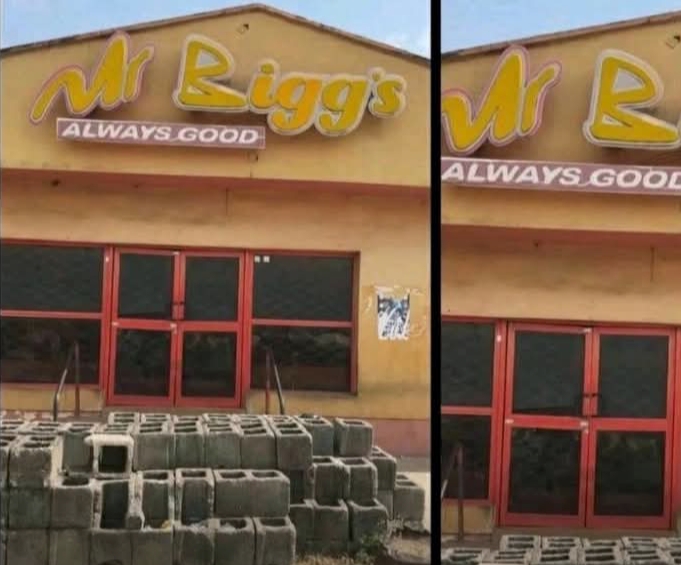
How Mr. Bigg’s Lost Nigeria: The Costly Mistake That Killed a Fast-Food Giant

There was a time when walking into felt like a celebration.

In the late 90s and early 2000s, it wasn’t just a restaurant—it was a status symbol. A weekend trip to Mr. Bigg’s with your family meant you were doing well. Birthdays were hosted there. First dates happened there. Their meat pie? Arguably the most iconic in Nigeria.
They had everything going for them:

- First-mover advantage
- Nationwide brand recognition
- Backing from a corporate giant
- Deep emotional connection with customers
They didn’t just lead the market—they owned it.
So what went wrong?
The Fatal Mistake: Scaling Without Control
Mr. Bigg’s didn’t collapse because Nigerians stopped eating fast food.
They collapsed because they forgot what they were truly selling.
In a bid to dominate every corner of Nigeria, the brand aggressively adopted a franchise model—licensing its name to independent operators across the country.
On paper, it looked brilliant:
- Rapid expansion
- Lower capital risk
- Faster market penetration
But franchising comes with one unforgiving rule:
Quality control must be absolute.
Mr. Bigg’s broke that rule.
When Every Outlet Became a Different Brand
Slowly, the experience began to fracture.
A meat pie in Lagos didn’t taste like a meat pie in Ilorin.
Customer service varied wildly from one outlet to another.
Some locations were clean and functional—others were poorly maintained and uncomfortable.
In some cases:
- Generators were turned off to save fuel, leaving customers sweating
- Cheaper ingredients replaced original recipes
- Food quality dropped—sometimes drastically
But customers didn’t blame franchise owners.
They blamed Mr. Bigg’s.
Because the logo was the same.
While Mr. Bigg’s Slipped, Competitors Took Over
As the brand struggled with consistency, new players entered the market—faster, sharper, and more disciplined.
Chains like and didn’t just compete—they executed better.
They introduced:
- Standardized food quality
- Cleaner, more modern environments
- Strong operational systems
- Affordable combo meals tailored to economic realities
While competitors innovated, Mr. Bigg’s relied on nostalgia.
And nostalgia doesn’t satisfy hunger.
The Market Changed—But Mr. Bigg’s Didn’t
Beyond internal failures, external pressures mounted:
- Rising fuel and operational costs
- Inflation squeezing consumer spending
- Increased demand for better dining experiences
Customers began to prioritize:
- Comfort
- Aesthetics
- Value for money
Fast food was no longer just about eating—it became about experience.
Mr. Bigg’s failed to evolve with that shift.
The Bigger Lesson for Nigerian Entrepreneurs
This isn’t just a story about a fast-food chain.
It’s a warning.
Today, many business owners are obsessed with scaling:
- Opening multiple branches too quickly
- Expanding without systems
- Chasing visibility over sustainability
But here’s the truth:
Scaling is not growth. Scaling is consistency.
If you cannot replicate your customer experience perfectly across locations, expansion will not grow your brand—it will destroy it.
Do Not Scale a Broken System
Before you open a second branch, ask yourself:
- Are your processes clearly defined?
- Can your quality be enforced without your presence?
- Is your customer experience repeatable—not just exceptional once?
Because if the answer is no, then expansion is dangerous.
You’re not building a bigger business—you’re building a bigger failure.
Final Word
Mr. Bigg’s didn’t lose Nigeria overnight.
They lost it gradually—one inconsistent experience at a time.
And in business, trust is like glass: Once it cracks, it never quite looks the same again.
By Mahmood Abdullahi Loke