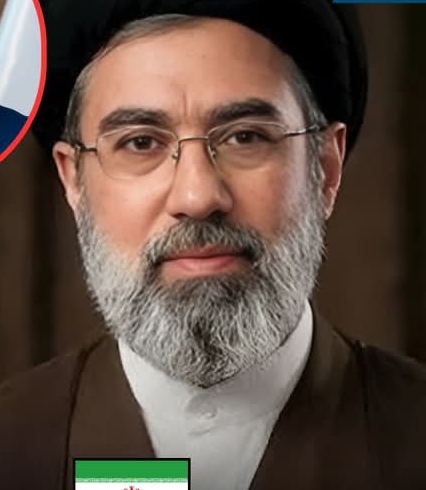
Iran Could Emerge From the War Stronger and More Dangerous


Military analysts are warning that the current regional conflict may inadvertently harden Iran’s military capabilities and domestic resilience, creating a far more formidable adversary in the long term. By forcing Tehran to rapidly innovate in drone technology and asymmetric warfare, the war is acting as a high-stakes testing ground for advanced weaponry.

The prolonged engagement has also allowed the Iranian Revolutionary Guard to further entrench its influence over critical infrastructure and supply chains across the Middle East. This consolidation of power suggests that a post-war Iran could possess a much more organized and battle-hardened paramilitary network than before the hostilities began.
Geopolitically, the conflict is driving Tehran into deeper strategic alliances with other global powers, providing it with new avenues for economic and technological support that bypass Western sanctions. These growing ties could grant Iran access to high-end defensive systems and satellite intelligence that significantly elevate its regional threat level.
Domestically, the government is utilizing the wartime environment to suppress dissent and mobilize the population under a unified banner of “homeland defense.” This social transformation, if successful, could create a more disciplined and ideologically committed citizenry that is less susceptible to external diplomatic pressure.
Ultimately, the concern is that a “weakened” Iran might be a misconception, as the regime has historically shown a unique ability to adapt and survive under extreme duress. The international community must now consider the possibility that the end of this war will reveal a Tehran that is better equipped and more determined to project its power globally.
1. War as an innovation accelerator
You’re right that sustained pressure often forces rapid military adaptation. Iran has already demonstrated this through its investment in drone warfare and missile systems, especially via the (IRGC). Constraints like sanctions tend to push Tehran toward low-cost, high-impact asymmetric tools—drones, cyber operations, proxy warfare—rather than conventional military expansion.
That said, innovation under pressure can be uneven. Resource limitations, infrastructure damage, and brain drain can also slow progress.
2. Expansion of proxy and paramilitary networks
Iran’s regional strategy has long relied on allied non-state actors across countries like , , and . Conflict environments often deepen these ties, making networks more coordinated and battle-tested.
However, this expansion comes with risks: proxies can become harder to control, and overextension can strain Iran’s logistics and finances.
3. Strategic alignment with global powers
Tehran has increasingly leaned toward partnerships with countries like and . These relationships can help bypass sanctions and provide access to technology and intelligence.
But these alliances are transactional, not unconditional. Both Moscow and Beijing pursue their own interests, and their support may not fully offset Iran’s economic isolation.
4. Domestic consolidation and resilience
Historically, external threats have allowed Iranian leadership to rally nationalism and justify tighter internal control. Wartime narratives can reduce dissent in the short term and strengthen regime cohesion.
Still, this is not guaranteed long-term. Economic hardship, inflation, and public fatigue can undermine internal stability, even in highly controlled environments.
5. The “stronger after pressure” paradox
Iran has repeatedly shown resilience—from the to decades of sanctions. The idea that it could emerge more hardened isn’t far-fetched.
But “stronger” doesn’t necessarily mean more powerful across all dimensions. It may instead mean:
- More militarily adaptive
- More ideologically entrenched
- But still economically constrained and diplomatically isolated
Bottom line
The risk you’re pointing out is real: conflict can unintentionally optimize a state for survival and asymmetric competition. A post-war Iran might not be conventionally stronger, but it could be more resilient, less predictable, and harder to determine.