Lagos 2027: Ambode, Alausa, Gbajabiamila and the High-Stakes APC Power Game
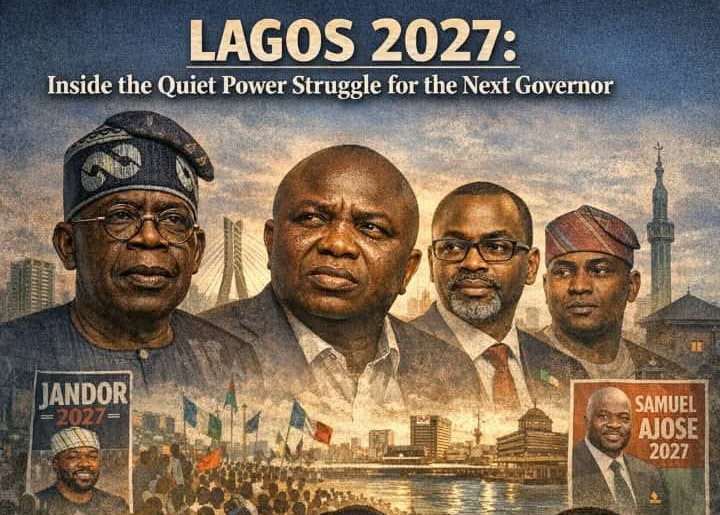
Lagos 2027 – Inside the Quiet Power Struggle for the Next Governor


In the intricate system of Lagos politics, where influence often travels through whispered conversations rather than public rallies, the early manoeuvring ahead of the 2027 governorship election has already begun to reveal familiar patterns. A speculative insider-style analysis currently circulating on social media attempts to capture the mood within the ruling party’s inner circles, presenting what it describes as the “real street”, the quiet ecosystem of party elders, financiers, and power brokers who historically shape the direction of politics in Nigeria’s commercial capital.

The backdrop to the intrigue is the timetable released by the Independent National Electoral Commission (INEC) in February 2026. The schedule sets March 26, 2026, as the deadline for public officials seeking elective office to resign their appointments, with party primaries scheduled between April 23 and May 30. Campaigns for the governorship race will run from September 9, 2026, until February 5, 2027, while the election itself is fixed for February 6, 2027. In a political environment often clouded by rumours and unofficial timelines, these dates have provided the first concrete anchor for the unfolding succession debate.
At the centre of the conversation lies the enduring influence of Bola Ahmed Tinubu, Nigeria’s president and the most consequential political figure Lagos has produced in the Fourth Republic. Tinubu’s political machinery has shaped every governorship transition in the state since 1999. From Babatunde Fashola to Akinwunmi Ambode and the incumbent governor Babajide Sanwo-Olu, each occupant of Alausa has emerged with the blessing of the network Tinubu built during his own tenure as governor. Although party leaders routinely emphasise internal democracy, few observers doubt that the president’s preference will remain decisive in determining who carries the banner of the All Progressives Congress (APC) in the state.
Among the names circulating in political circles is Ambode, whose administration between 2015 and 2019 left behind a legacy of visible infrastructure projects that still resonate with some Lagosians. Yet his bitter fallout with the party structure ahead of the 2019 election, which denied him a second-term ticket, continues to cast a shadow over his prospects. Admirers speak of unfinished business, while sceptics inside the party quietly question whether a leader once seen as estranged from the political establishment could again command its confidence.
Another figure frequently mentioned is Tunji Maruf Alausa, Nigeria’s current Minister of Education, whose technocratic credentials and Lagos roots have made him the subject of persistent speculation. Admirers within policy circles describe him as cerebral and reform-minded, a potential bridge between technocratic governance and political leadership. Yet Alausa himself has publicly dismissed suggestions that he intends to contest the governorship, insisting that his focus remains on his ministerial responsibilities. The contrast between such denials and continued whispers of a “head-hunted” candidacy illustrates the fluid nature of Lagos’ pre-primary politics.
Other potential aspirants come from both the centre of federal power and the state’s traditional political periphery. Names occasionally mentioned include Femi Gbajabiamila, now Chief of Staff to the President, and Hakeem Muri-Okunola, the President’s Principal Private Secretary. Both wield considerable influence within the federal administration, yet observers question whether either would abandon those strategic positions for the uncertainties of a state-level contest. At the same time, politicians from Lagos’ historically under-represented Badagry axis are attempting to frame the 2027 race around the language of geographical equity. Among them are Abdul-Azeez Olajide Adediran, widely known as Jandor, and businessman Samuel Ajose, whose grassroots mobilisation efforts have added another dimension to the emerging contest.
The debate has also revived familiar conversations about religious and regional balance in Lagos politics. The state governed by Tinubu and Fashola for sixteen years under Muslim leadership has since been led by two Christian governors, Ambode and Sanwo-Olu. Within sections of the ruling party, some strategists quietly argue that a Muslim candidate might restore a perceived equilibrium. Such considerations, while rarely expressed openly, have historically influenced candidate selection in a state where coalition-building across religious and ethnic lines remains essential.
Beyond the ruling party, however, the tone of the insider commentary is markedly dismissive of opposition prospects. Figures such as Gbadebo Rhodes-Vivour, the former Labour Party candidate who mounted a spirited challenge in the 2023 election, are described as unlikely to reproduce the momentum generated by the national surge that accompanied the presidential campaign of Peter Obi. Critics of that view note that Lagos politics has occasionally produced surprises, particularly when voter frustration interconnects with strong urban mobilisation. Yet the prevailing assumption among many political insiders remains that the real contest will unfold not between parties but within the APC itself.
For all the speculation, the story of Lagos’ next governor is far from written. The weeks leading to the March 26 resignation deadline will test which aspirants are prepared to commit their careers to the race and which names will quietly fade from the conversation. As has often been the case in the state’s political history, the decisive moves may occur not in the glare of campaign stages but in the discreet negotiations of party elders and strategists. In Lagos, the loudest voices rarely determine the outcome, the quiet consensus of the political establishment usually does.
©️ Adebamiwa Olugbenga Michael is a Lagos-based professional journalist, political economist, and policy intelligence analyst