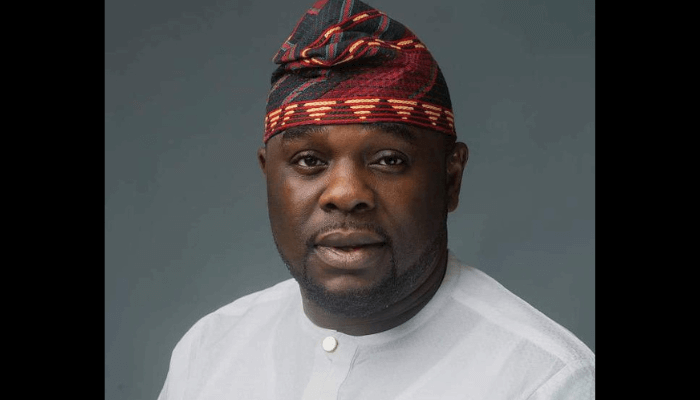
MAYOR DELE OSHINOWO: FROM AGBOYI-KETU MAYOR TO APC’S KOSOFE 2027 FLAGBEARER
By NewsMediaNG
Mayor Dele Oshinowo has emerged as one of the more prominent grassroots political figures in Lagos’ Kosofe axis, building his political profile from party activism and local-government administration to the frontline of the 2027 House of Representatives race.

His political journey has been marked by electoral contests, local-government leadership, infrastructure projects, empowerment programmes and, more recently, a highly contested bid for the APC ticket to represent Kosofe Federal Constituency.

The Independent National Electoral Commission has now listed Oshinowo as the APC candidate for the Kosofe Federal Constituency contest, according to recent reports, bringing another chapter to the political battle surrounding the seat.
EARLY LIFE AND EDUCATION
Oshinowo was born into the Oshinowo family of Ijebu-Ode, Ogun State, according to biographical accounts published about him.

He attended St. Agnes Primary School and later Maryland Comprehensive Secondary School in Lagos before proceeding to the United Kingdom for higher education.
He obtained a Bachelor of Arts degree in Business Studies and a Master’s degree in Risk Management from the University of East London.
During his years in the United Kingdom, he worked as a business and security analyst with Citibank before moving into business and real-estate activities.
His professional background in business, security and real estate would later become part of the profile he brought into grassroots politics.
FROM POLITICAL ACTIVISM TO GRASSROOTS POLITICS
Oshinowo’s political involvement dates back to the late 1990s.
Available accounts place his early political activities within the Alliance for Democracy (AD) era, when he was involved in the mobilisation of young people and progressive political activists in Lagos.
His political ambitions did not immediately translate into electoral victory.
He contested for the chairmanship of Agboyi-Ketu LCDA in 2011 under the Action Congress of Nigeria but did not secure the ticket. In 2015, he also sought the APC ticket for Kosofe Constituency II in the Lagos State House of Assembly race.
Those setbacks, however, did not end his political career.
He subsequently became Secretary of Agboyi-Ketu LCDA, serving from 2012 to 2014 and later participating in the council’s transition committee.
He eventually became Executive Chairman of Agboyi-Ketu LCDA, beginning a period that would substantially increase his political visibility across Kosofe and Lagos.
THE AGBOYI-KETU YEARS
Oshinowo’s biggest political asset remains his record as chairman of Agboyi-Ketu.
His administration presented itself as one focused on infrastructure, housing, education, empowerment, healthcare, technology and community development.
Among the projects and programmes associated with his administration were housing developments, road projects, markets, administrative infrastructure, educational interventions and empowerment schemes.
A major component was the use of public-private partnerships in housing development.
One of the projects highlighted during his tenure was the Greenwich Gardens housing development. His official profile cites 271 completed housing units, while professional and media reports have also documented other housing developments, including Raymond Estate and Sterling Heights.
The administration also pursued infrastructure projects across the LCDA.
Vanguard reported that the administration undertook 64 road projects, while other reported projects included transformers, markets, a shopping arcade, legislative facilities and community infrastructure.
WE LIFT: THE EMPOWERMENT MODEL
Another signature initiative associated with Oshinowo is the WE LIFT empowerment programme.
The initiative moved beyond one-off cash distribution into vocational training and provision of equipment to beneficiaries.
In 2025, Punch reported that 53 participants graduated from the Agboyi-Ketu WE LIFT Empowerment Training programme, with some beneficiaries receiving vocational equipment worth up to ₦800,000.
Oshinowo said the programme was designed to give beneficiaries sustainable skills rather than simply distribute items that could later be sold.
Earlier accounts of the programme also cite direct financial empowerment for traders and women, including grants of ₦50,000 to beneficiaries.
EDUCATION AND SOCIAL PROGRAMMES
Education also featured prominently in the administration’s programmes.
Reported interventions included assistance with JAMB and GCE forms for indigent students, bursary programmes and educational support.
A major school project in the riverine community of Agboyi was also presented as part of the administration’s attempt to address educational infrastructure in hard-to-reach areas.
Other reported initiatives included free bus rides, children’s programmes and assistance to traders and residents affected by emergencies.
POLITICAL MOBILISATION
Oshinowo’s influence was not restricted to his council.
During the 2019 political cycle, he played roles in campaign structures associated with Babajide Sanwo-Olu and the late Senator Bayo Osinowo, helping mobilise support within Agboyi-Ketu and the wider Lagos East political structure.
That experience strengthened his reputation as a grassroots organiser and party mobiliser.
It also helps explain his decision to move from local government politics to the federal constituency contest.
THE ROAD TO KOSOFE 2027
The move to the House of Representatives represents the biggest electoral ambition of Oshinowo’s political career so far.
In the 2026 APC primary for Kosofe Federal Constituency, he emerged as the winner ahead of several contenders, including incumbent lawmaker Kafilat Ogbara.
Reports of the primary placed Oshinowo ahead of his rivals, triggering a political dispute over the outcome.
Oshinowo celebrated the result as a democratic victory, while Ogbara and her supporters questioned aspects of the process and maintained that the matter required further party consideration.
The dispute subsequently became one of the most closely watched internal APC battles in Lagos politics.
By September 2026, reports indicated that INEC had listed Oshinowo as the APC candidate, significantly strengthening his position heading into the 2027 election.
His campaign has since expanded across wards and communities in Kosofe, with meetings involving party executives, traditional leaders, community associations and religious stakeholders.
THE CONTROVERSIES
Oshinowo’s political career has not been without controversy.
One of the most prominent recent disputes followed the 2026 APC primary.
His emergence as the party’s preferred candidate was challenged politically by incumbent lawmaker Kafilat Ogbara, who called for calm while maintaining that declarations surrounding the primary were not necessarily the final word under the party’s internal processes.
The dispute later evolved into a wider question about who should carry the APC flag in Kosofe.
There have also been controversies during his tenure as council chairman.
In March 2025, reports emerged alleging that Oshinowo was involved in an incident concerning police officers and a land dispute. Oshinowo denied attacking constituted authority and rejected the allegations.
Another incident reported in June 2025 involved allegations surrounding an altercation involving Oshinowo and a member of a prominent local family. Reports of the incident generated competing narratives from different sides.
In June 2026, Oshinowo was also reported to have issued a pre-action notice over an alleged defamatory publication, signalling his willingness to use legal channels to challenge reports he considered damaging to his reputation.
Separately, in August 2026, a group reportedly called on him to publish certificates submitted to INEC. Such demands should be distinguished from an established finding of wrongdoing: the available report describes a political demand, not a judicial or regulatory finding that his qualifications were invalid.
WHAT OPPONENTS SAY — AND WHAT SUPPORTERS SAY
The political argument surrounding Oshinowo increasingly revolves around two competing narratives.
Supporters point to his years of local-government experience, infrastructure projects, housing initiatives, empowerment programmes and grassroots networks.
They argue that his experience running Agboyi-Ketu gives him practical knowledge of the problems confronting residents of Kosofe.
His critics, however, are likely to focus on questions surrounding the implementation and sustainability of projects, political control of grassroots structures and the controversies that have accompanied his rise.
The 2026 APC primary dispute also demonstrated that his emergence has not been universally accepted within the party.
For Oshinowo, the challenge is therefore not simply winning the general election. It is convincing voters beyond his established political base that his local-government record can translate into effective federal representation.
THE 2027 TEST
Oshinowo enters the 2027 contest with an unusual advantage: he is not approaching voters as an unknown aspirant.
He has already served for years in local government and built a recognisable political identity across the Kosofe axis.
But federal representation presents a different test.
The expectations of constituents will extend beyond roads, markets and empowerment to issues such as federal infrastructure, legislative advocacy, employment, education, security, healthcare, flood control and access to federal programmes.
His campaign message has increasingly centred on stronger representation and a stronger Kosofe, while drawing heavily on his experience as a former council chairman.
THE MAN BEHIND THE POLITICAL BRAND
Oshinowo’s political identity is built around three major pillars: grassroots administration, political mobilisation and development projects.
His supporters see him as a politician who understands local government from the inside and has demonstrated an ability to translate political authority into visible projects.
His critics see a politician whose growing influence must be subjected to the same scrutiny expected of every public office seeker.
Either way, his emergence as the APC candidate has made him one of the central figures in the political contest for Kosofe ahead of 2027.
The next phase will determine whether the former Agboyi-Ketu mayor can convert his local-government record and political machinery into a broader electoral mandate.
For Oshinowo, the ambition is now bigger than the council.
It is Kosofe — and the National Assembly.
DELE OSHINOWO: FROM AGBOYI-KETU MAYOR TO APC’S KOSOFE 2027 FLAGBEARER
By NewsMediaNG
Mayor Dele Oshinowo has emerged as one of the more prominent grassroots political figures in Lagos’ Kosofe axis, building his political profile from party activism and local-government administration to the frontline of the 2027 House of Representatives race.
His political journey has been marked by electoral contests, local-government leadership, infrastructure projects, empowerment programmes and, more recently, a highly contested bid for the APC ticket to represent Kosofe Federal Constituency.
The Independent National Electoral Commission has now listed Oshinowo as the APC candidate for the Kosofe Federal Constituency contest, according to recent reports, bringing another chapter to the political battle surrounding the seat.
EARLY LIFE AND EDUCATION
Oshinowo was born into the Oshinowo family of Ijebu-Ode, Ogun State, according to biographical accounts published about him.
He attended St. Agnes Primary School and later Maryland Comprehensive Secondary School in Lagos before proceeding to the United Kingdom for higher education.
He obtained a Bachelor of Arts degree in Business Studies and a Master’s degree in Risk Management from the University of East London.
During his years in the United Kingdom, he worked as a business and security analyst with Citibank before moving into business and real-estate activities.
His professional background in business, security and real estate would later become part of the profile he brought into grassroots politics.
FROM POLITICAL ACTIVISM TO GRASSROOTS POLITICS
Oshinowo’s political involvement dates back to the late 1990s.
Available accounts place his early political activities within the Alliance for Democracy (AD) era, when he was involved in the mobilisation of young people and progressive political activists in Lagos.
His political ambitions did not immediately translate into electoral victory.
He contested for the chairmanship of Agboyi-Ketu LCDA in 2011 under the Action Congress of Nigeria but did not secure the ticket. In 2015, he also sought the APC ticket for Kosofe Constituency II in the Lagos State House of Assembly race.
Those setbacks, however, did not end his political career.
He subsequently became Secretary of Agboyi-Ketu LCDA, serving from 2012 to 2014 and later participating in the council’s transition committee.
He eventually became Executive Chairman of Agboyi-Ketu LCDA, beginning a period that would substantially increase his political visibility across Kosofe and Lagos.
THE AGBOYI-KETU YEARS
Oshinowo’s biggest political asset remains his record as chairman of Agboyi-Ketu.
His administration presented itself as one focused on infrastructure, housing, education, empowerment, healthcare, technology and community development.
Among the projects and programmes associated with his administration were housing developments, road projects, markets, administrative infrastructure, educational interventions and empowerment schemes.
A major component was the use of public-private partnerships in housing development.
One of the projects highlighted during his tenure was the Greenwich Gardens housing development. His official profile cites 271 completed housing units, while professional and media reports have also documented other housing developments, including Raymond Estate and Sterling Heights.
The administration also pursued infrastructure projects across the LCDA.
Vanguard reported that the administration undertook 64 road projects, while other reported projects included transformers, markets, a shopping arcade, legislative facilities and community infrastructure.
WE LIFT: THE EMPOWERMENT MODEL
Another signature initiative associated with Oshinowo is the WE LIFT empowerment programme.
The initiative moved beyond one-off cash distribution into vocational training and provision of equipment to beneficiaries.
In 2025, Punch reported that 53 participants graduated from the Agboyi-Ketu WE LIFT Empowerment Training programme, with some beneficiaries receiving vocational equipment worth up to ₦800,000.
Oshinowo said the programme was designed to give beneficiaries sustainable skills rather than simply distribute items that could later be sold.
Earlier accounts of the programme also cite direct financial empowerment for traders and women, including grants of ₦50,000 to beneficiaries.
EDUCATION AND SOCIAL PROGRAMMES
Education also featured prominently in the administration’s programmes.
Reported interventions included assistance with JAMB and GCE forms for indigent students, bursary programmes and educational support.
A major school project in the riverine community of Agboyi was also presented as part of the administration’s attempt to address educational infrastructure in hard-to-reach areas.
Other reported initiatives included free bus rides, children’s programmes and assistance to traders and residents affected by emergencies.
POLITICAL MOBILISATION
Oshinowo’s influence was not restricted to his council.
During the 2019 political cycle, he played roles in campaign structures associated with Babajide Sanwo-Olu and the late Senator Bayo Osinowo, helping mobilise support within Agboyi-Ketu and the wider Lagos East political structure.
That experience strengthened his reputation as a grassroots organiser and party mobiliser.
It also helps explain his decision to move from local government politics to the federal constituency contest.
THE ROAD TO KOSOFE 2027
The move to the House of Representatives represents the biggest electoral ambition of Oshinowo’s political career so far.
In the 2026 APC primary for Kosofe Federal Constituency, he emerged as the winner ahead of several contenders, including incumbent lawmaker Kafilat Ogbara.
Reports of the primary placed Oshinowo ahead of his rivals, triggering a political dispute over the outcome.
Oshinowo celebrated the result as a democratic victory, while Ogbara and her supporters questioned aspects of the process and maintained that the matter required further party consideration.
The dispute subsequently became one of the most closely watched internal APC battles in Lagos politics.
By September 2026, reports indicated that INEC had listed Oshinowo as the APC candidate, significantly strengthening his position heading into the 2027 election.
His campaign has since expanded across wards and communities in Kosofe, with meetings involving party executives, traditional leaders, community associations and religious stakeholders.
THE 2027 TEST
Oshinowo enters the 2027 contest with an unusual advantage: he is not approaching voters as an unknown aspirant.
He has already served for years in local government and built a recognisable political identity across the Kosofe axis.
But federal representation presents a different test.
The expectations of constituents will extend beyond roads, markets and empowerment to issues such as federal infrastructure, legislative advocacy, employment, education, security, healthcare, flood control and access to federal programmes.
His campaign message has increasingly centred on stronger representation and a stronger Kosofe, while drawing heavily on his experience as a former council chairman.
THE MAN BEHIND THE POLITICAL BRAND
Oshinowo’s political identity is built around three major pillars: grassroots administration, political mobilisation and development projects.
His supporters see him as a politician who understands local government from the inside and has demonstrated an ability to translate political authority into visible projects.
His critics see a politician whose growing influence must be subjected to the same scrutiny expected of every public office seeker.
Either way, his emergence as the APC candidate has made him one of the central figures in the political contest for Kosofe ahead of 2027.
The next phase will determine whether the former Agboyi-Ketu mayor can convert his local-government record and political machinery into a broader electoral mandate.
For Oshinowo, the ambition is now bigger than the council.
It is Kosofe — and the National Assembly.