Medical Students Now Plan to ‘Japa’ Before Graduation — NMA Raises Alarm
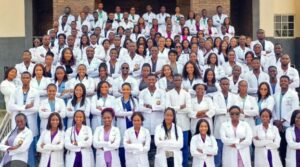
The Nigerian Medical Association (NMA) has raised the alarm over the worsening migration of doctors, revealing that some medical students now begin planning to leave Nigeria even before completing their training.

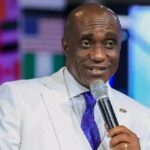
NMA President, Prof. Afekhide-Ernest Omoti, disclosed this in response to inquiries by Sunday PUNCH, warning that the trend posed a serious threat to Nigeria’s already strained healthcare system.

Omoti said some medical students were now preparing for foreign qualifying examinations while still in school or during their internship, with the aim of relocating shortly after completing their professional registration.
“The Nigerian medical student, even before he graduates, is already planning how to leave the country because he’s seen what is ahead of him, that there is no future ahead,” he said.
According to him, young doctors increasingly write foreign licensing examinations during their internship so they can leave Nigeria as soon as they complete the registration process.

The NMA president urged the Federal Government to urgently improve the conditions of service and welfare of doctors to restore confidence among young medical professionals who may otherwise seek opportunities abroad.
He said the association had submitted a proposal for a minimum retention package to the government, stressing that the NMA was not demanding salaries comparable to those paid to doctors in developed countries.
“We’re not asking that you give us what is equivalent to what people earn abroad, but we’re saying give us what will make the doctor happy to remain in the country, and that amount is not that much,” Omoti said.
He maintained that most Nigerian doctors would prefer to remain in the country if they could work under decent conditions, earn reasonable incomes and feel safe.
“Every doctor wants to remain in this country, I can assure you, hardly any doctor ordinarily would want to leave. We want to stay. But for many people, they just cannot do it anymore,” he said.
Omoti also criticised the loss of doctors trained with significant public resources, noting that the government invests heavily in medical education only for many of the beneficiaries to eventually relocate.
“The government spends so much money to train an average doctor, and these doctors leave for free. Who loses? The government loses; the Nigerian people lose.”
He called on the government to introduce stronger incentives and policies capable of retaining medical professionals and addressing the factors driving migration.
The warning comes amid continuing concerns over Nigeria’s healthcare workforce, with doctors and other health professionals leaving the country in search of better remuneration, working conditions, career opportunities and improved welfare.
The NMA has repeatedly demanded improved salaries, better medical infrastructure, safer workplaces and stronger retention measures to slow the migration of healthcare workers.
The association has also advocated an increase in the retirement age for clinical health workers, arguing that retaining experienced professionals could help address the shortage of medical personnel while the government trains and retains younger doctors.
NMA Raises Alarm Over Attacks on Doctors
Omoti also expressed concern over the increasing cases of attacks, intimidation and harassment of healthcare workers, saying the frequency of such incidents had become alarming.
He disclosed that a national policy against the intimidation and harassment of healthcare workers had been developed and released following the work of a committee set up to address the issue.
According to him, the policy places responsibility on hospitals to provide adequate security for healthcare workers and ensure that perpetrators are prosecuted and made to compensate affected workers.
He called for stronger security measures in hospitals, including the installation of closed-circuit television cameras and deployment of adequate security personnel, particularly around emergency units.
Omoti attributed some attacks on doctors to grief, frustration, poor communication and misconceptions among patients and their relatives.
“You can’t expect that everybody who comes to a hospital, no matter how bad it is, must survive. So, the fact that you are grieving doesn’t mean you take your anger on the doctor or on the healthcare professional,” he said.
He further urged hospitals to improve communication with patients and their relatives, particularly concerning the impact of inadequate manpower on healthcare delivery.
He noted that a single doctor could sometimes be left to attend to numerous patients in an emergency unit, making it impossible to provide immediate attention to everyone.
“Because of the limited workforce, the only person there in the emergency, with so many patients, and then you expect that one doctor will divide himself into 10, and attend to 10 patients at once. You can’t do that,” he said.