


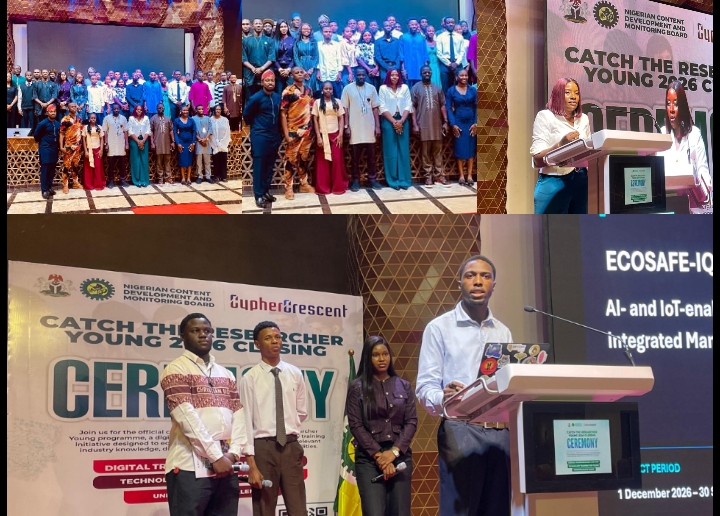
NCDMB Concludes 2026 Catch the Researcher Young Programme, Recognises Top Three Student Researchers
The Nigerian Content Development and Monitoring Board (NCDMB) has concluded the 2026 edition of its Catch the Researcher Young Programme (CRYP), an initiative designed to strengthen indigenous research capacity, promote technological innovation and equip Nigerian undergraduates with skills to address industry and societal challenges.

The programme ended with simultaneous closing ceremonies in Yenagoa, Bayelsa State, and Lagos State, bringing together participating students, programme facilitators and representatives of the Board to celebrate the achievements of the initiative.
CRYP is focused on equipping undergraduate students with digital skills, research competencies and knowledge of emerging technologies to enable them to develop innovative, homegrown solutions to challenges across different sectors of the Nigerian economy.

Representing the Executive Secretary of NCDMB, Engr. Felix Omatsola Ogbe (FNSE, FIPS), at the closing ceremonies, the Director of Corporate Services, Dr. Abdulmalik Halilu, commended the programme implementer, Cypher Crescent Limited, for successfully delivering the initiative.
Halilu also congratulated the participating students for their commitment and contributions throughout the programme, urging them to translate the knowledge and competencies acquired into practical solutions capable of addressing challenges in the oil and gas industry and other sectors.
He emphasised the importance of developing indigenous technological solutions, noting that initiatives such as CRYP provide young Nigerians with opportunities to contribute meaningfully to national development through research, innovation and creativity.
A major highlight of the closing ceremonies was the presentation of innovative research proposals developed by participants, demonstrating the potential of young Nigerian researchers to apply technology and scientific knowledge to real-world problems.
Among the projects showcased were ECOSAFE-IQ and PumpVerity AI, which reflected the participants’ efforts to develop technology-driven solutions to identified challenges.
The ceremonies also featured the recognition of the programme’s three Best Researchers: Marvelous Lucky, Cornerstone Olanrewaju and Chiemela Loveday Emmanuel.
Their recognition underscored the importance of rewarding research excellence, creativity and innovative thinking among young Nigerians.
In his closing remarks, the Director of Planning, Research and Statistics at NCDMB, Mr. Silas Omomehin Ajimijaye, expressed appreciation to the Board for sponsoring the initiative.
He reaffirmed the importance of CRYP in strengthening indigenous research capacity, advancing human capital development and promoting technological innovation.
Ajimijaye noted that investing in young researchers remains essential to building the technical expertise and innovation ecosystem required to support Nigeria’s industrial development.
The successful conclusion of the 2026 CRYP edition reinforces NCDMB’s commitment to developing local research capabilities and preparing young Nigerians to contribute to the country’s technological advancement, particularly within the oil and gas industry.
Through initiatives such as CRYP, the Board continues to promote human capital development and encourage the emergence of a new generation of Nigerian innovators capable of creating solutions to local challenges.
NewsMediang.com reports that strengthening indigenous research and technological innovation remains critical to Nigeria’s ambition of building local capacity, deepening industrial competitiveness and reducing dependence on foreign expertise.