NDLEA destroys 51 hectares of cannabis, arrests 281 suspects in Ekiti
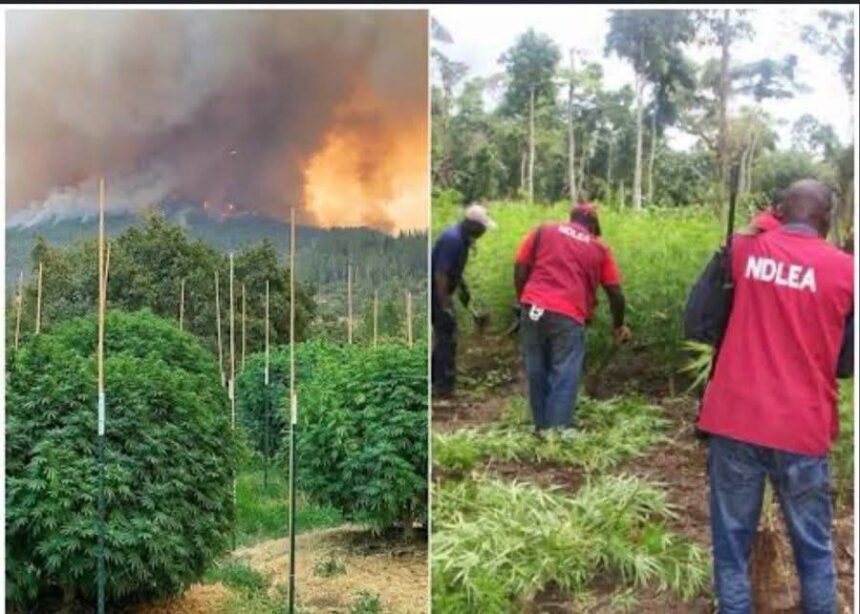
The National Drug Law Enforcement Agency has said it destroyed more than 51 hectares of cannabis sativa plantations and arrested 281 suspects involved in illicit drug trafficking, peddling and abuse across Ekiti State in the past year.

The Ekiti State Commander of the agency, Rufus Aina, disclosed this on Thursday in Ado Ekiti during activities marking the 2026 World Drug Day.

He said the command also secured the conviction of 50 suspects, while other cases remain pending before the Federal High Court in Ado Ekiti.
World Drug Day is celebrated annually on June 26. The theme for the 2026 edition is, “The World Drug Problem: Persisting Issues, New Challenges, Innovative Responses.”

Aina described the large-scale cultivation of cannabis in several communities across the state as a major challenge.
He said, “In Ekiti State, the challenge is particularly significant due to the illicit cultivation of cannabis sativa in commercial quantities in many of the local governments and communities.
“While some may view cannabis cultivation as a source of income, its illegal production, trafficking, peddling and usage have far-reaching consequences, including criminality, insecurity, school dropouts, substance dependence, and the destruction of livelihoods, forest reserves and communities.
“While longstanding issues such as drug trafficking, substance dependence and organised criminal networks persist, new threats continue to emerge, driven by changing drug markets, technological advancements and the proliferation of novel psychoactive substances.
“Drug abuse still remains a major public health and security concern. It destroys lives, weakens families, fuels crime, and undermines national development.
“Today, new threats such as synthetic drugs, the misuse of prescription medicines, and the use of digital platforms for drug trafficking have made the problem even more complex.
“Addressing these challenges requires a collective and innovative approach. Beyond law enforcement, we must strengthen prevention, public awareness, treatment, rehabilitation and community engagement. Parents, teachers, religious leaders, community organisations and government agencies all have critical roles to play in protecting our society, especially our youth,” he said.