Nigeria Prize for Science & Innovation Draws Highest Number of Entries in 22-Year History as NLNG Advances Search for Nigeria’s Next Scientific Breakthrough

For the first time in recent memory, The Nigeria Prize for Science and Innovation reached a conclusion many had not expected: no winner emerged. Despite receiving 112 submissions under the theme Innovations in Artificial Intelligence (AI), Information Communication Technology (ICT), and Digital Technologies for Development, none met the standards required for the coveted recognition.

For organisers, it was a difficult decision. For researchers and innovators, it was a sobering moment.
Yet instead of weakening interest in the competition, that verdict appears to have triggered a stronger response from Nigeria’s scientific community.

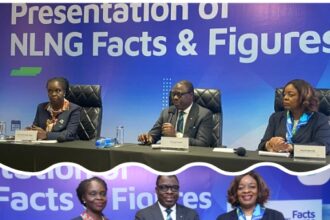
On Thursday in Lagos, organisers announced a dramatic turnaround: the 2026 edition of the Prize has attracted 237 entries — more than double the previous year’s submissions and the highest number recorded since the Prize was established in 2004.
The record-setting figure marks more than a numerical achievement. It signals renewed momentum in Nigeria’s innovation landscape and perhaps a broader shift in how science, technology and research are increasingly being viewed in the country.
A difficult decision that changed the conversation
For many organisations, announcing a winner despite reservations might have been easier than confronting criticism over an empty result.
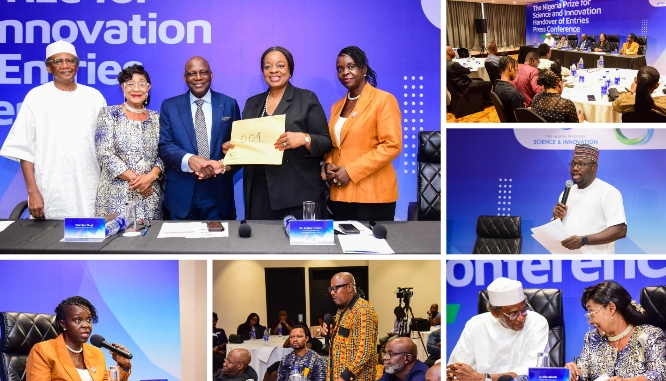
But according to Dr. Sophia Horsfall, General Manager, External Relations and Sustainable Development at NLNG, preserving the integrity of the Prize was more important than avoiding disappointment.
“We believe that if a Nigerian discovery is to command global respect, it must withstand the highest levels of scrutiny,” she said during the handover ceremony.
“It would have been easier to select the strongest submission and proceed with an award, even where the standard had not been fully met. However, the Prize held firmly to its purpose as a search for true scientific breakthroughs.”
That decision, she explained, was not made lightly.
NLNG management and the Advisory Board acknowledged disappointment over the outcome but refused to lower the benchmark.
Instead, they asked a difficult question: if Nigeria possesses immense talent, why were the submissions falling short of expectations?
The answer, organisers believed, may not have been a shortage of ideas but perhaps a gap in engagement, visibility and access.
Taking the message directly to innovators
The response that followed represented a departure from traditional approaches.
Rather than wait for researchers and innovators to come to them, organisers launched The Nigeria Prize for Science and Innovation Roadshow.
The initiative took awareness campaigns directly to institutions, innovation hubs and communities where scientific ideas are developed.
Organisers also expanded engagement through partnerships with scientific festivals, academic institutions and media organisations.
The objective was simple: create stronger connections with researchers and encourage participation.
The result became evident in the figures released this week.
“This year, we have received 237 entries, surpassing the 112 entries received in 2025, making this the highest number in the history of the Prize,” Horsfall said.
Beyond the statistics, she argued, the development reflects growing enthusiasm for research and recognition in Nigeria.
“It proves there is a hunger in this country for research, innovation, discovery and recognition.”
Why AI and digital technologies remain central
Some observers questioned why the Prize retained the same theme after last year produced no winner.
Organisers, however, insist the decision was deliberate.
Artificial Intelligence, ICT and digital technologies continue to dominate conversations around economic transformation globally.
Across sectors ranging from healthcare and agriculture to finance and education, digital tools increasingly shape how societies solve complex challenges.
For Nigeria, with its rapidly expanding youth population and development needs, the stakes may be even higher.
Speaking at the ceremony, Chairman of the Advisory Board, Professor Barth Nnaji, described the theme as one of the most important subjects of modern times.
“In the world of science, we do not just see gadgets or software. We see these technologies as primary drivers of socio-technical transformation,” he said.
“These technologies are the keys to unlocking economic sustainability and solving the very real challenges facing our people.”
Nnaji believes the record participation suggests Nigerian researchers are beginning to move beyond basic applications and toward more sophisticated innovation.
“It shows more researchers and innovators are starting to tackle complex problems with advanced digital tools,” he said.
The burden of a $100,000 prize
With the announcement of record entries comes another challenge: deciding who deserves the Prize.
Valued at $100,000, The Nigeria Prize for Science and Innovation has built a reputation as one of Africa’s most prestigious scientific recognitions.
But unlike competitions driven by popularity or public sentiment, organisers insist the process is intensely rigorous.
“People often ask, ‘How do you choose a winner for a $100,000 prize?’” Nnaji said.
“The answer is: with extreme detail.”
According to him, entries will undergo extensive scrutiny by an independent panel selected for competence, integrity and expertise.
Judges are expected to assess originality, practical relevance, scalability and measurable impact. The process, organisers say, explains why last year ended without a winner and why this year’s record numbers do not automatically guarantee success.
Quality remains more important than quantity.
Looking beyond awards
The significance of the Prize extends beyond the eventual winner.
For Anne-Marie Palmer-Ikuku, Manager, Corporate Communication and Public Affairs at NLNG, the larger story lies in the people behind the entries.
Scientists, researchers, coders and innovators often spend years developing ideas, navigating failed experiments and pursuing solutions with little public attention.
Submitting such work, she noted, requires courage.
“To the scientists, innovators, researchers and coders who have put their work forward this year, it takes a unique kind of courage to submit your work to be scrutinised by a panel of experts,” she said.
Her message highlighted an often-overlooked reality: innovation ecosystems thrive not simply because prizes exist, but because individuals continue working despite uncertainty and setbacks.
More than a competition
As the Advisory Board begins reviewing 237 entries, the larger question may no longer be whether Nigeria possesses scientific talent. The growing participation appears to answer that.
The challenge instead may be creating systems capable of nurturing discoveries and transforming them into solutions with real-world impact.
Other members of the Advisory Board include Chief Dr. Nike Akande and Professor Baba Yusuf Abubakar.
For now, the competition enters its next phase.
The winner of the 2026 edition is expected to be unveiled at a world press conference in September.
Until then, the story of the Prize may already have produced one important outcome: proof that in Nigeria’s scientific community, disappointment did not end the conversation. It simply inspired a stronger response.