Nigeria Prize for Science Records Historic 237 Entries in 2026 Edition
The 2026 edition of The Nigeria Prize for Science and Innovation has reached a historic milestone after attracting a record-breaking 237 entries, the highest number of submissions since the Prize was established in 2004.
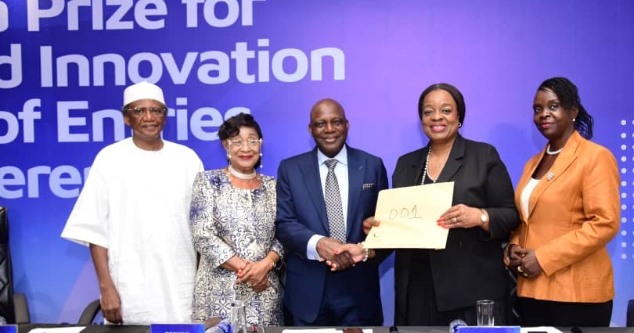
The entries were formally handed over to the Advisory Board at a press conference held in Lagos on Thursday, signalling the beginning of the adjudication process for what is widely regarded as one of Africa’s most prestigious science awards.

This year’s competition retains the theme, Innovations in Artificial Intelligence (AI), Information Communication Technology (ICT), and Digital Technologies for Development, continuing a deliberate focus on technology-driven solutions aimed at addressing developmental challenges.

The decision to retain the theme follows the 2025 edition, which ended without a winner after none of the 112 submissions met the standards required for selection.
Speaking at the event, Dr. Sophia Horsfall, General Manager, External Relations and Sustainable Development at NLNG, said the sustained emphasis on digital innovation reflects both global realities and Nigeria’s future development needs.

“In this fourth revolution, digital infrastructure is as foundational to our survival as electricity or water. For Nigeria, our economic sustainability depends on our ability to move beyond promising research and into undeniable innovation that delivers,” Horsfall said.
According to her, scientific excellence must not be compromised if Nigerian discoveries are to earn international credibility.
“We believe that if a Nigerian discovery is to command global respect, it must withstand the highest levels of scrutiny. It is this conviction that guided the difficult decision seven months ago,” she said.
Horsfall acknowledged that both NLNG and the Advisory Board were disappointed by the outcome of the previous edition but insisted that lowering standards was never considered.
Instead, organisers initiated a broader engagement strategy through The Nigeria Prize for Science and Innovation Roadshow, taking awareness campaigns directly to researchers, innovators and academic institutions across different parts of the country.
The initiative also included collaborations with scientific festivals, innovation hubs, media organisations and educational institutions to encourage participation and deepen public engagement.
The efforts, she said, yielded significant results.
“This year, we have received 237 entries, surpassing the 112 entries received in 2025, making this the highest number in the history of the Prize,” Horsfall said.
“It proves that there is a hunger in this country for research, innovation, discovery and recognition. It further proves that we need platforms that elevate scientific endeavour and transform ideas into impact.”
She stressed that despite the increase in entries, the credibility of the Prize would remain tied to the quality of submissions and the integrity of the selection process.
“A prize is only as valuable as the standards it upholds,” she added.
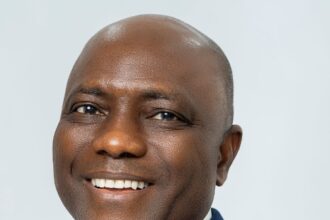
Receiving the entries on behalf of the Advisory Board, Chairman of the Board, Professor Barth Nnaji, described the development as encouraging for the future of Nigerian science and innovation.
He said the increasing volume of entries suggests that Nigerian researchers are beginning to tackle more complex national problems using advanced technological solutions.
“The theme we have focused on for the past two years — Innovations in Artificial Intelligence, ICT and Digital Technologies for Development — is perhaps the most critical topic of our time,” he said.
Addressing the controversy surrounding the absence of a winner in 2025, Nnaji said the decision reflected the Prize’s commitment to excellence rather than a rejection of Nigerian innovation.
“Our refusal to award the prize in 2025 was not a dismissal of the hard work of Nigerian innovators. Rather, it was a statement that The Nigeria Prize for Science and Innovation holds a standard of excellence,” he stated.
The former minister said he was excited by the response from the scientific community, noting that this year’s submissions surpassed all previous records since the Prize began more than two decades ago.
“This year, we have beaten last year’s record and every other record since inception. The sheer volume of entries is a testament to the fact that the spirit of innovation in Nigeria is thriving,” Nnaji said.
He further explained that judging for the $100,000 award would involve a rigorous and transparent process overseen by experts selected for their competence and integrity.
“People often ask, ‘How do you choose a winner for a $100,000 prize?’ The answer is: with extreme detail,” he said.
According to him, the Advisory Board and panel of judges will assess each submission based on merit, originality, practical relevance and measurable impact.
“Our broader objective is to identify work that brings tangible impact to the challenges Nigeria faces, whether through digital health technologies serving rural populations or AI tools preserving our cultural heritage and languages,” he added.
Also speaking, Manager, Corporate Communication and Public Affairs at NLNG, Anne-Marie Palmer-Ikuku praised scientists, researchers, innovators and coders who submitted entries for demonstrating resilience and commitment.
She described participation as an act of courage and encouraged innovators not to be discouraged by previous outcomes.
“To the scientists, innovators, researchers and coders who have put their work forward this year, it takes a unique kind of courage to submit your work to be scrutinised by a panel of experts,” she said.
Palmer-Ikuku also commended the media for helping to stimulate conversations around science and innovation and urged journalists to continue supporting national development through sustained reporting on technological advancement.
Other members of the Advisory Board include Chief Dr. Nike Akande and Professor Baba Yusuf Abubakar.
The Nigeria Prize for Science and Innovation, now in its 22nd year and valued at $100,000, is expected to announce its winner during a world press conference scheduled for September.