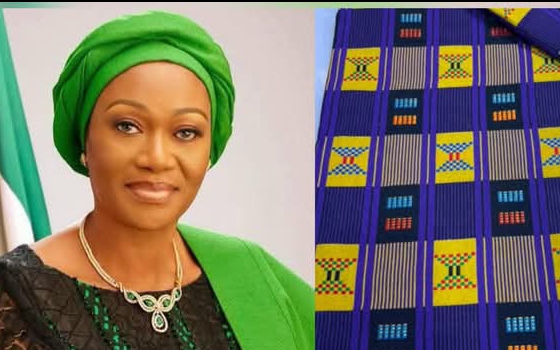


Oluremi Tinubu Pledges to Wear Akwete Wrapper if President Tinubu Wins Second Term

NewsMediaNG
Nigeria’s First Lady, Senator Oluremi Tinubu, has pledged to wear the traditional Akwete wrapper if President Bola Ahmed Tinubu secures a second term in office, describing the move as part of her commitment to promoting indigenous fabrics and supporting local industries.
Mrs. Tinubu made the remark while announcing a ₦2 billion intervention aimed at strengthening the Akwete weaving industry, one of Nigeria’s oldest indigenous textile traditions, renowned for its handwoven craftsmanship and cultural significance.
The First Lady said the initiative would empower local weavers, preserve the nation’s rich cultural heritage, and create more economic opportunities, particularly for women and young people engaged in the textile value chain.
“I will proudly wear the Akwete wrapper if my husband is re-elected as President,” she said, emphasizing her confidence in the administration while encouraging Nigerians to embrace locally made products.
The ₦2 billion support package is expected to improve production capacity, expand market access for Akwete fabrics, and preserve the centuries-old weaving tradition, which originated in Abia State.
Her pledge has sparked conversations on social media, with supporters viewing it as a symbolic endorsement of Nigerian-made textiles, while others interpreted it as an early political statement ahead of the 2027 general elections.
The Akwete cloth, handwoven by artisans in Abia State, is widely regarded as one of Nigeria’s most prestigious traditional fabrics and has gained recognition for its intricate designs and cultural value. The federal government’s renewed focus on promoting local industries aligns with broader efforts to diversify the economy, create jobs, and encourage patronage of made-in-Nigeria products.