Power Promise vs Reality: Inside’s 6,000MW Pledge and Nigeria’s Lingering Darkness

When he assumed office as Nigeria’s Minister of Power in August 2023, Adebayo Adelabu struck an optimistic tone.

Nigeria, he said, would generate 6,000 megawatts (MW) of electricity before the end of the year.
“The lights will come on,” he assured.

For millions of Nigerians across —where erratic power supply has long defined daily life—the promise sounded familiar. Successive administrations have made similar commitments, often with little to show.
Still, there was cautious hope.
Months later, reality paints a more complex—and troubling—picture.
The 6,000MW Target: Ambition Meets Old Constraints
By December 2023, Nigeria had not reached the promised 6,000MW mark.
Grid data showed that while generation occasionally peaked above 5,000MW, it struggled to sustain those levels. Frequent fluctuations and system instability persisted, exposing deep-rooted structural weaknesses.
Industry analysts say the shortfall was not surprising.
“The target was ambitious but disconnected from the realities of the sector,” said a Lagos-based energy consultant. “Generation is only one piece of a much larger problem.”
A Sector Trapped by Systemic Challenges
Investigations reveal that Nigeria’s power crisis goes far beyond generation capacity.
1. Gas Supply Constraints
Over 70% of Nigeria’s electricity is generated from gas-fired plants. Yet, an inconsistent gas supply continues to cripple output.
Pipeline vandalism, payment disputes, and pricing issues often disrupt supply to generation companies (GenCos), forcing plants to operate below capacity.
2. Transmission Bottlenecks
Even when power is generated, getting it across the country remains a challenge.
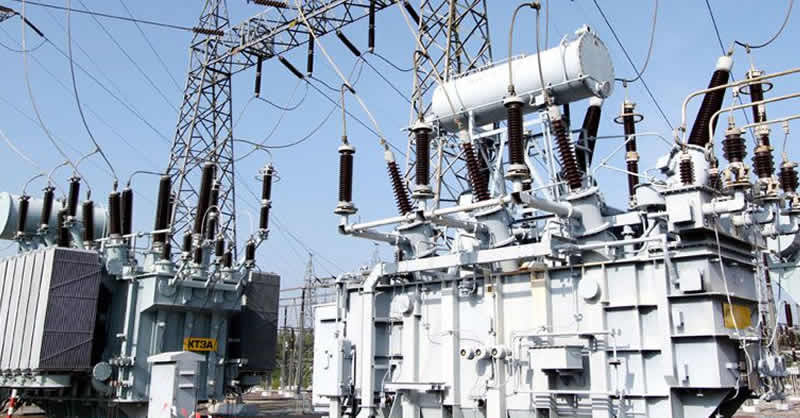
The Transmission Company of Nigeria (TCN) operates a fragile grid infrastructure that struggles to wheel more than 5,000MW reliably. Attempts to push beyond this threshold frequently result in grid disturbances or collapses.
3. Persistent Grid Collapses
Nigeria’s national grid has suffered repeated collapses—some partial, others total—plunging entire regions into darkness.
Each collapse reinforces public scepticism about government promises and highlights the fragility of the system.
4. Distribution Inefficiencies
Electricity distribution companies (DisCos) face their own challenges, including:
- Aging infrastructure
- Energy theft
- Poor metering systems
- Revenue collection gaps
As a result, even available power often fails to reach end users efficiently.
The Human Cost of Unreliable Power
For households and businesses, the consequences are immediate and costly.
Across cities like Lagos, Abuja, and Kano, the sound of generators remains constant. Small businesses spend a significant portion of their income on fuel, while larger firms factor energy costs into higher prices for goods and services.
“I spend more on diesel than rent,” said a small business owner in Ikeja. “Public power is too unreliable to depend on.”
This reality continues to stifle economic growth, discourage investment, and widen inequality.
Tariffs Up, Supply Uncertain
Ironically, the period following Adelabu’s promise also saw rising electricity tariffs in some bands, particularly for customers classified under higher service categories.
The government argued that tariff adjustments were necessary to attract investment and improve service delivery.
But for many Nigerians, higher bills without corresponding improvement in supply have only deepened frustration.
Government Response: Progress or Public Relations?
The Ministry of Power maintains that progress is being made.
Officials point to incremental improvements in generation capacity, ongoing reforms, and efforts to address gas supply issues. There are also plans to expand transmission infrastructure and integrate renewable energy into the grid.
The President’s administration has repeatedly emphasised its commitment to fixing the power sector as a cornerstone of economic reform.
However, critics argue that these efforts remain too slow—and too familiar.
“We’ve heard reform plans for decades,” said an energy policy expert. “The real issue is execution.”
A Pattern of Unfulfilled Promises
Adelabu’s 6,000MW pledge is only the latest in a long history of ambitious targets.
From the privatisation of the power sector in 2013 to multiple roadmaps and intervention programs, Nigeria’s electricity story has been marked by bold announcements and limited delivery.
The gap between policy and performance continues to define the sector.
What Needs to Change?
Experts say meaningful progress will require more than targets and timelines.
Key priorities include:
- Comprehensive grid modernisation
- Cost-reflective but transparent pricing
- Improved governance and accountability
- Investment in renewable and decentralised energy
- Stronger enforcement against energy theft and vandalism
Without addressing these fundamentals, new promises may continue to follow the same trajectory as old ones.
Conclusion: Waiting in the Dark
When Adelabu promised that “the lights would come on,” Nigerians listened—some hopeful, others sceptical.
Today, that scepticism appears justified.
While progress has been made in pockets, the broader reality remains unchanged for millions who still rely on generators and endure daily blackouts.
The question is no longer whether Nigeria can generate 6,000MW.
It is whether the country can finally build a power system that works—consistently, reliably, and for everyone.
Until then, the lights remain uncertain.