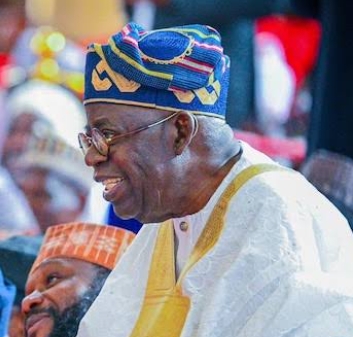
President Tinubu: Who Will Tell the President the Truth?
Newsmediang editorial

Nearly three years into the administration of President Bola Ahmed Tinubu, many Nigerians are asking a painful but necessary question: Who will tell the President the truth?

The truth is not what political appointees tell him in briefing rooms. It is not what party loyalists say at political gatherings. It is not what government spokespersons repeat at press conferences. The truth is what millions of Nigerians experience daily in markets, homes, hospitals, schools, farms, and workplaces across the country.
The reality is stark: life has become increasingly difficult for the average Nigerian.

The removal of fuel subsidy, the floating of the naira, and other economic reforms were presented as tough but necessary decisions to rescue the economy. While many economists acknowledged the need for reforms, Nigerians expected government to simultaneously implement effective measures to cushion the impact on citizens. That expectation remains largely unmet.
Today, food prices have reached unprecedented levels. Families that once managed three meals a day now struggle to afford one. Transportation costs continue to rise. Rent has become unbearable in many urban centres. Small businesses are folding under the weight of inflation, high energy costs, and reduced consumer purchasing power.
Official statistics may point to economic adjustments and projections of future growth, but statistics do not buy food. Figures do not pay school fees. Economic theories do not put medicine on hospital shelves.
What Nigerians need is evidence that the sacrifices they are making today will produce tangible improvements tomorrow. Unfortunately, many citizens are yet to see that promise reflected in their daily lives.
This is not a call for abandoning reforms. Rather, it is a call for honesty, empathy, and urgency. Government must acknowledge the suffering of the people and intensify efforts to reduce the burden. Job creation, support for local production, targeted social interventions, improved security, and policies that directly impact household welfare should become immediate priorities.
The danger of surrounding leadership with praise singers is that leaders become insulated from reality. History has repeatedly shown that governments perform best when they listen to criticism, engage opposing views, and remain connected to the people they serve.
President Tinubu needs advisers who will speak truth rather than convenience. He needs feedback from farmers struggling with production costs, traders battling inflation, manufacturers facing foreign exchange challenges, and ordinary citizens whose incomes have been eroded by rising prices.
Yet the economic hardship is only one side of the crisis confronting Nigerians.
Across many parts of the country, insecurity continues to cast a dark shadow over national life. Communities live in fear of armed attacks. Farmers are afraid to cultivate their lands. Highways that should facilitate commerce and national integration have become corridors of anxiety and danger.
The continued killings of innocent Nigerians by bandits, terrorists, kidnappers, and other criminal elements raise troubling questions about the effectiveness of the nation’s security architecture. Every life lost represents a family shattered, a community traumatized, and a nation diminished.
Particularly disturbing is the growing trend of attacks on educational institutions. School abductions, once considered isolated incidents, have become recurring tragedies. Students who should be focused on learning now find themselves vulnerable to criminals seeking ransom and notoriety. Parents send their children to school with fear in their hearts, uncertain whether they will return safely.
Education should be a pathway to opportunity, not a journey into danger.
While government officials frequently assure Nigerians that security agencies are making progress, the persistence of violent attacks suggests that much more remains to be done. Citizens judge security not by official statements but by their ability to travel safely, sleep peacefully, and conduct their daily activities without fear.
A government’s first responsibility is the protection of lives and property. When citizens feel unsafe in their homes, schools, farms, highways, and places of worship, confidence in governance begins to erode.
President Tinubu must hear the concerns of ordinary Nigerians. He must hear from families displaced by violence, parents worried about school safety, business owners crippled by insecurity, and communities mourning loved ones lost to senseless attacks.
The challenge before the administration is not simply to formulate policies but to deliver measurable results that improve the lives of citizens. Economic reforms must translate into lower living costs. Security initiatives must result in safer communities. Promises must become realities.
Nigeria possesses enormous potential, but potential alone cannot feed the hungry, protect the vulnerable, or comfort grieving families.
The truth the President needs to hear is straightforward: Nigerians want security. Nigerians want affordable living. Nigerians want functioning schools, safe communities, and a government that responds effectively to their struggles.
Democracy thrives when leaders hear not only applause but also concern. Leadership is ultimately judged not by intentions or speeches, but by outcomes.
Until citizens can feel safer, live better, and look to the future with confidence, the question will continue to resonate across the nation:
Who will tell the President the truth?