


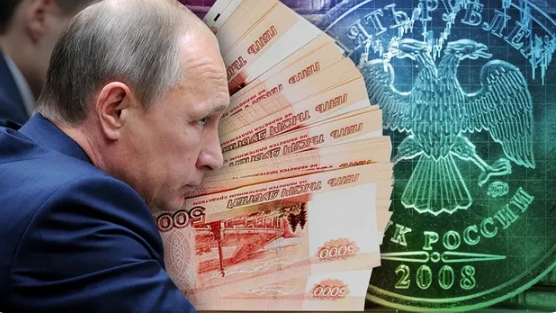
Putin’s War Comes Home: Russia Raises Taxes Again as Putin Turns to Citizens and Businesses to Fund Ukraine War

Russia has approved another round of tax increases as the Kremlin struggles to finance its nearly five-year war against Ukraine, placing additional pressure on businesses, investors and ordinary consumers.

Russia’s financial burden from the war in Ukraine is increasingly being felt beyond the battlefield, with President Vladimir Putin’s government turning to additional taxation to generate revenue for rising military expenditure.
The Russian State Duma, the country’s lower parliamentary chamber, on Tuesday, November 24, approved a 2027–2029 budget alongside new tax measures designed to strengthen government revenue.

Under the proposed budget, Russia plans to spend approximately 17.15 trillion roubles ($208.9 billion) on national defence in 2027, representing a significant increase from the 12.93 trillion roubles allocated for 2026.
The new tax measures include a windfall profits tax of between 20 and 30 per cent on certain mining companies, particularly those benefiting from higher global commodity prices.
The government also plans to increase taxation on income from investments, dividends, bank interest and property sales, introducing rates ranging from 13 to 22 per cent.
Additionally, foreign online purchases valued below €200 will attract a 22 per cent value-added tax (VAT), alongside a 100-rouble charge per parcel from January 2027.
The measures are expected to provide the government with additional domestic revenue as it faces mounting financial demands from the prolonged conflict.
Russia’s economic pressure deepens
The latest tax increases come amid growing concerns about Russia’s economic outlook.
Heavy military expenditure, sluggish economic growth, Western sanctions, labour shortages and high borrowing costs have contributed to pressure on government finances.
According to reports by the Associated Press, Russia’s budget deficit has exceeded earlier projections, forcing the government to explore additional revenue sources.
The country’s increasing dependence on military-related industries has also raised concerns about the balance between defence spending and investment in civilian economic development.
Economist Chris Weafer, chief executive of Macro-Advisory Ltd, previously told the Associated Press that Russia could finance its budget deficit through 2027 and possibly 2028, but warned that doing so would come at the expense of households and businesses.
Small businesses and households face higher costs
The new tax measures add to an already difficult operating environment for Russian businesses.
Earlier tax reforms increased the VAT rate from 20 to 22 per cent in 2026 and expanded the number of small businesses exposed to VAT obligations.
A report by The Bell indicated that nearly one-third of Russian small business owners had considered reducing operations or shutting down because of the tax burden.
For ordinary citizens, higher taxes on investment income and additional charges on imported online purchases could further increase household expenses.
The development highlights how the financial consequences of the Ukraine war are extending into everyday economic activities across Russia.
How long can Russia sustain the financial burden?
Although the latest measures provide the Kremlin with additional revenue, they also expose the growing challenge of sustaining elevated military expenditure while maintaining economic stability.
Russia’s government maintains that the budget will support national defence, veterans and social programmes.
However, the increasing allocation of public resources to military priorities raises questions about the funding available for infrastructure, civilian industries and other domestic development programmes.
The battlefield remains in Ukraine, but the economic consequences of the conflict are increasingly being felt inside Russia.
How long Moscow can maintain this level of military spending without placing greater pressure on businesses, households and long-term economic growth remains a major question.