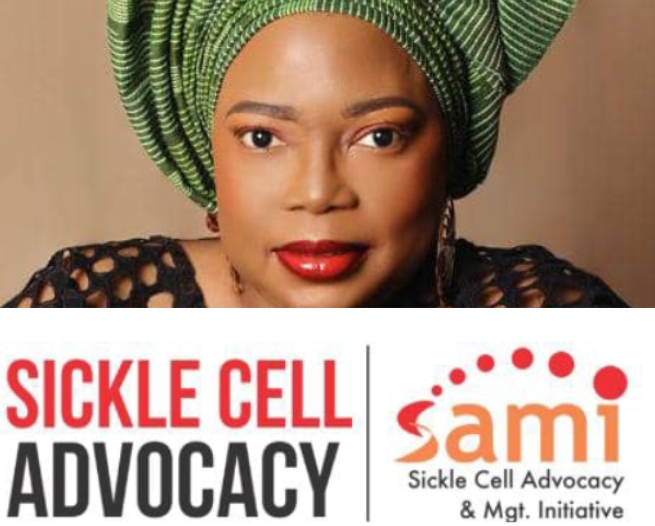
SAMI @ 18: From One Warrior to Thousands: How Toyin Adesola Built a Lasting Legacy
By ‘Yomi Oyelami

Eighteen years ago, Toyin Ibidunni Adesola planted a seed that many believed would struggle to survive. Battling sickle cell disorder herself, she chose not to allow her personal pain define her life. Instead, she transformed it into a mission of hope for thousands of others.

Today, that seed has blossomed into the Sickle Cell Advocacy and Management Initiative (SAMI)—one of Nigeria’s most impactful organisations dedicated to supporting people living with sickle cell disorder. As the organisation celebrates its 18th anniversary, it stands not merely as another non-governmental organisation but as the enduring legacy of a woman affectionately remembered as the “Sickle Cell General.”
For those who knew Toyin Adesola, her life’s timing always seemed symbolic. Born in September, the globally recognised Sickle Cell Awareness Month, and celebrated every June around World Sickle Cell Day, her journey reflected a life seemingly destined for advocacy.

When she founded SAMI in 2008, she was taking a bold step at enormous personal risk. Resources were scarce, awareness about sickle cell remained poor, and healthcare support for many warriors was almost non-existent. Yet she believed no one living with the condition should be denied the opportunity to live with dignity, receive quality healthcare or pursue their dreams.
From supporting just one beneficiary at inception, SAMI has evolved into a lifeline for thousands of individuals and families across Nigeria.
Its flagship Xtracare Free Medical Clinic has become one of the organisation’s most remarkable interventions. Introduced in 2014, the clinic operated every month without interruption for an entire decade, providing free medications and healthcare support to sickle cell warriors who could not otherwise afford treatment.
Even during the COVID-19 lockdown, when many services came to a halt, SAMI continued reaching beneficiaries with essential medications, ensuring that the pandemic did not become another burden for those already battling a lifelong health condition.
Although economic realities have forced the programme to adopt a periodic schedule, the organisation continues to ensure beneficiaries receive medications sufficient to last until subsequent clinics.
Recognising that many medical emergencies required more than periodic intervention, Toyin launched the Adopt-A-Warrior Project in 2019. Through the initiative, vulnerable sickle cell warriors are connected with sponsors who fund comprehensive private health insurance.
The impact has been profound. More than 100 beneficiaries have undergone surgeries, blood transfusions, Caesarean sections, diagnostic investigations and emergency treatments without worrying about hospital bills.
Yet healthcare was only one aspect of Toyin’s vision.
She understood that ignorance remained one of the greatest enemies confronting people living with sickle cell disorder. Determined to change public perception, she pioneered the now-famous Red Umbrella Walk, bringing together thousands of Nigerians every June 19 to commemorate World Sickle Cell Day and advocate for improved healthcare policies.
What started as a SAMI initiative has since become an annual tradition embraced by the Coalition of Sickle Cell NGOs across Nigeria.
Her passion for awareness also found expression on the airwaves.
In 2018, she launched “Touch A Cell with Toyin and the Gang,” Nigeria’s first weekly radio programme dedicated entirely to sickle cell education and advocacy. The programme aired successfully on Eko FM and Star FM before evolving into “Touch A Cell Lori Afefe” on Bond FM, extending vital health information to Yoruba-speaking audiences.
SAMI’s innovative programmes continued to expand. The organisation introduced the Touch A Cell Danceathon, using dance to drive awareness among young people; the Positive and Wellness Summit, which encouraged conversations around chronic illnesses and mental wellbeing; the Better You Health Hub, designed to educate schools and professional groups; and youth empowerment initiatives through Club Still Standing, inspiring sickle cell warriors to become leaders rather than victims of circumstance.
However, those who worked closely with Toyin insist that her greatest legacy cannot be measured by statistics alone.
Behind every project was a philosophy rooted in three enduring values—faith, compassion and audacity.
Her audacity challenged every stereotype surrounding sickle cell disorder.
She constantly reminded warriors that illness should never become an excuse for abandoning ambition. Her message remained unwavering: where others succeed, you too can succeed.
That belief shaped SAMI’s culture, where a lean team—mostly comprising people living with sickle cell disorder themselves—consistently delivered programmes that many larger organisations would struggle to execute.
Compassion was equally central to her leadership.
For Toyin, helping people meant more than writing cheques or distributing medication. It meant building relationships, creating a family and walking alongside beneficiaries through their life’s challenges. Everyone who encountered SAMI experienced an organisation where warmth, empathy and genuine concern remained as important as medical intervention.
Then there was faith.
Although SAMI welcomes people of every religious background, Toyin often described it as an organisation deeply rooted in faith rather than religion. That faith continues to sustain the organisation through seasons of uncertainty and transition.
As SAMI celebrates 18 years of service, many naturally ask what the future holds.
For those who carry Toyin Adesola’s vision forward, the answer lies not in looking back with nostalgia but in ensuring the organisation continues to thrive.
Supporting SAMI today is more than donating to a non-profit. It is preserving an institution that has restored hope, saved lives and changed countless futures.
Legacies survive because people choose to protect them.
As the organisation enters adulthood at 18, perhaps there can be no greater tribute to Toyin Ibidunni Adesola than ensuring that the work she began continues to touch lives for generations to come.
That would be the most fitting way to honour the woman whose compassion, courage and unwavering commitment earned her the enduring title—the Sickle Cell General.