The Spy Factor: Did Intelligence Leaks Enable the Leadership Strike? As Iran Media Confirmed Senior officials were killed
As Iranian state outlets released the names of senior officials killed in the recent strikes, attention has shifted from the scale of the attack to a deeper question: how were so many high-ranking figures reportedly located and targeted at once?

Iranian authorities have confirmed the death of, declaring a 40-day national mourning period. The reported operation — attributed to coordinated U.S. and Israeli action — has triggered one of the most serious regional escalations in years.

Beyond the military dimension, analysts are now examining claims of deep intelligence penetration inside Iran’s leadership structure.
Intelligence Penetration: Claims and Allegations
Commentary in regional media and political circles suggests that Israel’s intelligence service, , may have had access to highly sensitive internal information.

While none of these claims has been independently verified, several possibilities are being discussed by security analysts:
- Human intelligence (HUMINT): Insiders or informants within Iran’s security establishment.
- Signals intelligence (SIGINT): Advanced tracking, communications interception, or embedded surveillance tools.
- Operational security failures: Senior officials reportedly gathered in limited locations during heightened tensions.
Some reports allege that operatives were operating unusually close to top leadership circles, though these accounts remain unconfirmed. If accurate, such access would suggest systemic vulnerabilities rather than isolated breaches.
What Has Been Officially Confirmed
Iranian state media confirmed:
- The death of.
- A 40-day national mourning period.
- Ongoing retaliatory military exchanges involving Iran, the United States, and Israel.
Other casualty reports continue to evolve, with some international outlets listing additional senior military and intelligence officials among the dead.
Reported Senior Figures Killed
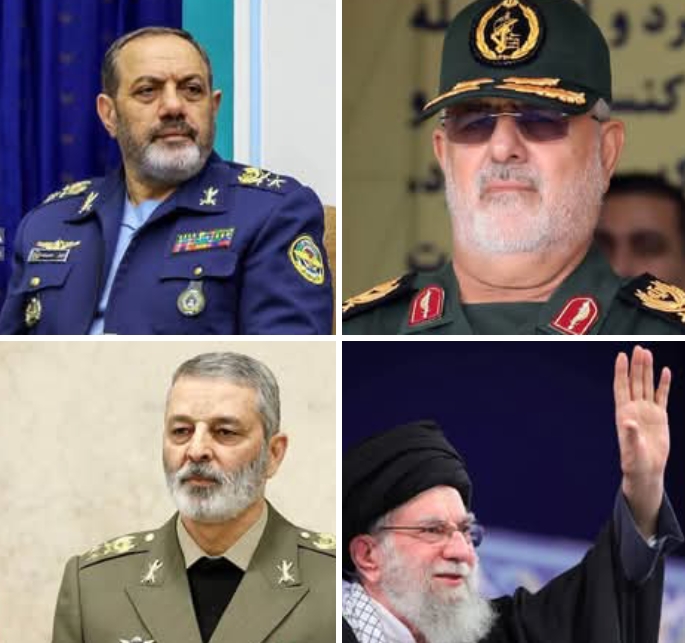
According to multiple international reports, those listed as killed include:
Ali Khamenei — Supreme Leader of Iran
Ali Shamkhani — Senior adviser and Defence Council figure
Mohammad Pakpour — Commander, IRGC Ground Forces
Aziz Nasirzadeh — Minister of Defence
Abdolrahim Mousavi — Commander-in-Chief of the Iranian Army
Additional names have been cited in various reports, though confirmations differ across outlets.
Strategic Implications
If infiltration played a role, the impact extends beyond immediate battlefield losses. Deep intelligence penetration can:
- Undermine trust within security institutions.
- Trigger internal purges and counterintelligence crackdowns.
- Disrupt command continuity during crisis response.
Historically, intelligence breakthroughs have reshaped conflicts by weakening leadership cohesion rather than frontline capacity.
At this stage, independent verification of many operational details remains limited. What is clear is that the reported scale of leadership losses — if confirmed — would represent a significant structural shock to Iran’s power hierarchy.
As the situation develops, casualty lists and official statements are likely to be updated, and competing narratives about how the operation succeeded will continue to emerge.