
Tinubu Promised Stable Electricity in 2023: Why Are Nigerians Still in Darkness? – APC Explains

NewsMediang.com | Politics | Power Sector

The All Progressives Congress (APC) Presidential Campaign Council has defended President Bola Ahmed Tinubu’s record in the electricity sector, insisting that his 2023 campaign promise to end estimated billing and improve electricity supply must be assessed alongside the administration’s broader reforms and the challenges inherited by the government.
In a statement issued on November 1, 2026, and signed by Dele Alake, spokesperson of the APC Presidential Campaign Council, the party said recent public discussions had quoted Tinubu’s campaign promise without including an important qualification he made during his engagement with members of the Organised Private Sector (OPS) in Lagos ahead of the 2023 general election.
At the meeting, Tinubu had pledged to address Nigeria’s longstanding electricity challenges, particularly estimated billing, unreliable power supply and the structural problems affecting the sector.
His exact words were:
“Whichever way, by all means necessary, you will have electricity, and you will not pay for estimated bills anymore. A promise made will be a promise kept. If I don’t keep the promise and I come for a second term, don’t vote for me, unless I give you adequate reasons why I couldn’t deliver.”
According to the APC campaign council, the concluding part of the statement is important in assessing the President’s commitment because he had also undertaken to explain any shortcomings before seeking another mandate from Nigerians.
Electricity Act: Tinubu opens sector to state participation
Alake identified the signing of the Electricity Act, 2023, as one of the administration’s major interventions in the power sector.
President Tinubu signed the legislation on June 6, 2023, eight days after assuming office. The law decentralised Nigeria’s electricity market by empowering state governments to establish regulatory authorities and develop electricity markets within their jurisdictions.
The reform has enabled states to participate more actively in electricity generation, transmission and distribution, while creating opportunities for private-sector investment.
According to Alake, states including Lagos, Enugu, Abia, Ekiti, Oyo, Kaduna and Niger have taken steps to establish their electricity regulatory institutions and attract investments.
The Nigerian Electricity Regulatory Commission (NERC) reported in May 2026 that 15 states had transitioned to regulating their respective electricity markets under the new framework. NERC +1
Presidential Metering Initiative targets estimated billing
The APC spokesperson also highlighted the Presidential Metering Initiative (PMI), introduced to address Nigeria’s electricity metering deficit.
He said the initiative was designed to close a metering gap estimated at more than seven million customers, adding that over 1.5 million electricity customers had been metered under the programme in the last three years.
The initiative, approved in November 2023, targets the deployment of five million smart meters by 2027.
Available NERC figures show that Nigeria had 7,743,839 metered electricity customers out of 12,589,486 active customers as of June 2026, representing a national metering rate of 61.51 per cent.
The administration has also introduced programmes aimed at developing the technical workforce required to accelerate meter installation.
FG raises N1.23 trillion to address electricity sector debts
Alake said the Tinubu administration had also taken steps to address accumulated financial obligations affecting electricity generation companies (GenCos) and gas suppliers.
He disclosed that the government established a N4 trillion bond programme to settle verified legacy debts owed to power generation companies and gas companies.
The programme is intended to improve liquidity across the electricity market, strengthen operators’ financial positions and encourage fresh investments in power generation.
Available reports show that the first and second bond issuances raised approximately N1.23 trillion, comprising N501.02 billion from the first issuance and N728.98 billion from the second
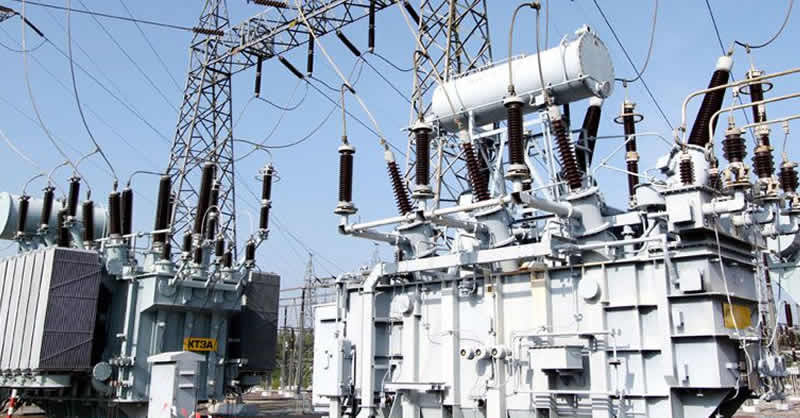
According to Alake, the intervention is already encouraging investment by electricity operators, citing Geregu Power Plc’s announcement of investments in new power transformers to improve operations at its Geregu 1 Power Plant.
He added that other companies were undertaking similar investments.
Tariff reforms and protection for low-income households
The APC spokesperson further defended the administration’s electricity tariff adjustments, explaining that improved commercial viability was necessary to attract investments and sustain operations across the power value chain.
He said the government had sought to balance the need for cost-reflective tariffs with the affordability of electricity for ordinary Nigerians.
The administration’s approach includes different service-based tariff bands and measures intended to protect low-income consumers from the full impact of electricity market reforms.
However, the Service-Based Tariff framework predates the Tinubu administration. NERC introduced the framework in November 2020, with customers classified according to the minimum hours of electricity supply they receive.
Transmission infrastructure receives attention
Alake also highlighted ongoing efforts to modernise Nigeria’s transmission infrastructure, including projects under the Presidential Power Initiative (PPI), which was initiated by the administration of former President Muhammadu Buhari.
He said Tinubu reviewed the existing arrangements and signed an acceleration agreement with the German partners in December 2023 to speed up the implementation of projects aimed at strengthening the national transmission grid.
According to him, the Federal Executive Council approved the first batch of five Transmission Company of Nigeria (TCN) substations for rehabilitation and upgrading in December 2024.
He added that the projects were at various stages of completion.
The spokesperson further disclosed that the Federal Executive Council approved another batch of projects in June 2026 involving the construction of eight new substations and the upgrading of four existing facilities in strategic locations.
He explained that electricity infrastructure projects require specialised equipment and lengthy procurement processes, making immediate completion unrealistic.
Solar power, rural electrification and grid expansion
The APC also cited interventions by the Rural Electrification Agency (REA), which has connected universities, hospitals and rural communities to solar electricity solutions.
Other projects identified by Alake include plans to modernise the Osogbo Grid Control Centre, which he said was built more than 60 years ago, and develop an East-West super grid to strengthen electricity transmission across the country.
He maintained that these investments were part of a broader strategy to address structural weaknesses in Nigeria’s electricity infrastructure.
Tinubu to present electricity sector scorecard ahead of second term bid
Alake acknowledged that resolving Nigeria’s electricity crisis remained an ongoing challenge but insisted that President Tinubu had not abandoned his campaign commitment.
He said the administration remained focused on addressing the financial, regulatory, commercial and infrastructure-related problems affecting the power sector.
“As he seeks Nigerians’ mandate for a second term in office, he will proudly present his scorecard in the power sector and clearly tell Nigerians what remains to be done,” Alake stated.
The statement comes amid continuing public concerns over electricity tariffs, unreliable supply, estimated billing and the financial sustainability of Nigeria’s power sector.
While the administration has introduced regulatory reforms, metering initiatives, debt-settlement programmes and transmission infrastructure projects, the ultimate assessment of its 2023 electricity pledge will depend on measurable improvements in electricity availability, affordability, metering coverage and service delivery to households and businesses.
For millions of Nigerians, the central question remains whether these interventions will translate into more reliable electricity and an end to the burden of estimated billing.