Trump Threatens Iran With ‘Severe Consequences’ As US Deploys Thousands Of Troops To Middle East
By NewsMediaNG

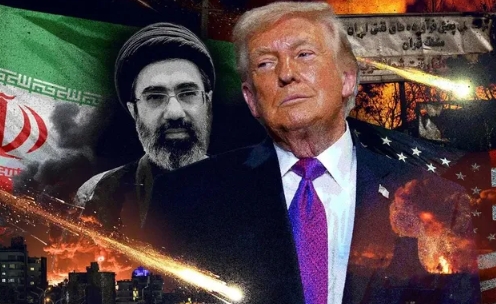
The United States has intensified military pressure on Iran, with thousands of additional American troops and a third aircraft carrier being deployed to the Middle East as President Donald Trump weighs the possibility of renewed strikes against Tehran.

The latest military buildup comes amid mounting tensions between Washington and Tehran and follows a warning from Trump that Iran must agree to a proposed deal or face what he described as severe consequences.
The deployment has raised fresh concerns that the confrontation could move beyond diplomatic pressure and develop into another major military escalation in the Middle East.

The additional American forces reportedly include thousands of sailors and Marines, while the arrival of another aircraft carrier would significantly expand Washington’s naval capabilities in the region.
The military posture gives the Trump administration additional options should negotiations with Iran fail, while simultaneously sending a strong signal to Tehran that Washington is prepared to use military force.
Trump’s warning has therefore taken on greater significance because it is being accompanied by a substantial military buildup rather than diplomatic statements alone.
The US president has repeatedly maintained that Iran must accept the proposed terms or face military consequences. However, the precise scope of any potential new strikes and the conditions that could trigger them remain uncertain.
Pressure Or Preparation For War?
The deployment can be viewed as part of Washington’s effort to increase pressure on Tehran ahead of negotiations.
By moving additional forces into the region, the United States is demonstrating that military action remains an option if diplomacy fails.
At the same time, the buildup creates a more dangerous environment in which an attack, miscalculation or confrontation involving US and Iranian forces could rapidly escalate.
The presence of multiple US carrier groups, combat aircraft, Marines and other military assets would give Washington significant capabilities across the region.
However, the deployment itself does not necessarily mean that a new American attack on Iran is imminent.
It could also be intended to strengthen the US negotiating position and persuade Iranian leaders that refusing an agreement could carry serious military and economic consequences.
Iran Faces Difficult Choices
For Tehran, the latest American moves create a difficult strategic situation.
Accepting Washington’s proposed deal could involve concessions that Iran considers unacceptable, while rejecting it could increase the possibility of renewed US military action.
Iranian officials have continued to reject what they regard as excessive American demands and have maintained their own positions on the issues at the centre of the confrontation.
The situation therefore remains heavily dependent on whether Washington and Tehran can find enough common ground to keep negotiations alive.
Risk Of Wider Regional Conflict
Beyond Iran and the United States, the consequences of another military confrontation could extend across the Middle East.
A major escalation could involve US bases and military personnel in the region, Iranian forces and allied armed groups, as well as critical shipping and energy infrastructure.
One of the biggest concerns is the Strait of Hormuz, a vital route for global oil shipments.
Any disruption to shipping through the waterway could send crude oil prices sharply higher and increase transportation and energy costs worldwide.
For countries whose economies depend heavily on crude oil exports, including Nigeria, developments in the Gulf could also have significant economic implications.
Higher international oil prices could increase government revenues for oil-producing countries, but prolonged instability could simultaneously raise import, transportation and inflationary pressures.
A Dangerous Moment For Diplomacy
Trump’s latest warning and the accompanying US military buildup have placed diplomacy under increasing pressure.
The central question is whether the deployment will convince Tehran to accept an agreement or instead deepen Iranian resistance and increase the possibility of confrontation.
For now, the United States appears to be keeping both options open: diplomacy backed by the threat of military force.
But as more American forces enter the region, the margin for miscalculation becomes narrower.
The immediate challenge for Washington and Tehran is therefore not only reaching an agreement, but preventing the military buildup surrounding their negotiations from becoming the trigger for a much wider conflict.