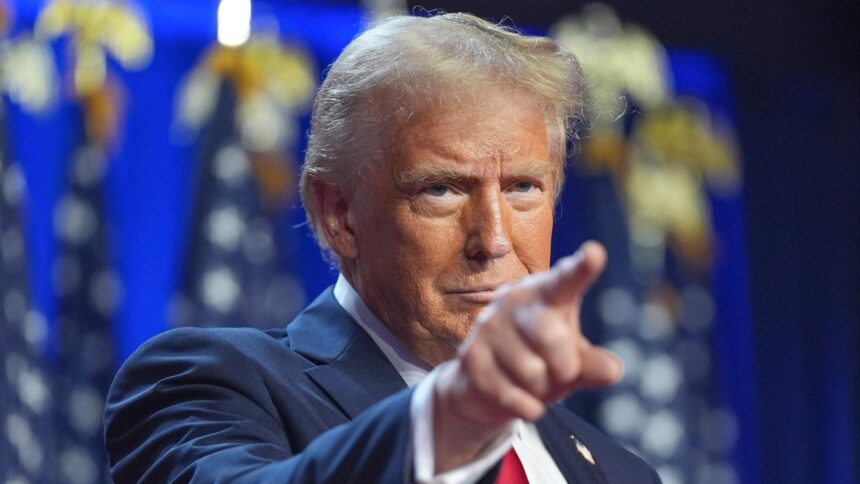
Trump Weighs NATO Pullout, Sparks Debate on Global Security Future

Fresh comments by U.S. President Donald Trump suggesting he would “strongly consider” withdrawing the United States from NATO have stirred renewed debate within global security circles, even as officials on both sides of the Atlantic caution that no formal process has been initiated.

Trump’s remarks, delivered in the context of ongoing tensions in the Middle East, reflect longstanding concerns about what he has repeatedly described as unequal burden-sharing within the alliance. He argued that the United States has carried a disproportionate share of NATO’s financial and military responsibilities, while some European members have been reluctant to support U.S.-aligned security initiatives beyond Europe’s immediate borders.
While Trump framed the issue around allied responses to escalating pressures involving Iran, analysts note that NATO’s mandate is primarily focused on collective defense within the Euro-Atlantic region. Participation in out-of-area operations—particularly in the Middle East—remains at the discretion of individual member states, rather than a binding alliance obligation.

Security experts say the remarks should be viewed in the broader context of Trump’s long-running critique of NATO, dating back to his presidency, when he pressed allies to meet agreed defense spending targets of at least two percent of GDP. Several European countries have since increased their military budgets, though gaps remain.
Across Europe, policymakers have responded cautiously but with concern. Leaders including UK Prime Minister Keir Starmer and French President Emmanuel Macron have in the past emphasized the strategic importance of the transatlantic alliance, warning that any weakening of U.S. commitment could have far-reaching implications for regional and global stability.
Diplomatic sources indicate that discussions around NATO reform—particularly on burden-sharing and operational flexibility—are ongoing within alliance structures. However, there is no official confirmation of any U.S. plan to withdraw, a move that would face significant legal and political hurdles, including the need for Congressional involvement.
Analysts warn that a U.S. exit from NATO, if ever pursued, would mark a fundamental shift in the global security architecture established after World War II. The alliance’s cornerstone principle of collective defense—enshrined in Article 5—has long been seen as a key deterrent against external aggression.
At the same time, some policy observers note a growing U.S. preference in certain quarters for more flexible security arrangements, including ad hoc coalitions and bilateral partnerships, particularly in regions such as the Middle East.
With geopolitical tensions rising and global energy markets under pressure, the future of NATO—and the extent of U.S. commitment to it—remains a critical issue to watch.
For now, officials stress that the alliance remains intact, even as debates over its evolution continue to intensify.