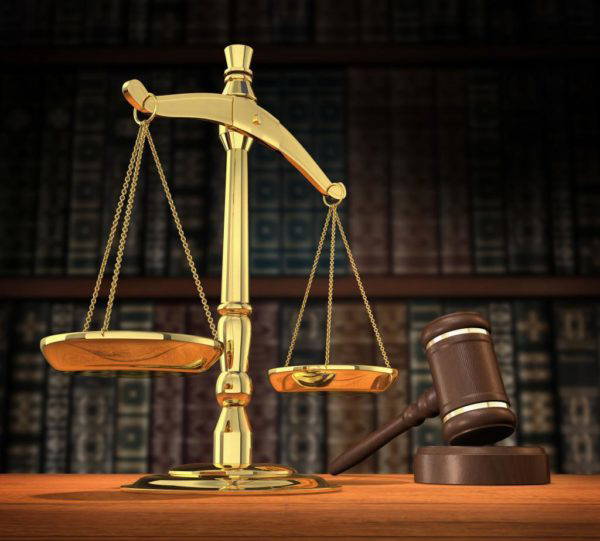
Truth vs Evidence: How Judges Determine Cases in Court

The law does not deliberately place evidence above truth. Rather, courts use evidence as the means of discovering truth. Since judges cannot personally witness past events, they must rely on admissible evidence to determine what is most likely true.

A more precise way to state the principle is:
In law, the truth that can be proven is the truth a court can act upon.
There are also situations where a person may be telling the truth yet still lose a case because:

- The evidence is insufficient.
- The evidence is inadmissible.
- The burden of proof was not met.
- Key witnesses are unavailable.
- Documents or records were not preserved.
This is reflected in the legal maxim:
“He who asserts must prove.”
In civil cases, the court generally decides on the “balance of probabilities”—which version is more likely true. In criminal cases, guilt must be proved “beyond reasonable doubt.” Mere belief, suspicion, or personal conviction is not enough.
The example of the ₦2 million loan illustrates this perfectly. Without documentation, witnesses, transfer records, messages, or other corroborating evidence, the court is left with one person’s word against anothers. The judge is not determining who is morally right but whether the claim has been legally established.
A common saying among lawyers is:
“Facts must be proved by evidence.”
So while many people say, “Evidence defeated the truth,” the legal reality is often that the truth was never adequately documented, preserved, or presented in a form the court could rely upon.
That is why prudent legal practice includes:
- Putting agreements in writing.
- Keeping receipts and records.
- Preserving electronic communications.
- Using witnesses where appropriate.
- Maintaining proper documentation of important transactions.
The strongest cases are not merely true—they are provable. Truth may exist independently, but a court can only deliver justice based on the evidence before it.