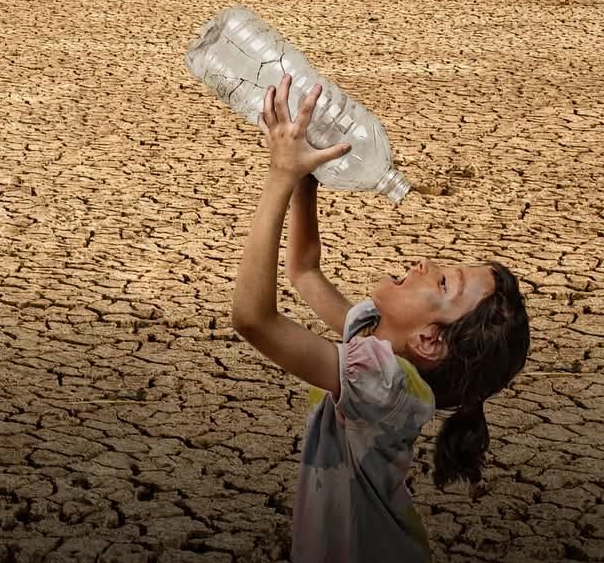
UN Declares World Has Entered Era of ‘Global Water Bankruptcy as Nearly 4 Billion people Face Water Scarcity

The United Nations University Institute for Water, Environment and Health (UNU-INWEH) has declared that the world has entered an era of “global water bankruptcy,” warning that growing pressure on freshwater resources is pushing many regions beyond the point of recovery.

In a newly released report, the institute said decades of over-extraction, ecosystem degradation, and the worsening impacts of climate change have left numerous river basins, aquifers, lakes, and wetlands unable to return to their historical levels of water availability.

The report describes global water bankruptcy as a post-crisis condition in which water systems have been depleted so severely that natural replenishment can no longer keep pace with human demand.
According to the findings, nearly four billion people currently experience severe water scarcity for at least one month every year, highlighting the growing strain on freshwater supplies worldwide.
The institute further warned that global demand for freshwater is projected to exceed available supply by 40 percent by 2030 if current consumption patterns continue, raising concerns about food security, public health, economic stability, and environmental sustainability.
Researchers noted that many of the world’s major lakes, rivers, and groundwater reserves have suffered significant declines due to excessive withdrawals for agriculture, industry, and urban development. Climate change, they added, is intensifying droughts, altering rainfall patterns, and reducing the reliability of water sources across many regions.
The report argues that traditional terms such as “water stress” and “water crisis” no longer adequately capture the severity of the challenge, as some ecosystems have already crossed critical thresholds from which recovery may be difficult or impossible.
UNU-INWEH called on governments, industries, and communities to adopt urgent and coordinated measures to improve water management, protect ecosystems, reduce waste, and invest in sustainable water infrastructure.
The institute stressed that without decisive action, water shortages could become a defining global challenge of the coming decades, affecting billions of people and increasing the risk of social, economic, and environmental disruptions worldwide.
The warning comes amid growing international concern over the state of global freshwater resources and increasing calls for stronger policies to ensure long-term water security for future generations.