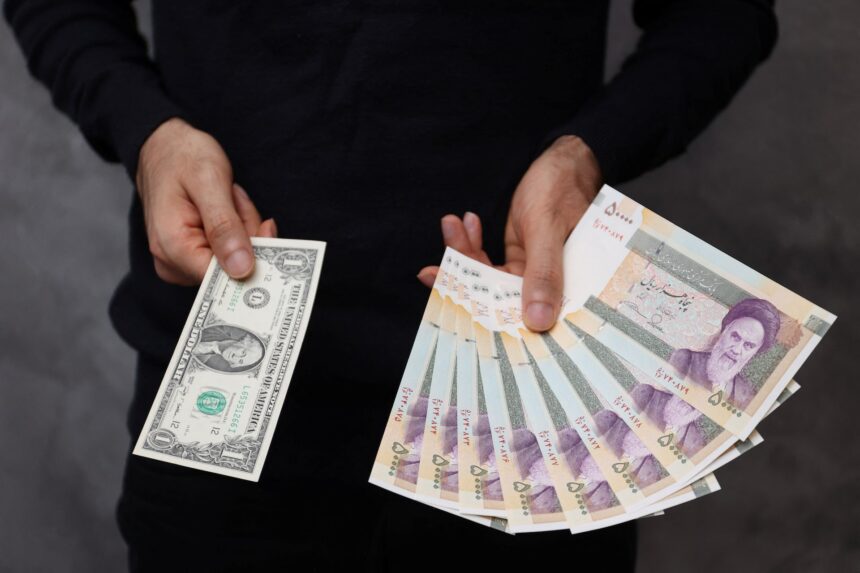
US Blockade Bites Hard as Iran’s Currency Collapses now exchanging for 1.8 million to the US dollar


Iran’s national currency has plunged to an unprecedented low, highlighting the deepening economic crisis facing the country amid ongoing geopolitical tensions and trade restrictions.

According to multiple reports, the Iranian rial dropped to around 1.8 million to the US dollar, marking its weakest level ever recorded on the open market.
The sharp decline has been rapid. Within just two days, the currency lost significant value as demand for foreign exchange surged, with traders and citizens scrambling for more stable currencies.
Blockade and War Pressure
The issue comes against the backdrop of a fragile ceasefire involving the United States and Israel following weeks of conflict that began in late February 2026.
Despite the ceasefire, the United States has maintained a naval blockade on Iranian ports, severely restricting the country’s ability to export oil—its primary source of foreign revenue.
The blockade has disrupted trade flows and limited access to hard currency, intensifying pressure on the already strained economy. Analysts say the restriction on oil exports has significantly reduced dollar inflows, accelerating the currency’s decline.
Inflation and Economic Decline
Iran’s economy had already been under severe strain long before the latest escalation. Years of sanctions, mismanagement, and high inflation had weakened purchasing power and reduced living standards.
Inflation is now estimated at over 60% year-on-year, further eroding household incomes and driving up the cost of essential goods such as food, fuel, and medicine.
Because many basic goods are imported and priced in dollars, the falling rial is expected to worsen inflation even further, creating a vicious cycle of rising prices and declining currency value.
Impact on Ordinary Citizens
For ordinary Iranians, the crisis is translating into soaring living costs and job losses. Reports indicate that factories have slowed or halted operations due to disrupted supply chains and a lack of raw materials.
Essential goods have become increasingly expensive, while shortages of fuel and imported products are worsening daily life. The economic shock has also raised concerns about growing poverty and potential social unrest.
Global Ripple Effects
The crisis is not confined to Iran alone. The blockade and reduced oil exports have pushed global oil prices sharply higher, contributing to inflationary pressures worldwide.
Financial markets have also reacted negatively, reflecting fears that prolonged instability in the region could disrupt global energy supplies and trade routes.
What Comes Next
Diplomatic efforts are ongoing, with mediation attempts aimed at stabilising the ceasefire and easing tensions. However, the continuation of the blockade suggests that economic pressure remains a key strategy.
Experts warn that without a significant breakthrough—either through sanctions relief or restored oil exports—the Iranian rial could face further depreciation, deepening one of the country’s worst economic crises in decades.