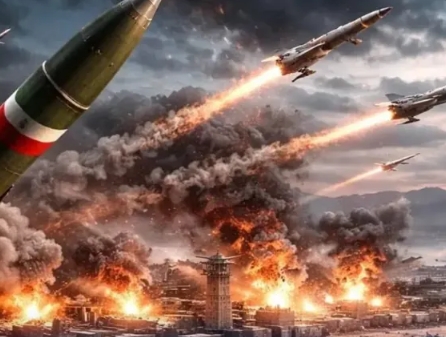
US Military Operations Against Iran Cost $37.5bn So Far – Pentagon Confirms


The United States has spent $37.5 billion on its ongoing military campaign against Iran, Defence Secretary Pete Hegseth disclosed on Tuesday, revealing that the cost of the conflict has risen by nearly $8 billion from the last public estimate.

Hegseth made the disclosure while testifying before the Senate Appropriations Committee, where he defended the Pentagon’s request for billions of dollars in additional funding to sustain military operations. According to him, the latest estimate includes projected operational costs through September 30, 2026.
The announcement comes as lawmakers intensify scrutiny over the financial burden of the war, which has already claimed the lives of several American service members and left more than 100 others injured. The Pentagon is seeking tens of billions of dollars in supplemental funding to replenish weapons stockpiles, maintain military readiness and continue operations in the Middle East.
The latest figure marks a sharp increase from the previous public estimate of about $29.5 billion, underscoring the escalating cost of one of the United States’ largest military engagements in recent years.
Genesis of the US-Iran War
The current conflict began in late February 2026 after the United States and Israel launched coordinated military strikes against Iran, with Washington accusing Tehran of posing an imminent threat through its missile programme, nuclear ambitions and attacks carried out by Iran-backed proxy groups against U.S. interests in the Middle East.
The Trump administration maintained that the operation aimed to destroy Iran’s ballistic missile capabilities, cripple its naval forces, prevent Tehran from acquiring nuclear weapons and weaken regional proxy networks. Iran responded with missile and drone attacks targeting U.S. military assets and allied countries, significantly expanding the conflict across the Middle East.
Since then, both sides have exchanged sustained military strikes, prompting concerns over regional stability, global oil supplies and the growing financial and human cost of the war. The conflict has also fuelled political divisions in Washington, with critics questioning the long-term strategy and mounting expenditure, while the administration insists the campaign is necessary for U.S. national security.