‘Votes Buying and Osun Election’ They Were Literally Selling Their Votes for a Pittance and Mess of Porridge
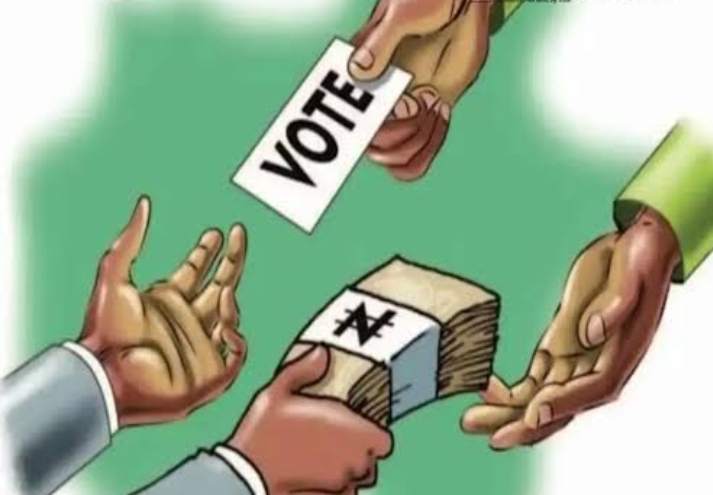
There is perhaps no more damning indictment of Nigeria’s democracy than the spectacle of citizens being reduced to bargaining chips on election day.
The unfolding allegations of vote buying during the Osun State governorship election are deeply troubling. Reports indicate that voters in several parts of the state were offered between ₦10,000 and ₦20,000 even up to ₦50,000 by agents of the APC and Accord Party, with allegations that the inducement began days before the election.

Some voters reportedly collected money from both sides. Others were allegedly asked to swear oaths or present their voter cards before receiving cash. In some locations, rice and other food items were also reportedly distributed as part of the inducement.

This is not democracy. It is the commodification of the people’s mandate.
But perhaps the most painful part of this sordid affair is not even the politicians offering the money. It is the desperate circumstances that make some citizens willing to sell a vote that should determine who governs them for the next four years.

When a voter accepts ₦10,000 or ₦20,000 to surrender the power to choose a governor, what does that money really represent?
A few bags of food. A few days of relief. Perhaps money for transport, school fees, medication or an urgent household need.
Then the money disappears.
The governor remains in office.
The roads remain bad. Jobs remain scarce. Schools remain underfunded. Hospitals remain overstretched. Electricity remains unreliable. The cost of living continues to rise.
The voter is left with the consequences long after the politician has recovered the money spent buying the vote.
That is why vote buying must not be dismissed as merely another feature of Nigerian elections.
It is an assault on democracy.
The irony is particularly painful: politicians who should be presenting credible programmes, defending their records and persuading citizens with ideas instead resort to treating the electorate as a marketplace.
And citizens who should be demanding accountability are sometimes forced by poverty and desperation to sell their most valuable political asset for a pittance and a mess of porridge.
The Electoral Act criminalises bribery and other forms of electoral inducement. The law prohibits corruptly giving or receiving money or other valuable consideration in exchange for votes.
Therefore, the response cannot end with newspaper headlines and social media outrage.
The relevant authorities must investigate credible allegations, identify the financiers and organisers and, where evidence establishes wrongdoing, prosecute those responsible.
At the same time, Nigerians must begin to ask a more uncomfortable question: Why has poverty become such a powerful weapon in our elections?
A hungry citizen is vulnerable to political manipulation.
A society where millions struggle to meet basic needs creates the perfect environment for politicians with deep pockets to purchase temporary loyalty.
This is why the fight against vote buying cannot be separated from the fight against poverty, unemployment, poor governance and institutional failure.
But citizens also have a responsibility.
₦20,000 should not determine who controls billions of naira in public resources.
A bag of rice should not determine who makes decisions affecting an entire generation.
A plate of food should not purchase four years of political power.
The people of Osun deserve better.
They deserve candidates who ask for their votes because of competence, character, policies and a credible vision for the state — not because they have enough cash to distribute at polling units.
And Nigeria deserves elections in which the poorest voter and the richest voter possess exactly the same political power: one vote.
If the allegations of widespread vote buying in Osun are established, this should not simply be another election scandal that disappears after the results are announced.
It should be a national wake-up call.
Because when poverty forces citizens to sell their votes, the real buyer is not merely purchasing a ballot.
He is purchasing the future.
And when that future is finally delivered, it is the same poor citizen who pays the price.
NewsMediaNG Editorial