When the World Is Advancing in Science and Technology, Why Is Nigeria Debating Arabic Education Integration?

By

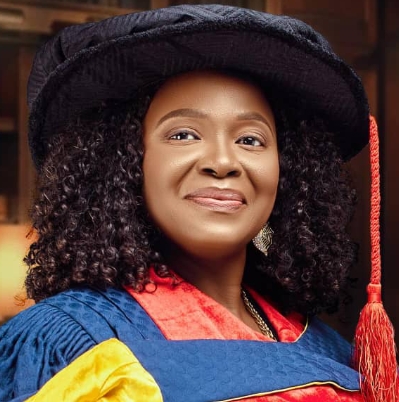
Professor Funmilayo Adesanya-Davies

Recent reports that Governor Bala Mohammed has advocated for the integration of Arabic education into Nigeria’s school system have generated considerable public debate. Whether this proposal is intended to strengthen linguistic diversity, improve cultural understanding, or expand educational opportunities, it deserves careful national scrutiny.
My immediate reaction is one of deep concern.
At a time when nations across the globe are investing massively in Artificial Intelligence, Robotics, Biotechnology, Quantum Computing, Renewable Energy, Aerospace Engineering, Cybersecurity, Space Exploration, Data Science, and Digital Innovation, Nigeria should be asking a different question: How do we prepare our children to compete in the twenty-first-century knowledge economy?
Instead, our national discourse appears increasingly occupied with issues that, in my opinion, do not directly address the urgent educational and developmental needs of millions of Nigerian children.
Countries such as China, Singapore, South Korea, Japan, India, the United States, Germany, and Finland are redesigning their educational systems around innovation, scientific research, digital literacy, entrepreneurship, and technological excellence. Their governments recognize that the future belongs to nations that produce inventors, scientists, engineers, software developers, medical researchers, and innovators.
Nigeria cannot afford to be left behind.
As a Professor of Applied Linguistics, I appreciate the value of languages. Every language carries history, culture, and identity. Arabic, like English, French, Chinese, Spanish, Portuguese, Yoruba, Hausa, Igbo, Efik, Tiv, and hundreds of Nigerian languages, has its academic importance.
However, language education should never overshadow the urgent need to strengthen Science, Technology, Engineering, and Mathematics (STEM). Our schools require better laboratories, modern libraries, qualified science teachers, reliable electricity, internet connectivity, digital devices, and functional classrooms.
Millions of Nigerian children remain out of school especially in Northern Nigeria – where Bala Mohammed comes from. In the country, many schools lack basic equipment like computers, furniture, etc. Teachers are poorly remunerated. Universities continue to suffer from inadequate funding, brain drain, and obsolete research facilities. These are the educational emergencies demanding immediate attention. Yet the likes of Gov Bala Mohammed are concerned with Islamic education. It’s so so disappointing.
The Constitution of the Federal Republic of Nigeria establishes Nigeria as a secular state that guarantees freedom of religion. Educational policy in public schools should therefore promote inclusiveness and avoid any perception of favouring one religious tradition over another. While the voluntary study of Arabic as a language is entirely legitimate, like any and every other language, proposals that could be interpreted as privileging one faith-based educational orientation in public institutions should be approached with caution and broad national consultation for heaven’s sake. Arabic language to further encourage banditry or what in times like this the nation!?
The world economy is changing rapidly. Artificial Intelligence is transforming industries. Automation is redefining employment. Digital economies are replacing traditional ones. Nations are competing through innovation rather than ideology.
Oh! No, Nigeria’s greatest resource is not crude oil as it’s generally believed. It is the intelligence of its young people and human capital development that is its best resource.
That intelligence must be nurtured through world-class education in science, technology, engineering, medicine, agriculture, environmental studies, artificial intelligence, and vocational skills that create jobs and stimulate economic growth.
Rather than debating educational priorities that may deepen existing religious sensitivities, governments at every level should focus on reducing learning poverty, expanding digital education, strengthening technical colleges, supporting research institutions, and equipping Nigerian youths with globally competitive skills, .
Our educational vision should prepare students not merely to pass examinations but to solve problems, invent new technologies, create industries, and compete successfully on the global stage.
History will remember those leaders who invested in knowledge, innovation, and human capital and not Governor Bala Mohammed advocating for the integration of Arabic education into Nigeria’s school system. The future will surely tell.
Nigeria deserves an educational revolution that prioritizes excellence, scientific advancement, critical thinking, technological innovation, and national unity.
The future belongs to nations that educate for tomorrow—not yesterday. One day, Northern Nigeria especially would regret the leadership of the likes of Governor Bala Mohammed advocating for the integration of Arabic education into the North and Nigeria’s school system as a whole.
Professor Funmilayo Adesanya-Davies
Professor of Applied Linguistics
Department of English
Ignatius Ajuru University of Education, Port Harcourt
Former Presidential Candidate, Federal Republic of Nigeria.