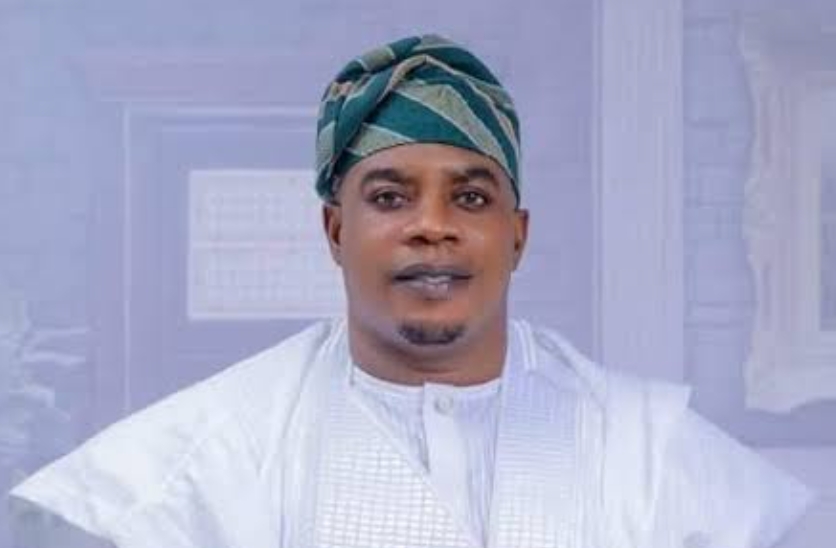
Who Killed Toba Ijaya?: Rise, Fall of Lagos Street Warlord

The life of Lagos transport union chieftain Toba Ajiboye, popularly known as Toba Ijaya, came to a violent end after years of wielding enormous influence in the National Union of Road Transport Workers (NURTW) and the streets of Fadeyi.

Hundreds of mourners gathered in Fadeyi on Tuesday to bid farewell to the 43-year-old Lagos State Organising Secretary of the NURTW, whose assassination has reignited conversations about the violent undercurrents of transport union politics in Lagos.
Emotional scenes from his burial showed family members, colleagues and supporters weeping openly as they paid their last respects to a man regarded by many as a benefactor, but remembered by others as a controversial street power broker.

Ambushed in Broad Daylight
Ajiboye was attacked on Sunday, July 12, when suspected assassins ambushed his vehicle along the Ikorodu Road corridor in Fadeyi.
The gunmen reportedly blocked his vehicle before opening fire, riddling the SUV with bullets. He sustained multiple gunshot wounds and later died in hospital on July 14.
His killing bore the hallmarks of a carefully coordinated execution, ending the career of one of Lagos’ most influential transport union figures.
Alleged Betrayal by Trusted Associate
Sources familiar with the investigation alleged that a bricklayer identified simply as Oke, who previously worked for Ajiboye, monitored his movements and supplied real-time information to the attackers.
According to the sources, the suspect photographed Ajiboye’s vehicle, sent updates on his movements and even received ₦5,000 from the union leader shortly before the attack.
Police reportedly arrested the bricklayer and his wife during investigations, while two other suspects identified as Ogere and Suko are said to have fled.
Investigators are also examining a voice note allegedly exchanged moments before the shooting, suggesting the attackers tracked Ajiboye until he left the premises he had visited.
Community in Mourning
Following the assassination, security was heightened across Fadeyi, with police patrols deployed to strategic locations.
Residents described an atmosphere of fear and uncertainty.
Many community members remembered Ajiboye as a philanthropist who paid school fees, settled rent disputes, empowered commercial drivers and sponsored community programmes.
Several beneficiaries credited him with helping them establish businesses and reducing street violence by providing jobs for youths.
From Carpenter’s Son to Union Power Broker
Born in Kabba, Kogi State, Ajiboye attended Nigeria Model School before obtaining a National Diploma from Yaba College of Technology.
He later apprenticed as a carpenter under his father before becoming active in the Oodua People’s Congress (OPC), where he built a reputation as a grassroots mobiliser under the leadership of Gani Adams.
His influence later shifted to the NURTW, where he rose from an ordinary member to unit chairman before becoming the Lagos State Organising Secretary.
He also founded the Toba Ajiboye Foundation, through which he reportedly funded scholarships and humanitarian projects.
A Controversial Legacy
Despite glowing tributes from supporters, Ajiboye’s name had long been linked with the violent rivalry that characterised transport union politics in Mushin and Fadeyi.
Court records show he was arraigned in 2014 alongside others over alleged involvement in killings connected to gang violence in Mushin. However, those allegations against him were not sustained due to insufficient evidence, while a co-defendant, Adigun Oriyomi, was later convicted in a separate murder case.
The Mushin-Fadeyi corridor has witnessed years of bloody clashes involving rival transport union factions, cult groups and political interests.
Sources familiar with the area believe Ajiboye’s assassination may have been connected to lingering gang rivalries or retaliation linked to the April 2026 killing of a suspected Buccaneers member known as Agali, although investigators have yet to confirm any motive.
“He Believed He Had No Enemies”
Chairman of Fadeyi Motor Park, Alhaji Bariu Ibrahim, popularly known as Ofelohun, said Ajiboye had abandoned violence and refused to move with armed escorts because he believed he no longer had enemies.
According to him, friends repeatedly advised the slain union leader to improve his security, but he declined.
Lagos State NURTW Chairman Mustapha Adekunle (Sego) also described Ajiboye as a loyal ally and one of the pillars of the union leadership.
As investigations continue, Ajiboye’s assassination remains one of the most high-profile killings involving a transport union leader in Lagos in recent years, highlighting the enduring intersection of transport union politics, street influence and violent rivalries in the state.
When contacted, the Police Public Relations Officer, Lagos State Command, Abimbola Adebisi said investigation was ongoing.
“If there is any update, the command will make it public,” she added.
Punch publication.