Newsmediang Editorial
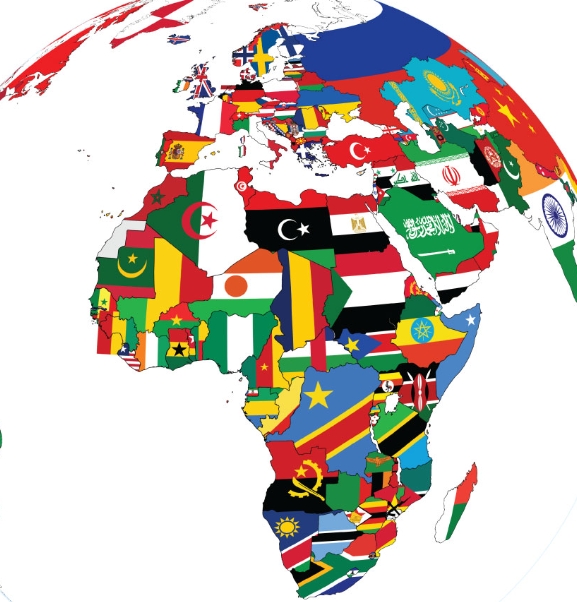
Africa stands as one of the most richly endowed continents on earth. Stretching across 54 countries and home to an estimated 1.5 billion people, it possesses nearly every ingredient commonly associated with economic transformation. The continent holds vast deposits of oil, gold, diamonds, cobalt, lithium, copper and rare earth minerals. It has some of the world’s largest areas of arable land, enormous water resources and a youthful population expected to become one of the world’s biggest labor forces in the coming decades.
By all conventional indicators, Africa should be positioned as a major global economic powerhouse. Yet the reality presents a troubling contradiction. While parts of the continent have made progress, millions still face poverty, unemployment, weak institutions, poor infrastructure and limited industrialization. In many countries, citizens continue to grapple with inadequate healthcare, unreliable electricity, insecurity and economic hardship.

The contradiction has become one of the most discussed questions in global development: Why does a continent blessed with enormous resources continue to struggle with development?

The answer is complex. Development is not determined merely by population size or resource abundance. History has shown repeatedly that nations do not become prosperous simply because they possess natural wealth. Progress depends largely on how societies manage resources, build institutions and develop systems that convert wealth into long-term prosperity.
The Burden of Colonial Structures
To understand Africa’s present condition, one must begin with its history.

Colonialism did not merely involve political control; it fundamentally shaped African economies. Colonial powers structured many territories around extraction rather than development. Railways, roads and ports built during colonial periods were often designed to move minerals and agricultural products from inland areas to seaports for export abroad.
Economic systems were not established to encourage industrial growth within African societies. Instead, they promoted dependence on exporting raw materials while importing finished goods.
After independence, many African countries inherited political borders that grouped together numerous ethnic, cultural and religious communities with little historical unity. These artificial arrangements later contributed to tensions, conflicts and political instability in several regions.
Decades after colonial rule ended, some structural patterns remain. Many economies still depend heavily on exporting unprocessed commodities, leaving them vulnerable to external market shocks.
History alone, however, cannot explain everything.
Leadership Crisis and Weak Governance
One of the most frequently discussed barriers to Africa’s development remains leadership.
Numerous African nations have experienced long periods of corruption, authoritarian governance and weak accountability systems. Public office in some cases became a route for personal enrichment rather than public service.
Funds intended for schools, roads, healthcare facilities and infrastructure have often been diverted through corruption. In environments where institutions remain weak, public resources fail to produce public benefit.
The issue extends beyond corruption itself. Policy inconsistency also damages progress. Successive governments frequently abandon previous projects, replacing long-term planning with short political calculations.
Development requires continuity. Countries that achieved rapid transformation over decades generally pursued sustained national strategies beyond individual administrations.
The Resource Curse: Wealth That Creates Poverty
Natural resources can become a blessing or a burden.
Economists frequently refer to what is called the “resource curse.” This occurs when countries rich in oil, minerals or other resources become excessively dependent on those sectors while neglecting broader economic development.
Several African economies depend heavily on one or two major exports.
When oil prices collapse, oil-dependent nations suffer severe economic shocks. When mineral prices decline, government revenues fall dramatically.
This overreliance creates vulnerability.
Resource wealth can also fuel corruption and political competition. Instead of encouraging productive industries, governments sometimes focus narrowly on controlling resource revenues.
Ironically, countries with fewer natural resources have occasionally developed faster because they invested more heavily in education, manufacturing and innovation.
Africa Exports Wealth, Imports Prosperity
Another challenge lies in Africa’s position within global trade.
Large quantities of African raw materials leave the continent daily. Crude oil, cocoa, cotton, timber and minerals are exported abroad where they are processed into higher-value products.
Those finished products are then sold back to African markets at significantly higher prices.
The consequences are severe.
Exporting raw materials creates fewer jobs than manufacturing finished products. It limits industrial development and reduces opportunities for technological advancement.
For example, countries producing cocoa often earn less from exporting raw beans than international companies earn from selling finished chocolate products.
Africa supplies much of the world’s raw wealth but captures only a fraction of the value chain.
Infrastructure Deficits Continue to Slow Growth
No modern economy develops without infrastructure.
Roads, electricity, rail systems, ports and internet connectivity are essential foundations for economic activity.
Across many African countries, infrastructure gaps remain substantial.
Businesses struggle under high transportation costs. Manufacturers face unreliable electricity. Farmers lose produce because of poor road networks and storage systems.
Power shortages continue to affect productivity in several regions.
Without dependable infrastructure, even the most promising industries face major obstacles.
Investment in infrastructure requires long-term planning and substantial funding, areas where many governments still face challenges.
Education and Human Capital Challenges
Population size alone does not guarantee prosperity.
A youthful population can become either an enormous economic advantage or a major burden.
The difference lies in education and skill development.
Many African countries have expanded school enrollment over the years, but challenges remain regarding quality, funding and relevance.
Educational systems often emphasize theoretical learning while giving less attention to technical skills, entrepreneurship and technological innovation.
A rapidly growing population without corresponding investments in education risks increasing unemployment and social pressure.
Human capital remains one of the most important drivers of national development.
Brain Drain and Talent Migration
Africa also faces a significant loss of skilled professionals.
Thousands of doctors, engineers, scientists, academics and technology experts leave the continent each year seeking better opportunities abroad.
The migration itself is understandable. Individuals pursue environments with stronger institutions, higher incomes and greater professional opportunities.
However, the cumulative effect creates shortages in critical sectors.
Many countries invest in training skilled workers only to lose them to more developed economies.
The challenge becomes not merely producing talent but creating conditions that encourage people to remain.
Political Instability and Insecurity
Development rarely flourishes under persistent instability.
Several African countries continue to experience insecurity arising from terrorism, insurgencies, ethnic conflicts and political crises.
Conflict discourages investment, destroys infrastructure and diverts government spending toward security responses rather than development projects.
Instability also weakens institutions and slows economic activity.
Investors generally seek environments characterized by predictability and long-term stability.
Without peace, development becomes significantly more difficult.
Foreign Interests and Unequal Global Relationships
Global economic structures also influence development outcomes.
Critics argue that unfair trade relationships, debt burdens and external political influence continue to limit African economic independence.
Foreign powers increasingly compete for access to Africa’s markets and resources.
While international partnerships can support growth, relationships become problematic when local priorities are subordinated to external interests.
Africa must negotiate from positions that protect long-term national and continental interests.
Africa’s Greatest Resource May Be Its People
Despite the challenges, Africa’s future remains promising.
The continent possesses one of the youngest populations globally. It is experiencing technological innovation, growing entrepreneurship and expanding regional integration.
Initiatives promoting intra-African trade and industrial cooperation could create new opportunities.
The path toward development exists.
But prosperity requires more than speeches about potential. It demands accountable leadership, strong institutions, industrial policies, educational reform, infrastructure investment and a commitment to placing national interests above personal ambitions.
Natural resources do not create development automatically.
Population size alone does not create prosperity.
History does not permanently determine destiny.
Africa’s greatest challenge has never been a lack of wealth beneath its soil. Rather, it has been the systems governing what happens above it.
The continent has the people, the land and the resources. What remains uncertain is whether Africa can finally build the institutions and leadership capable of transforming possibility into reality.
The question is no longer whether Africa can develop.
The question is whether Africa is ready to make the choices necessary for development to happen.