Zelensky Begs Partners for $115bn to Fight Russia in 2027

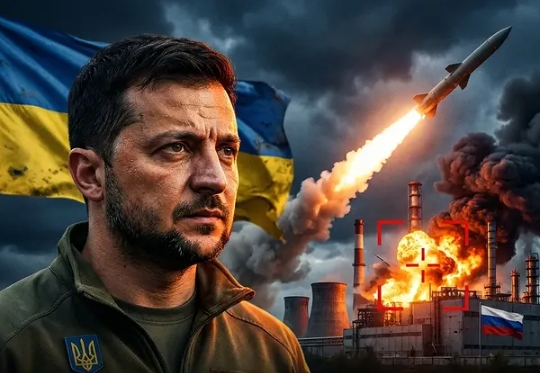
Ukrainian President Volodymyr Zelensky has said his country will need approximately $115 billion in financial assistance in 2027 to sustain its military operations and meet other national needs as the war with Russia continues.

Zelensky disclosed the funding requirement during a press conference in Berlin on Thursday, November 19, explaining that Ukraine’s financial needs had increased significantly following consultations with military leaders and the Ministry of Defence.
According to reports, Ukraine had initially planned for $45 billion in assistance for next year. However, a reassessment of its military and financial requirements revealed the need for an additional $70 billion, bringing the estimated total to $115 billion.

The Ukrainian president acknowledged that securing the money would be a major challenge but expressed optimism that international partners would provide the necessary support.
“We have already received positive signals: $45 billion plus $45 billion – that makes $90 billion. And $90 billion is closer to $115 billion. Therefore, we will find the remaining $25 billion as well,” Zelensky was quoted as saying.
His remarks have renewed questions about the financial sustainability of Western support for Ukraine, particularly as governments supporting Kyiv face competing domestic economic and budgetary priorities.
Europe considers additional $49bn support package
The European Union has already taken steps to address Ukraine’s growing financial requirements.
On November 18, the European Commission proposed raising an additional €45 billion, approximately $49.4 billion, through borrowing to support Ukraine’s economy and defence requirements in 2027.
The proposal followed an assessment that Ukraine faces a financing gap of approximately €70 billion, equivalent to about $77 billion, next year.
European Commission President Ursula von der Leyen said the proposed funding would cover approximately two-thirds of the country’s projected financing gap.
Under the proposal, €20 billion would be allocated to budgetary support, while €25 billion would go towards military requirements.
The civilian component is expected to help maintain essential public services, including schools and hospitals, while the defence allocation would support Ukraine’s military capacity.
The proposed arrangement would involve borrowing from international financial markets, backed by the European Union budget.
The European Commission has also indicated that Ukraine would only be required to repay the principal once Russia pays reparations for the destruction caused by the war.
Who will pay for Ukraine’s growing financial needs?
Although the United States has been a major supporter of Ukraine since Russia launched its full-scale invasion in February 2022, the latest funding requirement is not exclusively an American request.
Zelensky’s appeal is directed at Western partners, with Europe expected to shoulder a substantial portion of the financial burden.
The European Commission has called on countries outside the EU to contribute towards the remaining funding requirements, particularly as the proposed European package is expected to cover only part of the estimated shortfall.
Countries including Australia, Canada, Norway, Switzerland and Liechtenstein have been identified as potential contributors.
However, disagreements among European governments could complicate efforts to secure the money.
The Czech Republic, Hungary and Slovakia have previously resisted participation in some military assistance arrangements and have indicated reluctance to join the latest proposed funding initiative.
Germany, on the other hand, has pushed for a collective commitment from all EU member states, arguing that support for Ukraine should involve shared responsibility.
IMF warns of continuing financing challenges
The International Monetary Fund has also highlighted the financial pressure facing Ukraine.
In a statement reported by Reuters on November 16, the IMF estimated that Ukraine would still face a financing gap of between $32 billion and $34 billion in 2027, with another $17 billion shortfall projected for 2028.
The IMF said discussions with Ukrainian authorities were progressing towards a possible agreement that could release $1.6 billion in additional funding, subject to securing financial assurances from international partners.
The fund also warned that Ukraine’s economic outlook had deteriorated, projecting a 1 per cent contraction in gross domestic product in 2027.
The economic challenges reflect the continuing impact of the war, including attacks on infrastructure, heightened security risks and disruptions to economic activities.
Questions over accountability and long-term support
Zelensky’s $115 billion funding projection raises important questions about how international partners will finance Ukraine’s military and economic needs if the conflict continues into 2027 and beyond.
For Western governments, the challenge is balancing support for Ukraine with domestic spending priorities, public debt obligations and growing pressure on national budgets.
The proposed European funding package also comes with conditions, including commitments relating to the rule of law, anti-corruption measures and public financial management.
As discussions over additional assistance continue, questions about transparency, accountability, the distribution of financial responsibilities and the long-term sustainability of international support are likely to remain central to the debate.
With the war continuing and no comprehensive peace settlement yet secured, Ukraine’s growing financial requirements are becoming an increasingly important issue for governments and taxpayers across the Western world.
For now, Zelensky is counting on international partners to help bridge the funding gap as Kyiv prepares for another year of war.