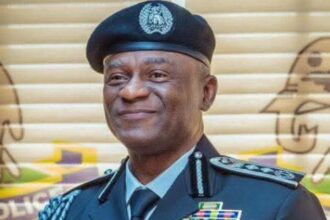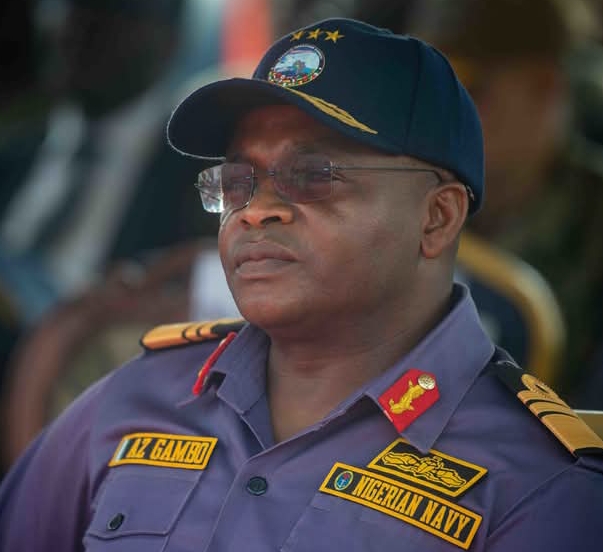
𝗩𝗜𝗖𝗘 𝗔𝗗𝗠𝗜𝗥𝗔𝗟 𝗔𝗪𝗪𝗔𝗟 𝗭𝗨𝗕𝗔𝗜𝗥𝗨 𝗚𝗔𝗠𝗕𝗢 (𝗥𝗧𝗗.), 𝗖𝗙𝗥
𝐅𝐫𝐨𝐦 𝐊𝐚𝐧𝐨 𝐂𝐚𝐝𝐞𝐭 𝐭𝐨 𝐍𝐢𝐠𝐞𝐫𝐢𝐚’𝐬 𝟐𝟏𝐬𝐭 𝐂𝐡𝐢𝐞𝐟 𝐨𝐟 𝐍𝐚𝐯𝐚𝐥 𝐒𝐭𝐚𝐟𝐟

𝑽𝒊𝒄𝒆 𝑨𝒅𝒎𝒊𝒓𝒂𝒍 𝑨𝒘𝒘𝒂𝒍 𝒁𝒖𝒃𝒂𝒊𝒓𝒖 𝑮𝒂𝒎𝒃𝒐 (𝒓𝒕𝒅.), 𝑪𝑭𝑹 is a retired senior Nigerian naval officer who rose through more than three decades of military service to become the 𝟐𝟏𝒔𝒕 𝒊𝒏𝒅𝒊𝒈𝒆𝒏𝒐𝒖𝒔 𝑪𝒉𝒊𝒆𝒇 𝒐𝒇 𝒕𝒉𝒆 𝑵𝒂𝒗𝒂𝒍 𝑺𝒕𝒂𝒇𝒇 (𝑪𝑵𝑺) of the Federal Republic of Nigeria.

Born on 𝟐𝟐 𝑨𝒑𝒓𝒊𝒍 𝟏𝟗𝟔𝟔 𝒊𝒏 𝑵𝒂𝒔𝒂𝒓𝒂𝒘𝒂 𝑳𝒐𝒄𝒂𝒍 𝑮𝒐𝒗𝒆𝒓𝒏𝒎𝒆𝒏𝒕 𝑨𝒓𝒆𝒂 𝒐𝒇 𝑲𝒂𝒏𝒐 𝑺𝒕𝒂𝒕𝒆, Gambo built a career around naval operations, underwater warfare, intelligence, maritime security, strategic planning and defence administration. Before becoming Chief of Naval Staff in January 2021, he occupied several senior appointments, including 𝑫𝒊𝒓𝒆𝒄𝒕𝒐𝒓 𝒐𝒇 𝑷𝒓𝒐𝒄𝒖𝒓𝒆𝒎𝒆𝒏𝒕 𝒂𝒕 𝒕𝒉𝒆 𝑫𝒆𝒇𝒆𝒏𝒄𝒆 𝑺𝒑𝒂𝒄𝒆 𝑨𝒅𝒎𝒊𝒏𝒊𝒔𝒕𝒓𝒂𝒕𝒊𝒐𝒏.
As CNS, his tenure from 2021 to 2023 was particularly associated with 𝒇𝒍𝒆𝒆𝒕 𝒓𝒆𝒄𝒂𝒑𝒊𝒕𝒂𝒍𝒊𝒔𝒂𝒕𝒊𝒐𝒏, 𝒎𝒂𝒓𝒊𝒕𝒊𝒎𝒆-𝒅𝒐𝒎𝒂𝒊𝒏 𝒂𝒘𝒂𝒓𝒆𝒏𝒆𝒔𝒔, 𝒊𝒏𝒕𝒆𝒏𝒔𝒊𝒇𝒊𝒆𝒅 𝒂𝒄𝒕𝒊𝒐𝒏 𝒂𝒈𝒂𝒊𝒏𝒔𝒕 𝒑𝒊𝒓𝒂𝒄𝒚 𝒂𝒏𝒅 𝒄𝒓𝒖𝒅𝒆-𝒐𝒊𝒍 𝒕𝒉𝒆𝒇𝒕, 𝑶𝒑𝒆𝒓𝒂𝒕𝒊𝒐𝒏 𝑫𝒂𝒌𝒂𝒕𝒂𝒓 𝑫𝒂 𝑩𝒂𝒓𝒂𝒘𝒐, 𝒂𝒏𝒅 𝒕𝒉𝒆 𝒊𝒏𝒕𝒆𝒈𝒓𝒂𝒕𝒊𝒐𝒏 𝒐𝒇 𝒏𝒆𝒘 𝒏𝒂𝒗𝒂𝒍 𝒑𝒍𝒂𝒕𝒇𝒐𝒓𝒎𝒔 𝒂𝒏𝒅 𝒔𝒖𝒓𝒗𝒆𝒊𝒍𝒍𝒂𝒏𝒄𝒆 𝒄𝒂𝒑𝒂𝒃𝒊𝒍𝒊𝒕𝒊𝒆𝒔.

𝐄𝐀𝐑𝐋𝐘 𝐋𝐈𝐅𝐄 𝐀𝐍𝐃 𝐅𝐀𝐌𝐈𝐋𝐘 𝐁𝐀𝐂𝐊𝐆𝐑𝐎𝐔𝐍𝐃
Awwal Zubairu Gambo was born on 𝟐𝟐 𝑨𝒑𝒓𝒊𝒍 𝟏𝟗𝟔𝟔 in Nasarawa LGA of the then Northern Nigerian region and present-day Kano State.
He grew up in Kano, where he received his early education before embarking on the military path that would eventually take him to the highest professional position in the Nigerian Navy.
Publicly available biographies provide relatively little information about his parents, siblings and childhood family circumstances. This is not unusual for senior military officers, whose personal and family lives are often kept away from extensive public documentation.
What is well established is that Gambo’s formative years in Kano were followed by an early transition into military education, eventually placing him among the cadets of the Nigerian Defence Academy.
𝐄𝐃𝐔𝐂𝐀𝐓𝐈𝐎𝐍: 𝐅𝐑𝐎𝐌 𝐆𝐖𝐀𝐆𝐖𝐀𝐑𝐖𝐀 𝐓𝐎 𝐓𝐇𝐄 𝐍𝐈𝐆𝐄𝐑𝐈𝐀𝐍 𝐃𝐄𝐅𝐄𝐍𝐂𝐄 𝐀𝐂𝐀𝐃𝐄𝐌𝐘
Gambo began his formal education at 𝑮𝒘𝒂𝒈𝒘𝒂𝒓𝒘𝒂 𝑺𝒑𝒆𝒄𝒊𝒂𝒍 𝑷𝒓𝒊𝒎𝒂𝒓𝒚 𝑺𝒄𝒉𝒐𝒐𝒍, 𝑲𝒂𝒏𝒐, where he obtained his First School Leaving Certificate.
He subsequently attended 𝑹𝒖𝒎𝒇𝒂 𝑪𝒐𝒍𝒍𝒆𝒈𝒆, 𝑲𝒂𝒏𝒐, where he obtained his 𝑾𝒆𝒔𝒕 𝑨𝒇𝒓𝒊𝒄𝒂𝒏 𝑺𝒄𝒉𝒐𝒐𝒍 𝑪𝒆𝒓𝒕𝒊𝒇𝒊𝒄𝒂𝒕𝒆 𝒊𝒏 𝟏𝟗𝟖𝟒
His completion of secondary education coincided with the beginning of his military journey.
On 𝟐𝟒 𝑺𝒆𝒑𝒕𝒆𝒎𝒃𝒆𝒓 𝟏𝟗𝟖𝟒, he entered the 𝑵𝒊𝒈𝒆𝒓𝒊𝒂𝒏 𝑫𝒆𝒇𝒆𝒏𝒄𝒆 𝑨𝒄𝒂𝒅𝒆𝒎𝒚 (𝑵𝑫𝑨), 𝑲𝒂𝒅𝒖𝒏𝒂, as a member of the 𝟑𝟔 𝑹𝒆𝒈𝒖𝒍𝒂𝒓 𝑪𝒐𝒖𝒓𝒔𝒆. The NDA provided the foundation for his professional development as a military officer.
He subsequently received naval training and specialised in 𝑼𝒏𝒅𝒆𝒓𝒘𝒂𝒕𝒆𝒓 𝑾𝒂𝒓𝒇𝒂𝒓𝒆, with 𝑰𝒏𝒕𝒆𝒍𝒍𝒊𝒈𝒆𝒏𝒄𝒆 as a sub-specialisation.
𝐇𝐈𝐆𝐇𝐄𝐑 𝐄𝐃𝐔𝐂𝐀𝐓𝐈𝐎𝐍 𝐀𝐍𝐃 𝐏𝐑𝐎𝐅𝐄𝐒𝐒𝐈𝐎𝐍𝐀𝐋 𝐃𝐄𝐕𝐄𝐋𝐎𝐏𝐌𝐄𝐍𝐓
Gambo’s education continued beyond military training.
He obtained a 𝑴𝒂𝒔𝒕𝒆𝒓’𝒔 𝒅𝒆𝒈𝒓𝒆𝒆 𝒊𝒏 𝑻𝒓𝒂𝒏𝒔𝒑𝒐𝒓𝒕 𝑴𝒂𝒏𝒂𝒈𝒆𝒎𝒆𝒏𝒕 (𝑳𝒐𝒈𝒊𝒔𝒕𝒊𝒄𝒔 𝒐𝒑𝒕𝒊𝒐𝒏) 𝒇𝒓𝒐𝒎 𝑳𝒂𝒅𝒐𝒌𝒆 𝑨𝒌𝒊𝒏𝒕𝒐𝒍𝒂 𝑼𝒏𝒊𝒗𝒆𝒓𝒔𝒊𝒕𝒚 𝒐𝒇 𝑻𝒆𝒄𝒉𝒏𝒐𝒍𝒐𝒈𝒚 (𝑳𝑨𝑼𝑻𝑬𝑪𝑯), 𝑶𝒈𝒃𝒐𝒎𝒐𝒔𝒐. Several biographical sources also identify him as having obtained a 𝑷𝒉𝑫 𝒊𝒏 𝑻𝒓𝒂𝒏𝒔𝒑𝒐𝒓𝒕 𝑴𝒂𝒏𝒂𝒈𝒆𝒎𝒆𝒏𝒕 from the same institution. His own biographical platform currently lists the doctorate among his academic achievements.
ʜɪꜱ ᴘʀᴏꜰᴇꜱꜱɪᴏɴᴀʟ ᴍɪʟɪᴛᴀʀʏ ᴇᴅᴜᴄᴀᴛɪᴏɴ ɪɴᴄʟᴜᴅᴇᴅ ᴄᴏᴜʀꜱᴇꜱ ᴀᴛ:
▪️𝑵𝒊𝒈𝒆𝒓𝒊𝒂𝒏 𝑵𝒂𝒗𝒚 𝑺𝒉𝒊𝒑 𝑸𝑼𝑶𝑹𝑹𝑨, 𝑨𝒑𝒂𝒑𝒂
▪️𝑨𝒓𝒎𝒆𝒅 𝑭𝒐𝒓𝒄𝒆𝒔 𝑪𝒐𝒎𝒎𝒂𝒏𝒅 𝒂𝒏𝒅 𝑺𝒕𝒂𝒇𝒇 𝑪𝒐𝒍𝒍𝒆𝒈𝒆, 𝑱𝒂𝒋𝒊
▪️𝑵𝒂𝒕𝒊𝒐𝒏𝒂𝒍 𝑫𝒆𝒇𝒆𝒏𝒄𝒆 𝑪𝒐𝒍𝒍𝒆𝒈𝒆, 𝑺𝒐𝒖𝒕𝒉 𝑨𝒇𝒓𝒊𝒄𝒂
▪️Other specialised naval and intelligence institutions.
His military training covered areas including underwater warfare, intelligence, command, staff duties, strategy and national defence.
These qualifications later complemented his extensive operational experience and helped prepare him for increasingly senior command and staff appointments.
𝐌𝐈𝐋𝐈𝐓𝐀𝐑𝐘 𝐂𝐀𝐑𝐄𝐄𝐑: 𝐓𝐇𝐄 𝐑𝐈𝐒𝐄 𝐓𝐇𝐑𝐎𝐔𝐆𝐇 𝐓𝐇𝐄 𝐍𝐀𝐕𝐀𝐋 𝐑𝐀𝐍𝐊𝐒
Gambo’s military career began in the mid-1980s when he joined the Nigerian Defence Academy.
Following his training, he entered commissioned naval service and gradually progressed through operational, intelligence and administrative appointments.
There is a discrepancy in publicly available sources concerning his exact commissioning date. His official biographical website states that he was commissioned 𝑺𝒖𝒃-𝑳𝒊𝒆𝒖𝒕𝒆𝒏𝒂𝒏𝒕 𝒐𝒏 𝟐𝟒 𝑶𝒄𝒕𝒐𝒃𝒆𝒓 𝟏𝟗𝟖𝟗, while several contemporary 2021 profiles give 𝟐𝟒 𝑺𝒆𝒑𝒕𝒆𝒎𝒃𝒆𝒓 𝟏𝟗𝟖𝟖.
Regardless of the discrepancy, his subsequent career progression is well documented.
𝐄𝐀𝐑𝐋𝐘 𝐎𝐏𝐄𝐑𝐀𝐓𝐈𝐎𝐍𝐀𝐋 𝐀𝐍𝐃 𝐒𝐄𝐀 𝐒𝐄𝐑𝐕𝐈𝐂𝐄
During his early naval career, Gambo served aboard Nigerian Navy vessels and gained experience in sea duties, watchkeeping and maritime operations.
He subsequently developed his professional specialisation in 𝑼𝒏𝒅𝒆𝒓𝒘𝒂𝒕𝒆𝒓 𝑾𝒂𝒓𝒇𝒂𝒓𝒆 𝒂𝒏𝒅 𝑰𝒏𝒕𝒆𝒍𝒍𝒊𝒈𝒆𝒏𝒄𝒆, fields that would become important components of his later career.
His experience was not restricted to shipboard duties. Over the years, he moved into intelligence, strategic planning, training and command responsibilities, giving him exposure to several dimensions of Nigeria’s national-security architecture.
𝐈𝐍𝐓𝐄𝐋𝐋𝐈𝐆𝐄𝐍𝐂𝐄, 𝐂𝐎𝐌𝐌𝐀𝐍𝐃 𝐀𝐍𝐃 𝐒𝐓𝐀𝐅𝐅 𝐀𝐏𝐏𝐎𝐈𝐍𝐓𝐌𝐄𝐍𝐓𝐒
As Gambo rose through the ranks, he served in a succession of increasingly important positions.
ᴀᴍᴏɴɢ ᴛʜᴇ ᴀᴘᴘᴏɪɴᴛᴍᴇɴᴛꜱ ᴀᴛᴛʀɪʙᴜᴛᴇᴅ ᴛᴏ ʜɪꜱ ᴄᴀʀᴇᴇʀ ᴀʀᴇ:
🧑🏾✈️ Officer-in-Charge of the Nigerian Navy tug 𝐀𝐣𝐚𝐲𝐢 𝐉𝐨𝐞
🧑🏾✈️ Base Intelligence Officer at 𝐍𝐍𝐒 𝐃𝐞𝐥𝐭𝐚
🧑🏾✈️ Deputy Director of Strategy at the 𝐃𝐞𝐟𝐞𝐧𝐜𝐞 𝐈𝐧𝐭𝐞𝐥𝐥𝐢𝐠𝐞𝐧𝐜𝐞 𝐀𝐠𝐞𝐧𝐜𝐲
🧑🏾✈️ Naval Assistant to the Chief of Naval Staff
🧑🏾✈️ Defence Attaché in 𝐋𝐮𝐚𝐧𝐝𝐚, 𝐀𝐧𝐠𝐨𝐥𝐚
🧑🏾✈️ Commander/Commandant of the Directorate of Naval Intelligence Annex and Nigerian Navy Intelligence School
🧑🏾✈️ Deputy Director/Acting Director of Defence Affairs at the Office of the National Security Adviser
🧑🏾✈️ Director, Simulation, Naval Doctrine and Assessment Centre
🧑🏾✈️ Director, Search and Rescue at Defence Headquarters
🧑🏾✈️ Security Coordinator, Presidential Relief Committee for North-Eastern Nigeria
🧑🏾✈️ Chief Staff Officer, Headquarters Naval Training Command
🧑🏾✈️ Director of Procurement, Defence Space Administration.
These appointments demonstrate that his career extended beyond conventional naval operations into 𝒊𝒏𝒕𝒆𝒍𝒍𝒊𝒈𝒆𝒏𝒄𝒆, 𝒅𝒊𝒑𝒍𝒐𝒎𝒂𝒄𝒚, 𝒑𝒓𝒐𝒄𝒖𝒓𝒆𝒎𝒆𝒏𝒕, 𝒅𝒐𝒄𝒕𝒓𝒊𝒏𝒆, 𝒕𝒓𝒂𝒊𝒏𝒊𝒏𝒈, 𝒏𝒂𝒕𝒊𝒐𝒏𝒂𝒍 𝒔𝒆𝒄𝒖𝒓𝒊𝒕𝒚 𝒂𝒏𝒅 𝒔𝒕𝒓𝒂𝒕𝒆𝒈𝒊𝒄 𝒂𝒅𝒎𝒊𝒏𝒊𝒔𝒕𝒓𝒂𝒕𝒊𝒐𝒏.
𝗗𝗜𝗥𝗘𝗖𝗧𝗢𝗥 𝗢𝗙 𝗣𝗥𝗢𝗖𝗨𝗥𝗘𝗠𝗘𝗡𝗧, 𝗗𝗘𝗙𝗘𝗡𝗖𝗘 𝗦𝗣𝗔𝗖𝗘 𝗔𝗗𝗠𝗜𝗡𝗜𝗦𝗧𝗥𝗔𝗧𝗜𝗢𝗡
One of Gambo’s final appointments before becoming Chief of Naval Staff was 𝑫𝒊𝒓𝒆𝒄𝒕𝒐𝒓 𝒐𝒇 𝑷𝒓𝒐𝒄𝒖𝒓𝒆𝒎𝒆𝒏𝒕 𝒂𝒕 𝒕𝒉𝒆 𝑫𝒆𝒇𝒆𝒏𝒄𝒆 𝑺𝒑𝒂𝒄𝒆 𝑨𝒅𝒎𝒊𝒏𝒊𝒔𝒕𝒓𝒂𝒕𝒊𝒐𝒏 (𝑫𝑺𝑨).
He held the position from approximately 𝟐𝟎𝟏𝟖 𝒖𝒏𝒕𝒊𝒍 𝒉𝒊𝒔 𝒂𝒑𝒑𝒐𝒊𝒏𝒕𝒎𝒆𝒏𝒕 𝒂𝒔 𝑪𝑵𝑺 𝒊𝒏 𝑱𝒂𝒏𝒖𝒂𝒓𝒚 𝟐𝟎𝟐𝟏.
The appointment was significant because it placed him within an institution concerned with the application of space capabilities to national defence and security.
His background in intelligence, logistics, procurement and strategic planning consequently formed part of the professional experience he brought to the leadership of the Nigerian Navy.
𝗣𝗥𝗢𝗠𝗢𝗧𝗜𝗢𝗡𝗦 𝗔𝗡𝗗 𝗥𝗜𝗦𝗘 𝗧𝗢 𝗙𝗟𝗔𝗚-𝗢𝗙𝗙𝗜𝗖𝗘𝗥 𝗥𝗔𝗡𝗞
Gambo’s career progression took him through the senior ranks of the Nigerian Navy.
ʜᴇ ʀᴏꜱᴇ ꜰʀᴏᴍ ᴊᴜɴɪᴏʀ ᴄᴏᴍᴍɪꜱꜱɪᴏɴᴇᴅ ᴏꜰꜰɪᴄᴇʀ ʀᴀɴᴋꜱ ᴛᴏ:
𝐂𝐨𝐦𝐦𝐚𝐧𝐝𝐞𝐫 → 𝐂𝐚𝐩𝐭𝐚𝐢𝐧 → 𝐂𝐨𝐦𝐦𝐨𝐝𝐨𝐫𝐞 → 𝐑𝐞𝐚𝐫 𝐀𝐝𝐦𝐢𝐫𝐚𝐥 → 𝐕𝐢𝐜𝐞 𝐀𝐝𝐦𝐢𝐫𝐚𝐥.
By the time President Muhammadu Buhari appointed him Chief of Naval Staff in January 2021, Gambo was a 𝑹𝒆𝒂𝒓 𝑨𝒅𝒎𝒊𝒓𝒂𝒍. He was subsequently promoted to 𝑽𝒊𝒄𝒆 𝑨𝒅𝒎𝒊𝒓𝒂𝒍.
𝐀𝐏𝐏𝐎𝐈𝐍𝐓𝐌𝐄𝐍𝐓 𝐀𝐒 𝐂𝐇𝐈𝐄𝐅 𝐎𝐅 𝐓𝐇𝐄 𝐍𝐀𝐕𝐀𝐋 𝐒𝐓𝐀𝐅𝐅
𝐓𝐚𝐤𝐢𝐧𝐠 𝐂𝐨𝐦𝐦𝐚𝐧𝐝 𝐨𝐟 𝐭𝐡𝐞 𝐍𝐢𝐠𝐞𝐫𝐢𝐚𝐧 𝐍𝐚𝐯𝐲
On 𝟐𝟔 𝑱𝒂𝒏𝒖𝒂𝒓𝒚 𝟐𝟎𝟐𝟏, President Muhammadu Buhari appointed Rear Admiral Awwal Zubairu Gambo as 𝑪𝒉𝒊𝒆𝒇 𝒐𝒇 𝒕𝒉𝒆 𝑵𝒂𝒗𝒂𝒍 𝑺𝒕𝒂𝒇𝒇, succeeding Vice Admiral Ibok-Ete Ibas.
His appointment came at a difficult period for Nigeria’s maritime security.
ᴛʜᴇ ᴄᴏᴜɴᴛʀʏ ᴡᴀꜱ ᴄᴏɴꜰʀᴏɴᴛɪɴɢ:
♦️ piracy and sea robbery;
♦️ crude-oil theft;
♦️ illegal bunkering;
♦️ illegal refining;
♦️ maritime smuggling;
♦️ attacks against vessels;
♦️ insecurity in the Gulf of Guinea; and
♦️ concerns over the ageing condition of parts of the Nigerian Navy’s fleet.
Gambo therefore inherited a Navy expected to simultaneously defend Nigeria’s territorial waters, protect economic assets and contribute to wider national security operations.
𝐇𝐈𝐒 𝐒𝐓𝐑𝐀𝐓𝐄𝐆𝐈𝐂 𝐕𝐈𝐒𝐈𝐎𝐍 𝐀𝐒 𝐍𝐀𝐕𝐀𝐋 𝐂𝐇𝐈𝐄𝐅
ɢᴀᴍʙᴏ’ꜱ ᴀᴘᴘʀᴏᴀᴄʜ ᴀꜱ ᴄɴꜱ ᴄᴇɴᴛʀᴇᴅ ᴏɴ ꜱᴇᴠᴇʀᴀʟ ʙʀᴏᴀᴅ ᴘʀɪᴏʀɪᴛɪᴇꜱ:
𝟏. 𝐅𝐥𝐞𝐞𝐭 𝐑𝐞𝐜𝐚𝐩𝐢𝐭𝐚𝐥𝐢𝐬𝐚𝐭𝐢𝐨𝐧
He sought to increase the number and capability of operational naval platforms.
𝟐. 𝐌𝐚𝐫𝐢𝐭𝐢𝐦𝐞 𝐃𝐨𝐦𝐚𝐢𝐧 𝐀𝐰𝐚𝐫𝐞𝐧𝐞𝐬𝐬
He promoted greater use of technology and surveillance to detect and respond to threats.
𝟑. 𝐈𝐧𝐭𝐞𝐥𝐥𝐢𝐠𝐞𝐧𝐜𝐞-𝐋𝐞𝐝 𝐎𝐩𝐞𝐫𝐚𝐭𝐢𝐨𝐧𝐬
Rather than relying solely on routine patrols, his administration placed increasing emphasis on intelligence-driven deployment.
𝟒. 𝐀𝐧𝐭𝐢-𝐏𝐢𝐫𝐚𝐜𝐲 𝐎𝐩𝐞𝐫𝐚𝐭𝐢𝐨𝐧𝐬
The Navy intensified operations against piracy and maritime criminality.
𝟓. 𝐀𝐧𝐭𝐢-𝐎𝐢𝐥-𝐓𝐡𝐞𝐟𝐭 𝐎𝐩𝐞𝐫𝐚𝐭𝐢𝐨𝐧𝐬
His administration placed considerable emphasis on protecting Nigeria’s petroleum resources.
𝟔. 𝐏𝐞𝐫𝐬𝐨𝐧𝐧𝐞𝐥 𝐃𝐞𝐯𝐞𝐥𝐨𝐩𝐦𝐞𝐧𝐭 𝐚𝐧𝐝 𝐖𝐞𝐥𝐟𝐚𝐫𝐞
Training, discipline, infrastructure and welfare remained part of his stated agenda.
𝐅𝐀𝐋𝐂𝐎𝐍 𝐄𝐘𝐄 𝐀𝐍𝐃 𝐓𝐇𝐄 𝐓𝐄𝐂𝐇𝐍𝐎𝐋𝐎𝐆𝐈𝐂𝐀𝐋 𝐓𝐑𝐀𝐍𝐒𝐅𝐎𝐑𝐌𝐀𝐓𝐈𝐎𝐍 𝐎𝐅 𝐌𝐀𝐑𝐈𝐓𝐈𝐌𝐄 𝐒𝐄𝐂𝐔𝐑𝐈𝐓𝐘
One of the notable technological developments associated with Gambo’s tenure was the operationalisation of the 𝑭𝒂𝒍𝒄𝒐𝒏 𝑬𝒚𝒆 𝑴𝒂𝒓𝒊𝒕𝒊𝒎𝒆 𝑫𝒐𝒎𝒂𝒊𝒏 𝑨𝒘𝒂𝒓𝒆𝒏𝒆𝒔𝒔 𝑺𝒚𝒔𝒕𝒆𝒎.
The system provided the Nigerian Navy with enhanced surveillance and maritime intelligence capabilities, allowing the service to monitor movements within Nigeria’s maritime domain and respond more intelligently to potential threats.
The philosophy was to move away from indiscriminate or routine deployment toward 𝒊𝒏𝒕𝒆𝒍𝒍𝒊𝒈𝒆𝒏𝒄𝒆-𝒍𝒆𝒅 𝒎𝒂𝒓𝒊𝒕𝒊𝒎𝒆 𝒐𝒑𝒆𝒓𝒂𝒕𝒊𝒐𝒏𝒔.
In practical terms, surveillance information could be used to identify suspicious vessels and direct naval assets toward specific targets.
This became particularly significant in the Navy’s fight against illegal oil activities and maritime crime.
𝐓𝐇𝐄 𝐅𝐈𝐆𝐇𝐓 𝐀𝐆𝐀𝐈𝐍𝐒𝐓 𝐏𝐈𝐑𝐀𝐂𝐘 𝐈𝐍 𝐓𝐇𝐄 𝐆𝐔𝐋𝐅 𝐎𝐅 𝐆𝐔𝐈𝐍𝐄𝐀
Perhaps one of the most internationally visible achievements during Gambo’s tenure was the dramatic reduction in reported piracy incidents.
According to contemporary reports, piracy incidents in the Gulf of Guinea fell substantially, with reported incidents declining from 𝟒𝟒 𝙞𝙣 𝟐𝟎𝟐𝟎 𝒕𝒐 𝟏𝟏 𝙞𝙣 𝟐𝟎𝟐𝟏.
Nigeria subsequently exited the 𝑰𝒏𝒕𝒆𝒓𝒏𝒂𝒕𝒊𝒐𝒏𝒂𝒍 𝑴𝒂𝒓𝒊𝒕𝒊𝒎𝒆 𝑩𝒖𝒓𝒆𝒂𝒖’𝒔 𝒑𝒊𝒓𝒂𝒄𝒚 𝒍𝒊𝒔𝒕 𝒊𝒏 𝟐𝟎𝟐𝟐, a development hailed by the Nigerian Navy as an important achievement in maritime security.
It is important, however, to avoid portraying the achievement as the work of one individual alone.
The improvement reflected the combined efforts of the 𝑵𝒊𝒈𝒆𝒓𝒊𝒂𝒏 𝑵𝒂𝒗𝒚, 𝒐𝒕𝒉𝒆𝒓 𝑵𝒊𝒈𝒆𝒓𝒊𝒂𝒏 𝒔𝒆𝒄𝒖𝒓𝒊𝒕𝒚 𝒂𝒏𝒅 𝒎𝒂𝒓𝒊𝒕𝒊𝒎𝒆 𝒂𝒈𝒆𝒏𝒄𝒊𝒆𝒔, 𝒓𝒆𝒈𝒊𝒐𝒏𝒂𝒍 𝒑𝒂𝒓𝒕𝒏𝒆𝒓𝒔, 𝒊𝒏𝒕𝒆𝒓𝒏𝒂𝒕𝒊𝒐𝒏𝒂𝒍 𝒄𝒐𝒐𝒑𝒆𝒓𝒂𝒕𝒊𝒐𝒏 𝒂𝒏𝒅 𝒕𝒉𝒆 𝒃𝒓𝒐𝒂𝒅𝒆𝒓 𝒍𝒆𝒈𝒂𝒍 𝒂𝒏𝒅 𝒐𝒑𝒆𝒓𝒂𝒕𝒊𝒐𝒏𝒂𝒍 𝒇𝒓𝒂𝒎𝒆𝒘𝒐𝒓𝒌 𝒂𝒈𝒂𝒊𝒏𝒔𝒕 𝒑𝒊𝒓𝒂𝒄𝒚.
Gambo nevertheless served as the Navy’s professional head during this period and publicly championed the operational gains.
𝐎𝐏𝐄𝐑𝐀𝐓𝐈𝐎𝐍 𝐃𝐀𝐊𝐀𝐓𝐀𝐑 𝐃𝐀 𝐁𝐀𝐑𝐀𝐖𝐎 — “𝐒𝐓𝐎𝐏 𝐓𝐇𝐄 𝐓𝐇𝐈𝐄𝐅”
Another defining chapter of Gambo’s tenure was the launch of Operation Dakatar Da Barawo, a Hausa expression meaning “Stop the Thief.”
The operation was launched in April 2022 as a major campaign against crude-oil theft, illegal bunkering and illegal refining in the Niger Delta and surrounding areas.
The Nigerian Navy announced the deployment of approximately:
• 40 warships
• 200 gunboats
• 5 helicopters
• Special Boat Service personnel
• Other naval and security assets.
The operation was conducted in collaboration with the Nigerian National Petroleum Corporation and other stakeholders.
THE REPORTED FINANCIAL IMPACT OF DAKATAR DA BARAWO
Nigerian Navy-related accounts and subsequent reports attributed substantial seizures to the operation.
One assessment cited by supporters of Gambo’s record reported the seizure of approximately:
• 728,000 barrels of crude oil
• 44.5 million litres of illegally refined diesel
• 2.46 million litres of kerosene
with the combined value put at more than ₦71 billion during the first year of the operation.
At another stage of the operation, Gambo stated that naval action had prevented more than ₦30 billion worth of crude-oil diversion over a five-month period.
These figures should properly be described as figures reported by the Nigerian Navy and supporting organisations, rather than independently audited figures attributable solely to Gambo.
THE MT HEROIC IDUN INCIDENT
The MT Heroic Idun became one of the better-known maritime-security cases associated with Gambo’s tenure.
The vessel was linked to an attempted unauthorised crude-oil operation and subsequently became the subject of international attention after a false piracy alarm.
Nigeria’s maritime surveillance and subsequent naval coordination contributed to the vessel’s interception and eventual transfer to Nigerian authorities.
The episode illustrated how intelligence, maritime surveillance and international cooperation could be combined in the pursuit of suspected maritime economic crimes. The Nigerian Navy itself issued detailed documentation concerning the vessel and its transfer to Nigeria.
FLEET RECAPITALISATION AND NEW NAVAL PLATFORMS
Gambo’s tenure also coincided with an aggressive effort to strengthen the Nigerian Navy’s fleet.
Among the platforms associated with this period was NNS LANA, a hydrographic survey vessel.
The vessel enabled the Navy to undertake systematic hydrographic surveys of Nigerian coastal and offshore waters and supported the country’s maritime charting capabilities.
Another important platform was NNS KADA, while additional patrol boats and other vessels were introduced into the fleet.
Gambo’s administration also supported the acquisition of offshore patrol vessels and other platforms intended to improve the Navy’s ability to patrol Nigeria’s extensive maritime environment.
LOCAL CONTENT AND INDIGENOUS NAVAL CAPABILITY
An important aspect of the Navy’s development during this period was the emphasis on indigenous capacity.
The Navy continued efforts to build, maintain and refit vessels locally.
The commissioning of locally constructed platforms and efforts to sustain indigenous technical capacity were presented as part of a wider strategy to reduce dependence on foreign support and improve fleet availability.
This included work surrounding Seaward Defence Boats and other locally supported naval platforms.
PERSONNEL WELFARE AND INFRASTRUCTURE
Gambo’s administration also placed emphasis on the welfare and living conditions of naval personnel.
During his tenure, projects involving naval housing, accommodation and other infrastructure were pursued.
These included estate and housing developments intended to provide improved accommodation for officers, ratings and civilian personnel associated with the Navy.
Supporters of his administration regarded such projects as an important complement to operational modernisation because an effective military force also depends on the welfare and morale of its personnel.
FAMILY AND PERSONAL LIFE
Vice Admiral Gambo is married to Hajiya Nana Aisha Gambo, a Nigerian entrepreneur and philanthropist.
The couple have three children, according to biographical reporting.
Hajiya Nana Aisha Gambo became particularly prominent during her husband’s tenure as Chief of Naval Staff because she served as President of the Naval Officers’ Wives Association (NOWA).
She has been involved in business, humanitarian activities, women empowerment, education, health and welfare programmes.
Reports describe her as a businesswoman involved in areas including commodity distribution, construction and interior decoration.
As NOWA president, she supported programmes directed toward naval families, widows, orphans and vulnerable communities.
HONOURS, DECORATIONS AND PROFESSIONAL RECOGNITION
Throughout his career, Gambo accumulated military decorations and professional recognitions.
Among those associated with his name are:
• Passed Staff Course (psc)
• Admiralty Medal (AM)
• General Service Star (GSS)
• ECOMOG-related recognition
• Professional fellowships and memberships.
He is also associated with professional bodies including the Nigerian Institute of Management and other professional institutes.
THE COMMANDER OF THE ORDER OF THE FEDERAL REPUBLIC — CFR
One of the most prominent honours of Gambo’s career came in October 2022, when President Muhammadu Buhari conferred on him the national honour of Commander of the Order of the Federal Republic (CFR).
The honour recognised his contribution to national service and security while serving as Chief of Naval Staff.
MOST OUTSTANDING NAVAL CHIEF IN AFRICA
In November 2022, Gambo received the Most Outstanding Naval Chief in Africa award at the 17th Africa Security Watch Awards and Conference in Banjul, The Gambia.
The recognition was presented against the background of developments in Nigeria’s maritime-security environment, including the country’s removal from the IMB piracy list and the Nigerian Navy’s intensified maritime operations.
This was an award from a private/security-sector recognition platform and should therefore be distinguished from a formal Nigerian state honour such as the CFR.
CRITICISM AND DEBATE OVER HIS POLICIES
No senior military administration is without criticism, and Gambo’s tenure was no exception.
One area of debate concerned the Navy’s expanding involvement in internal-security matters and the establishment or expansion of naval capabilities outside traditional maritime environments.
Some observers questioned whether resources devoted to inland initiatives could have been more effectively concentrated on Nigeria’s coastal and riverine security challenges.
There were also criticisms that, despite intensified operations, oil theft remained a major national problem.
Human-rights and civil-society voices continued to argue during his tenure that naval and inter-agency efforts had not eliminated crude-oil theft and illegal refining.
Such criticism does not necessarily negate the operational achievements recorded during the period; rather, it demonstrates that the security challenge was considerably larger than any single operation or military commander.
THE 2023 HANDOVER CONTROVERSY
Gambo’s departure from office in 2023 generated another controversy.
Following President Bola Ahmed Tinubu’s decision to retire the service chiefs in June 2023, reports circulated suggesting that Gambo had delayed his handover to his successor, Rear Admiral Emmanuel Ikechukwu Ogalla.
Some reports alleged that the former CNS wanted to complete certain financial or contractual matters before leaving office.
The Nigerian Navy strongly rejected the allegations, describing reports of a refusal to hand over as false and misleading.
The Navy explained that the transition involved normal administrative procedures, including verification and documentation.
The handover eventually took place on 23 June 2023, with Ogalla assuming command. Gambo’s official post-service platform also records the handover ceremony on that date.
Consequently, claims that Gambo permanently refused to surrender command should not be presented as established fact.
RETIREMENT AND PULLING-OUT FROM THE NAVY
After approximately 39 years of military service, Gambo left active service in 2023.
His formal handover took place on 23 June 2023, while a ceremonial pulling-out event was held in July 2023.
At his farewell events, Gambo stated that he was leaving behind a stronger Nigerian Navy.
He highlighted achievements including the reduction of piracy, maritime surveillance improvements, fleet development and the Navy’s involvement in combating oil theft.
POST-RETIREMENT LIFE AND PUBLIC ENGAGEMENT
Retirement did not mark the end of Gambo’s public involvement.
He has continued to participate in discussions involving leadership, management, national development and security.
In February 2025, he delivered a keynote address at the investiture of Commodore Abimbola Ayuba (rtd.) as President of the Nigerian Institute of Management. His address focused on adaptive leadership, technology, innovation and the changing demands of modern management.
His continued public engagements demonstrate that his post-military interests have extended beyond naval affairs into leadership and national development.
THE 2025 ABUJA LAND CONTROVERSY
A Major Post-Retirement Controversy
In November 2025, Gambo’s name became associated with a highly publicised dispute over a parcel of land in Gaduwa District, Abuja.
The dispute centred on Plot 1946, Buffer Transit Southern Park Way.
On 11 November 2025, FCT Minister Nyesom Wike visited the location following a dispute involving FCT officials and military personnel stationed at the property.
Reports identified the property as being linked to Gambo and said naval personnel prevented FCT officials from accessing the site.
WHAT THE FCT AUTHORITIES ALLEGED
FCT authorities questioned the legality of the development and raised concerns about documentation and development approval.
Reports said officials alleged that the development lacked appropriate FCT approval and that a letter associated with the property did not, in itself, constitute statutory title or permission to commence construction.
The confrontation between Wike and a naval officer at the site subsequently generated widespread national debate concerning:
• military-civil relations;
• civilian supremacy;
• the use of serving military personnel in private disputes;
• land administration in Abuja; and
• the conduct expected of retired senior officers.
GAMBO’S POSITION AND THE NEED FOR CAUTION
The Abuja land matter should be treated differently from established elements of Gambo’s military biography.
The public reports surrounding the incident contain allegations and competing positions, and the dispute concerns property rights and administrative approval.
Therefore, it would be inaccurate to write that Gambo was conclusively guilty of “land grabbing,” abuse of power or any criminal offence unless a competent authority or court establishes such facts.
What can safely be stated is that a major dispute occurred involving a property linked to him, military personnel were involved in the confrontation, and FCT authorities challenged the legality of the development.
LEGACY: A NAVY IN TRANSITION
Gambo’s legacy is likely to remain closely associated with the transformation of Nigeria’s maritime-security architecture during his period as CNS.
His supporters point to:
Fleet modernisation — through acquisition and induction of new vessels and other platforms.
Maritime surveillance — particularly the operationalisation of Falcon Eye.
Anti-piracy operations — culminating in Nigeria’s removal from the IMB piracy list in 2022.
Anti-oil-theft operations — particularly Operation Dakatar Da Barawo.
Hydrographic capability — strengthened through NNS LANA.
International maritime cooperation — involving regional and international partners.
Personnel and infrastructure development — including welfare and housing initiatives.
These achievements, however, should be viewed as institutional achievements involving many naval officers, sailors, other security agencies, government institutions and international partners, rather than the accomplishment of one individual alone.
A CAREER OF INTELLIGENCE, COMMAND AND MARITIME SECURITY
Awwal Zubairu Gambo’s career represents the trajectory of a Nigerian military officer who entered the armed forces as a young cadet in the 1980s and eventually rose to command the country’s naval service.
His professional identity was shaped not only by traditional naval command but also by intelligence, underwater warfare, strategic planning, procurement, diplomacy, technology and national-security administration.
As Chief of Naval Staff, he presided over a period when maritime security became increasingly intertwined with Nigeria’s economic survival, particularly through the fight against piracy, crude-oil theft and illegal bunkering.
SELECTED CAREER TIMELINE
Year/Period <•••> Career Milestone
22 April 1966 <•••> Born in Nasarawa LGA, Kano State
1984 <•••> Obtained WASC from Rumfa College, Kano
24 September 1984 <•••> Entered NDA as member of 36 Regular Course
Late 1980s <•••> Began commissioned naval career
1990s–2000s <•••> Operational, intelligence and staff appointments
2011–2013 <•••> Defence Attaché, Luanda, Angola
2013–2014 <•••> Senior naval intelligence appointment
2014–2015 <•••> Defence Affairs appointment, Office of NSA
2015–2017 <•••> Director, Simulation, Naval Doctrine and Assessment Centre
2017 <•••> Director, Search and Rescue; later Security Coordinator, North-East Relief Committee
2017–2018 <•••> Chief Staff Officer, Naval Training Command
2018–2021 <•••> Director of Procurement, Defence Space Administration
26 January 2021 <•••> Appointed Chief of Naval Staff
2021–2023 <•••>. Led Nigerian Navy as CNS
2022 <•••> Nigeria exited IMB piracy list
2022 <•••> Operation Dakatar Da Barawo intensified
October 2022 <•••> Conferred with CFR
November 2022 <•••> Named Most Outstanding Naval Chief in Africa
23 June 2023 <•••> Handed over command to Rear Admiral Emmanuel Ogalla
July 2023 <•••> Formal pulling-out ceremony
2025 <•••> Continued public engagements; involved in widely reported Abuja land dispute
22 April 2026 <•••> Celebrated 60th birthday
The 2026 birthday milestone is consistent with his documented date of birth of 22 April 1966. His own platform published a 60th-birthday address in April 2026.
DISCLAIMER AND EDITORIAL NOTE
This biography has been compiled from publicly available biographical records, contemporary Nigerian media reports, Nigerian Navy-related publications and information published through platforms associated with Vice Admiral Awwal Zubairu Gambo.
Some details in publicly available accounts conflict, particularly his exact commissioning date. Some sources state 24 September 1988, while his own biographical platform states 24 October 1989. This biography deliberately acknowledges the discrepancy rather than presenting an uncertain date as an uncontested fact.
Similarly, figures concerning the value of petroleum products seized during Operation Dakatar Da Barawo are reported figures from the Navy and organisations praising the operation and should not automatically be interpreted as independently audited figures.
Finally, allegations surrounding the November 2025 Abuja land dispute are presented as allegations and competing claims, not as established criminal findings. The public record available in the sources reviewed does not justify declaring Gambo guilty of a crime.
CONCLUSION
From Cadet to Admiral: The Awwal Gambo Story
The story of Vice Admiral Awwal Zubairu Gambo (rtd.), CFR is fundamentally a story of a young Kano-born cadet who entered Nigeria’s military system in 1984 and spent nearly four decades climbing through the professional hierarchy of the Nigerian Navy.
From naval operations and underwater warfare to intelligence, defence administration and strategic command, Gambo’s career crossed several important dimensions of Nigeria’s national-security establishment.
His most consequential period came between 2021 and 2023, when he served as the country’s Chief of Naval Staff. During those 29 months, the Nigerian Navy intensified its campaign against piracy and oil theft, expanded its fleet, strengthened maritime surveillance and participated in a major effort to reclaim Nigeria’s maritime space from criminal networks.
The country’s removal from the International Maritime Bureau’s piracy list in 2022, the launch of Operation Dakatar Da Barawo, the expansion of maritime surveillance and the acquisition of new naval platforms remain among the most prominent milestones associated with his tenure.
His career has also not been without controversy. From questions surrounding the sustainability of some security strategies to the 2023 handover reports and, more recently, the 2025 Abuja land dispute, his public record contains episodes that invite scrutiny as well as recognition.
Ultimately, history will judge Gambo not simply by the honours attached to his name, but by the institutions he helped build, the operations he commanded, the decisions he made, and the standards by which those decisions are ultimately measured.
**Vice Admiral Awwal Zubairu Gambo (rtd.), CFR remains one of the notable Nigerian naval officers of his generation—a career officer whose journey from Kano to the highest professional office in the Nigerian Navy reflects almost four decades of service to Nigeria.**
𝙎𝙞𝙜𝙣𝙚𝙙
Military World HQ 🇳🇬
Preserving Military History • Defence Education • Historical Archives • Armed Forces Documentation.
#Militaryworldhq