Airtel Surpasses 17,000 Cell Sites, Adds Over 1,000 Sites in Nationwide Expansion
By Bola Ayejuni
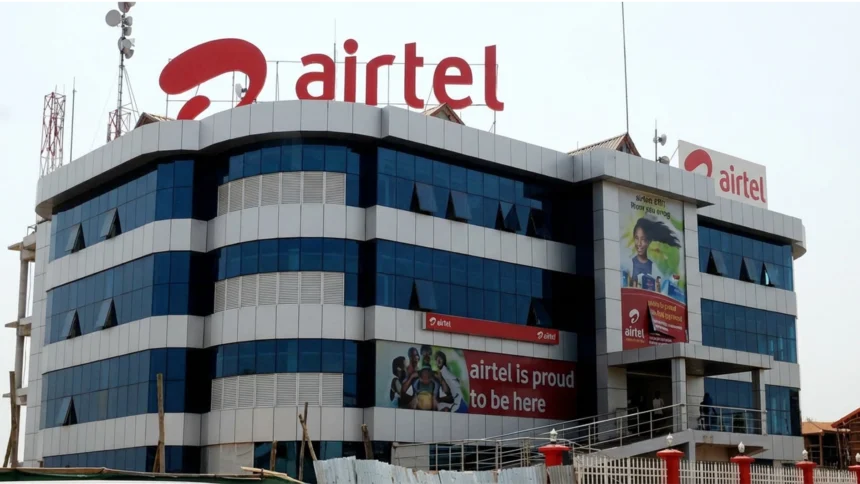
Airtel Nigeria is approaching the 18,000-cell-site milestone as the telecommunications operator accelerates network expansion nationwide, adding more than 1,000 new sites annually and extending high-speed mobile connectivity to underserved and rural communities.

The expansion underscores Airtel Nigeria’s growing infrastructure commitment to the country’s digital economy, with its network now covering all 774 Local Government Areas.

More than 99 per cent of Airtel Nigeria’s sites are 4G-enabled, while the company continues to deploy new sites and upgrade existing infrastructure to meet rising demand for mobile connectivity.
According to Airtel Africa’s latest annual report, the Nigerian operation added more than 1,050 new sites during its 2025/26 financial year.

The latest expansion marks a significant increase from the approximately 15,000 sites Airtel operated two years ago. By early 2026, the operator had crossed the 17,000-site mark after adding about 2,000 sites within two years.
The network expansion has also extended coverage to communities that have historically been underserved by telecommunications infrastructure, including Kukawa in Borno State; Okomu-Udo in Edo State; Chimbi in Niger State; Orile Ijaiye in Oyo State; Kopii in Benue State; and Aran-Orin in Kwara State, among others.
Airtel has said a significant proportion of its network investments is targeted at deep rural communities, small towns and the outskirts of major cities.
Speaking at a media roundtable in February, Airtel Nigeria Chief Executive Officer, Dinesh Balsingh, said the company would sustain its large-scale network expansion programme in 2026.
“Everyone has the right to digital connectivity, including people in deep rural markets and small communities,” Balsingh said.
Beyond voice calls and internet access, wider network availability is helping families stay connected while enabling businesses to communicate with customers and suppliers. It also supports access to digital banking, education, healthcare and government services.
For farmers in remote communities, mobile connectivity can provide access to crop prices, weather updates, market information and agricultural advisory services. Small businesses also rely increasingly on mobile data for digital payments, customer acquisition, logistics and e-commerce.
Airtel’s strategy is not limited to deploying new infrastructure. The company is also upgrading capacity across its existing network.
In 2025, Airtel upgraded capacity on about a quarter of its existing sites, deploying higher-capacity radios and migrating parts of its backhaul infrastructure from microwave to fibre.
The operator has also continued to strengthen its spectrum position. Since November 2025, Airtel has added 20MHz of spectrum, which is expected to be fully integrated across its sites this quarter.
Balsingh said the investment programme was focused on improving coverage, capacity and network resilience, with the benefits ultimately reflected in customers’ quality of service.
“We have invested with discipline and clarity to strengthen our network nationwide. Those investments are now translating into measurable improvements in performance, customer experience and reach, including in underserved communities,” he said.
Third-party measurements have also pointed to improving mobile network performance in Nigeria. Ookla’s Speedtest Global Index reported a median mobile download speed of 97.74 Mbps for Nigeria in June 2026.
For Airtel, the continued network expansion is aimed not only at increasing geographical coverage but also at improving the speed, capacity and stability available to existing customers.
Airtel Nigeria Director of Marketing, Ismail Adeshina, said the company’s network investments were ultimately designed to make connectivity more useful in the daily lives of Nigerians as consumers, families and businesses increasingly depend on mobile services.
“With mobile connectivity increasingly serving as the platform for financial services, commerce, education, healthcare, agriculture and enterprise, expanding the physical network effectively increases the number of Nigerians able to participate in those activities,” Adeshina said.
The infrastructure expansion is therefore contributing to Nigeria’s broader digital economy by increasing access to mobile connectivity and enabling more individuals, businesses and communities to participate in the country’s growing digital ecosystem.