ADESANYA-DAVIES COMMENDS TINUBU ON STRONGER INTERNATIONAL COOPERATION ON BORDER SECURITY

Says Nigeria Must Secure Its Borders, Strengthen Intelligence and Prevent Transnational Insecurity

By Professor Funmilayo Adesanya-Davies
PORT HARCOURT, RIVERS STATE — September 15, 2026

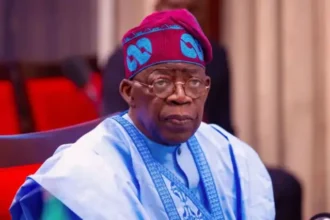
Professor Funmilayo Adesanya-Davies, Professor of Applied Linguistics and former Presidential Candidate, has commended President Bola Ahmed Tinubu for giving increasing attention to Nigeria’s border-security challenges and supporting stronger international cooperation on intelligence, migration management and transnational security.
Her commendation follows the recent engagement between the Nigeria Immigration Service (NIS) and China’s National Immigration Administration, where both sides agreed to strengthen cooperation in migration management, intelligence sharing, technical exchanges and capacity building for more secure borders.
Professor Adesanya-Davies said the development was timely, noting that Nigeria’s security challenges cannot be completely addressed without securing the nation’s territorial borders.
“Nigeria has been consistent in its contention that one of our most serious security vulnerabilities stems from the inability to effectively secure our borders. A country cannot adequately protect its citizens when its borders remain vulnerable to infiltration by criminals, terrorists, arms traffickers and other transnational criminal networks.”
She recalled President Tinubu’s earlier observation that insecurity in the Sahelian region, particularly in Niger, Mali and Burkina Faso, was contributing to Nigeria’s security challenges. President Tinubu has also repeatedly emphasised stronger collaboration among security agencies, communities and traditional institutions in confronting insecurity.
According to her, the increasing instability across parts of the Sahel makes border management not merely an immigration issue but a national-security, economic and humanitarian priority.
INTELLIGENCE IS AS IMPORTANT AS MILITARY STRENGTH
Professor Adesanya-Davies stressed that Nigeria needs to move beyond reactive security operations towards intelligence-led prevention.
She said:
“The most powerful border is not necessarily the one with the largest number of personnel. It is the border supported by accurate intelligence, modern surveillance technology, reliable databases, effective document verification and rapid information-sharing among security agencies and neighbouring countries.”
She therefore welcomed Nigeria’s engagement with China on intelligence sharing and capacity building, describing it as an opportunity to acquire useful technology, expertise and institutional knowledge that can strengthen Nigeria’s border-management architecture.
She urged the Federal Government to extend such cooperation to other strategic partners while ensuring that Nigeria’s national interest, sovereignty and data security remain paramount.
SECURE THE BORDERS, PROTECT THE PEOPLE
Professor Adesanya-Davies noted that porous borders facilitate not only terrorism and banditry but also arms trafficking, human trafficking, irregular migration, smuggling and other forms of organised crime.
She called for stronger coordination among the Nigeria Immigration Service, Nigerian Customs Service, Armed Forces, Nigeria Police Force, intelligence agencies and the National Boundary Commission, particularly in border communities.
She also urged greater involvement of traditional rulers and local communities, describing them as essential sources of early warning information.
The Federal Government has itself recognised the importance of cooperation among federal agencies, border states, traditional institutions and neighbouring countries in strengthening Nigeria’s border security.
TINUBU MUST SUSTAIN THE MOMENTUM
While commending President Tinubu, Professor Adesanya-Davies urged the administration to make border security a sustained national project rather than a temporary response to security emergencies.
She said:
“President Tinubu deserves commendation for recognising that Nigeria’s security challenges have regional dimensions. We must, however, go further. Every kilometre of Nigeria’s international borders must be treated as a strategic national asset.”
She recommended increased investment in modern border surveillance, intelligence infrastructure, biometric systems, communication equipment, personnel training and properly equipped border posts.
She further called for stronger diplomatic and intelligence cooperation with neighbouring countries and other strategic partners.
“NIGERIA CANNOT AFFORD UNSECURED BORDERS”
Professor Adesanya-Davies concluded:
“The security of Nigeria begins at her borders. We must know who enters, who leaves, what comes into the country, what leaves the country and, most importantly, who poses a threat to our national security.”
“Nigeria has the human resources, institutions and strategic importance to build one of the strongest border-security systems in Africa. What is required is political will, sustained investment, inter-agency coordination and intelligent international cooperation.”
She therefore encouraged President Tinubu to sustain and deepen the emerging international partnerships on intelligence and border security, while ensuring that the ultimate objective remains clear: a safer Nigeria, secure borders and protection of the lives and livelihoods of Nigerians.