Iran–U.S. War: Disruption of UAE Supply Lines Weakens RSF as Sudanese Army Gains Ground

NewsMediaNG

The ongoing regional conflict involving and the is beginning to reshape battle dynamics far beyond the Persian Gulf, with new developments emerging in war-torn .
As tensions escalate in the Middle East following Iranian military actions under what Tehran calls Operation True Promise IV, the ripple effects are now being felt across other conflict zones in the region. One of the most immediate impacts appears to be on the battlefield in Sudan, where the balance of power between the (SAF) and the (RSF) is showing signs of shifting.

For several years, Sudanese authorities and regional observers have accused the RSF of receiving external backing through networks allegedly linked to the . These networks were believed to facilitate weapons deliveries, logistical support, and financial flows that helped sustain RSF operations during the country’s prolonged civil war.
In addition to military assistance, Sudanese officials have also alleged that the networks enabled the smuggling of Sudanese gold out of the country through regional trade routes.
However, those supply channels now appear to be under growing pressure.
Since Iran expanded its regional military posture and began targeting strategic interests connected to the UAE, analysts say Abu Dhabi has been forced to shift attention toward protecting its own security and economic infrastructure. The disruption of key logistics routes and regional air corridors has reportedly slowed or halted shipments that previously moved through these networks.
The effects are now being felt on the ground in Sudan.
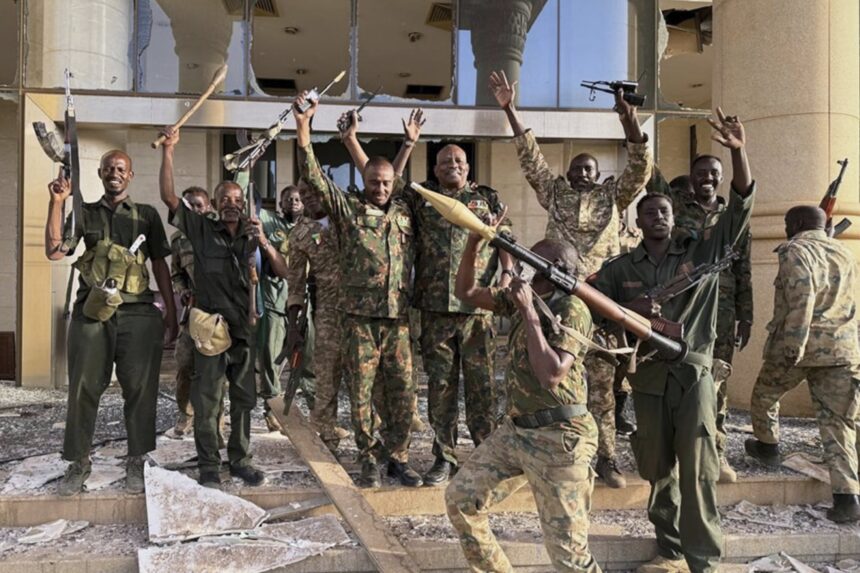
Military sources and local reports indicate that the Sudanese Armed Forces have begun advancing on several fronts, retaking towns that had earlier fallen under RSF control during earlier stages of the conflict.
For Sudan’s military leadership, the current situation is being viewed as a potential strategic window.
Without steady access to external arms, funding, and logistical support, analysts say the RSF may face increasing challenges in sustaining large-scale combat operations across multiple regions.
Within Sudan, many observers now believe the war could be entering a decisive phase.
If the disruption to external supply lines continues, the Sudanese army could accelerate efforts to reclaim more territory and weaken the paramilitary structure that has been blamed for widespread violence during the conflict.
The RSF has repeatedly faced accusations of involvement in mass killings, displacement of civilians, and ethnically motivated attacks in several parts of the country—allegations the group has previously denied.
For supporters of the government in Khartoum, the objective remains clear: re-establish full national control and bring an end to the conflict that has devastated large areas of the country.
While the regional confrontation between Iran and the United States began thousands of kilometres away, its geopolitical shockwaves are now influencing the trajectory of Sudan’s war—demonstrating once again how interconnected today’s conflicts have become.