NLNG 2026 Creative Arts Prize: Beyond Tapa Bay Tells Story of Resilient Nigerian Youths and Spotlights Surfing Talents- Onasode


Award-Winning Documentary Spotlights Nigeria’s Young Surfing Talents

By Newsmediang
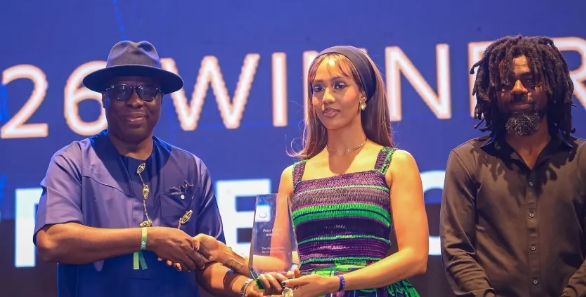
The story of a group of young Nigerians who have found hope, freedom and a sense of purpose through surfing on the remote island of Tapa Bay is at the heart of Beyond Tapa Bay, an independent documentary that has won the NLNG 2026 Nigerian Prize for Creative Arts.
The documentary, directed by Peter Okenetega-Oke, explores the lives of young surfers navigating the challenges of their environment while pursuing their dreams of competing and representing Nigeria in surfing competitions.
Speaking about the project, Rume Onasode, its producer and assistant director, described the film as a story of resilience, untapped talent and the urgent need for greater support for young Nigerians with extraordinary abilities.
Onasode spoke on behalf of Okenetega-Oke, the director, following the film’s recognition with the prestigious creative arts prize.
“Beyond Tapa Bay is a beautiful film about Nigerians, young Nigerians living on the remote island of Tapa Bay, and they are surviving day-to-day,” she said.
“For them, surfing is a way out, an escape from the reality of Nigeria. They are a group of skilled young Nigerians who are surfing and navigating the waves of life, literally, through this sport.”
According to her, the film captures the determination of young people who have developed remarkable surfing abilities despite limited resources, inadequate infrastructure and a lack of institutional support.
Their story, she explained, is both inspiring and bittersweet because their talent and ambition have not been matched by the opportunities required to turn their dreams into reality.
“That is the bittersweet story that we are telling with Beyond Tapa Bay,” she added.
How the Documentary Began
Onasode traced the origins of the project to 2022 and 2023, following an earlier film she worked on with Okenetega-Oke.
During the production of that first collaboration, they encountered a boy from Tapa Bay who could surf. The discovery sparked a conversation about the possibility of documenting the island’s surfing community.
What began as an idea gradually developed into a project aimed at telling a wider story about the island, its people and a sporting culture that remains largely unfamiliar to many Nigerians.
Towards the end of 2023, the production team returned to Tapa Bay to film the community and explore its history, while highlighting the surfing abilities of its young residents.
The filmmakers also wanted to establish that Nigeria has a surfing community capable of producing talented athletes, despite the challenges confronting them.
“We wanted to showcase that, tell their story, show that they are champions despite the environment, and also tell the world about what Nigeria has to offer beyond the shores,” Onasode said.
The documentary was produced independently by a small crew, with the central objective of presenting a different picture of Nigerian youths beyond the stereotypes often associated with them.
Challenging Stereotypes About Nigerian Youths
For Onasode, one of the documentary’s most significant contributions is its ability to challenge assumptions about what young Nigerians can achieve when given the opportunity.
She argued that the film demonstrates how talent can flourish in unexpected places, even when the people involved lack access to basic resources and professional sporting infrastructure.
The surfers featured in the documentary are not portrayed as fictional heroes or performers acting out a scripted narrative. Rather, the film follows real people as they navigate their everyday lives and pursue their ambitions.
“What makes this project special and an asset in this industry right now is that we’ve taken the mundane,” she said.
“You’re going to see normal everyday-looking Nigerians. So we’ve taken that mundane reality that we take for granted as Nigerians daily, but we’ve given it a beautiful backdrop.”
That backdrop, she explained, reveals a community of young people whose abilities challenge familiar assumptions about the limitations of Nigerian youths.
The film also confronts the stereotype that Black people do not swim, presenting young Nigerians who have gone beyond swimming to master surfing.
Onasode noted that surfing is a major sport and a substantial global industry in other parts of the world, raising questions about the opportunities available to Nigerian athletes with similar abilities.
For her, the surfers of Tapa Bay represent what young Nigerians can accomplish when their talents receive the necessary recognition, resources and support.
The Power of Real-Life Storytelling
Unlike conventional fictional productions, Beyond Tapa Bay relies on documentary storytelling to bring audiences closer to the lives of the people it features.
Onasode said she was particularly proud that the project remained committed to portraying a real community rather than creating a scripted version of its experiences.
“It’s about a real community showing real lives, real people, real Nigerians. They are not dressed up; there’s no script,” she said.
She acknowledged that appearing before cameras and sharing personal experiences could be difficult for people unfamiliar with filmmaking, particularly those who have never participated in a production before.
For the young surfers, the experience involved opening up about their lives and allowing the production team to document their experiences for audiences in different parts of the world.
The film has already been seen by audiences in the United States and the United Kingdom, according to Onasode. Its recognition at the 2026 Nigerian Prize for Creative Arts has also provided an opportunity to bring the story to a wider Nigerian audience.
She believes the documentary demonstrates the value of telling authentic Nigerian stories, particularly at a time when the country’s music, fashion and film industries are receiving growing international attention.
While Afrobeats and Nigerian fashion have established significant global visibility, she argued that documentary filmmaking offers another avenue for showcasing the country’s people, communities and cultural experiences.
Call for Greater Government Support
Beyond celebrating the achievements of the young surfers, Onasode called on the government and other stakeholders to create a more supportive environment for Nigerian creatives and the communities whose stories they tell.
She said support should extend beyond promoting Nigerian productions to international audiences, stressing that local stories also deserve recognition and investment at home.
“I think we are at a point where people want something different; people are ready for something different,” she said.
“Nigerians are tired, and we want to be inspired. And the best way to inspire each other is to inspire each other with who we are and what we do.”
She argued that government support should include measures that enable Nigerians to tell their own stories, develop their creative abilities and build sustainable industries around their talents.
For the surfing community of Tapa Bay, this could mean better access to sporting infrastructure, resources and opportunities to participate in competitions beyond their immediate environment.
For filmmakers, it would mean creating conditions in which independent productions can thrive and authentic Nigerian experiences can reach wider audiences.
Onasode also stressed that Nigerian stories should not be valued only for their potential to appeal to foreign audiences or members of the diaspora.
According to her, the experiences of ordinary Nigerians have intrinsic cultural and social value and deserve to be documented, supported and appreciated within the country.
A Story Beyond the Waves
At its core, Beyond Tapa Bay is about more than surfing. It is a story about young people finding purpose in a difficult environment, developing their abilities and holding on to ambitions that remain constrained by circumstances beyond their control.
The film’s central message is that extraordinary talent can exist in communities that are often overlooked, and that such talent needs more than admiration to flourish.
Through its portrayal of young surfers navigating the waves, the documentary offers a broader reflection on the determination of Nigerian youths to overcome challenges and create opportunities for themselves.
Its recognition with the 2026 Nigerian Prize for Creative Arts has brought renewed attention to their story and to the filmmakers’ efforts to document a rarely explored aspect of Nigerian life. For Onasode and Okenetega-Oke, the hope is that audiences will look beyond the waves and see the potential of a generation whose abilities deserve greater recognition, investment and opportunity.