Why Ogaga Ifowodo Is Asking Difficult Questions About God, Religion and Violence

The poet’s winning collection interrogates religious extremism, terrorism and the contradictions of killing in the name of God, drawing inspiration from the abduction of Leah Sharibu and other tragedies in Nigeria.

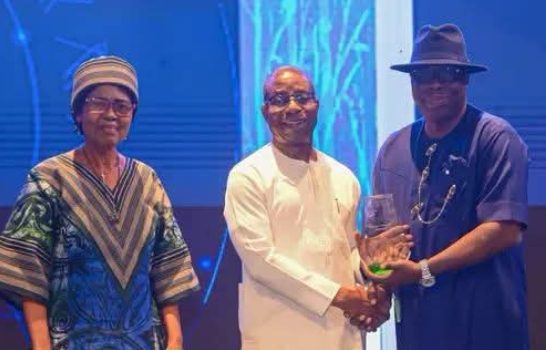
Poet Ogaga Ifowodo has won the 2026 edition of The Nigeria Prize for Literature with his poetry collection, Why Does God Need a Gun?, earning the $100,000 prize awarded by Nigeria LNG Limited (NLNG).
The collection confronts the troubling relationship between religion and violence, questioning why human beings invoke God to justify the killing, persecution and dehumanisation of fellow human beings.

Drawing on Nigeria’s painful experiences of terrorism, kidnapping and religious extremism, Ifowodo uses poetry to examine the contradictions between religious teachings about the sanctity of human life and violence perpetrated in the name of faith.
At the heart of the collection is a fundamental question: if God is all-powerful, all-knowing and present everywhere, why would human beings need to defend him with weapons or assume the responsibility of protecting divine authority through violence?
The poet’s reflections draw on the story of Leah Sharibu, one of the schoolgirls abducted from Dapchi, Yobe State, by Boko Haram insurgents in 2018, whose reported refusal to renounce her Christian faith attracted international attention.
Her story, alongside the abduction of the Chibok schoolgirls in 2014 and the killing of students at Federal Government College, Buni Yadi, in the same year, provides a disturbing backdrop to the collection’s interrogation of religious extremism.
For Ifowodo, these tragedies are not merely isolated incidents of insecurity. They represent a deeper crisis in which religious ideology can be weaponised to justify cruelty, suppress freedom and devalue human life.
Why Would God Need a Gun?
Explaining the inspiration behind the collection, Ifowodo recalled how the stories of abducted schoolchildren, kidnapped passengers and communities devastated by violence compelled him to question the use of religion as a justification for brutality.
He reflected on the abduction of the Dapchi schoolgirls, particularly Sharibu’s story, as well as the earlier Chibok abduction, which triggered the global #BringBackOurGirls campaign.
He also recalled the killing of 59 students at Federal Government College, Buni Yadi, in Yobe State, in February 2014.
The attack carried a particularly personal significance for the poet because he had attended a federal government college and experienced life as a boarding student.
He explained that his background made the tragedy especially difficult to contemplate, as he could imagine himself among the students whose lives were cut short.
Beyond these incidents, Ifowodo pointed to the Abuja-Kaduna train attack, the abduction of passengers, the destruction of communities and the displacement of people from their ancestral lands as examples of the human suffering that continues to define Nigeria’s security challenges.
These experiences, he suggested, raised fundamental questions about the nature of religious devotion and the willingness of some people to inflict suffering on others in the name of God.
His central concern is the assumption that human beings must defend an all-powerful creator.
If God possesses unlimited power, complete knowledge and presence everywhere, why would such a being require human guardians to protect his interests?
The question challenges the logic of religious violence and asks whether those who claim to defend God may instead be violating the dignity of the very people believed to have been created in God’s image.
The Contradictions of Religion and Violence
Ifowodo’s criticism extends beyond contemporary terrorism to the historical relationship between organised religion and systems of oppression.
He cited episodes including the Inquisition, the Crusades, historical persecution of scientific inquiry, slavery and apartheid as examples of how religious beliefs and institutions have, at different times, been used to legitimise violence and discrimination.
He questioned how a God believed to have created humanity from dust or clay, in his own image, could be invoked to justify the killing, maiming, imprisonment and dehumanisation of human beings.
“If we are made in God’s image, what justification is there for treating human life with such contempt in the name of that same God?” is the fundamental challenge running through the argument presented in his remarks.
His reflections confront the contradiction between religious teachings that emphasise the sacredness of human life and actions that destroy lives in the name of defending faith.
The collection also raises questions about the role of religious authorities and institutions in legitimising political power, racial oppression and the denial of human freedom.
By examining these historical and contemporary experiences, Ifowodo challenges believers and religious institutions to confront the consequences of allowing ideology to override compassion, reason and respect for human dignity.
The title, Why Does God Need a Gun?, captures the central paradox: why would an omnipotent creator need human beings to employ violence in defence of divine authority?
The question is both theological and political, forcing readers to examine how religious language can become a tool for justifying violence and how societies respond when faith is used to excuse cruelty.
From Political Tragedies to Religious Extremism
The 2026 award marks another milestone in Ifowodo’s literary journey, which has explored political history, personal memory and the human cost of violence.
The poet disclosed that this was his third attempt at winning The Nigeria Prize for Literature, having previously submitted two poetry collections.
His first attempt came in 2018 with A Good Morning, Mourning the Dead, a collection reflecting on the June 12 political crisis in Nigeria and other political tragedies across Africa.
The work examined experiences of violence and political upheaval in countries including Rwanda, Liberia, Zimbabwe, Algeria and the Democratic Republic of the Congo.
Although the collection made the shortlist, it did not win the prize.
Four years later, he submitted Augusta’s Poodle, a poetic journey through his childhood and early adolescence, ending around the time he was 11 or 12 and entered Federal Government College as a boarding student.
The collection offered a more personal exploration of memory and the experiences that shaped him.
With Why Does God Need a Gun?, Ifowodo turns his attention to religious extremism, terrorism and the moral questions arising from the use of faith to justify violence.
The progression across the three collections reflects a literary engagement with both personal and collective experiences, moving from political history and childhood memories to the wider human consequences of ideological conflict.
The Nigeria Prize for Literature and Its $100,000 Reward
Winning The Nigeria Prize for Literature places Ifowodo among the distinguished writers recognised through the annual award, which is sponsored by NLNG to celebrate literary excellence and encourage the development of Nigerian literature.
The $100,000 prize is one of the most prominent literary awards associated with Nigerian writing and attracts submissions from writers whose works engage with the country’s social, cultural and political experiences.
The award rotates among literary genres, including poetry, prose fiction, drama and children’s literature, according to its established cycle.
The 2026 edition focuses on poetry, providing a platform for works that explore the power of language, imagination and artistic expression in confronting issues affecting society.
For Ifowodo, the recognition of Why Does God Need a Gun? brings renewed attention to poetry as a vehicle for examining difficult questions about religion, morality, insecurity and the value of human life.
Poetry as a Challenge to Society
Beyond the financial reward and professional recognition, the collection places an urgent question before Nigerian society: what happens when the defence of religious belief becomes an excuse for violence against fellow human beings?
By drawing on the experiences of Leah Sharibu, the Chibok schoolgirls, the victims of the Buni Yadi attack and Nigerians affected by other acts of terrorism, Ifowodo directs attention to the human consequences of religious extremism.
His argument challenges religious communities to consider whether actions committed in the name of God are consistent with the values of compassion, justice and respect for human life that many faith traditions profess.
The collection also invites readers to reflect on the responsibilities of religious leaders, political authorities and communities in confronting ideologies that turn belief into a justification for persecution.
At a time when Nigeria continues to grapple with insecurity, abductions and attacks on communities, the questions raised by Ifowodo’s poetry remain particularly relevant.
Can the defence of religion justify the destruction of human life? If humanity is believed to have been created in God’s image, what does violence against fellow human beings say about those who claim to defend the divine?
With Why Does God Need a Gun?, Ifowodo uses the recognition of the Nigeria Prize for Literature to bring these questions into sharper public focus, challenging readers to confront the distance between professed faith and the treatment of humanity.
His $100,000-winning collection ultimately asks readers to reconsider the relationship between belief, power and violence—and whether any claim of religious devotion can justify the destruction of the lives that religion itself teaches are sacred.