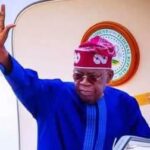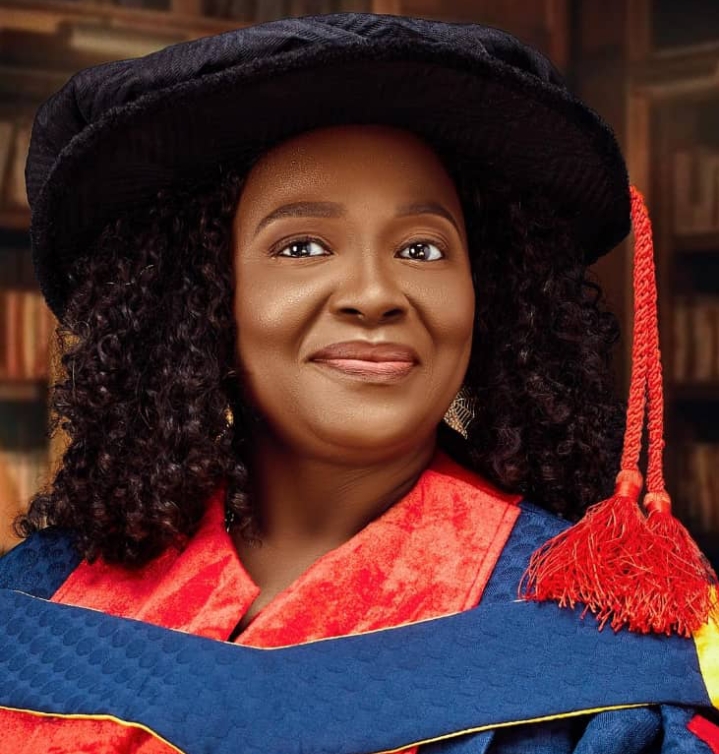
PROF. FUNMILAYO ADESANYA-DAVIES COMMENDS PRESIDENT TINUBU FOR BOLD EDUCATION REFORM TO REINTEGRATE JSS AND SSS

Says Seamless Six-Year Secondary Education Cycle Will Reduce Dropouts, Strengthen Curriculum Continuity and Improve Learning Outcomes

Port Harcourt, Rivers State — August 30, 2026 — Professor Funmilayo Adesanya-Davies, Professor of Applied Linguistics and specialist in Curriculum Development at Ignatius Ajuru University of Education (IAUE), Port Harcourt, has commended President Bola Ahmed Tinubu and the Federal Government for initiating the reintegration of Junior Secondary School (JSS) and Senior Secondary School (SSS) into a unified six-year secondary education structure.
Professor Adesanya-Davies described the proposed reform as a bold, forward-looking and child-centred education policy capable of addressing longstanding structural weaknesses in Nigeria’s secondary education system.

The Federal Government, through the Honourable Minister of Education, Dr. Tunji Alausa, announced plans to reintegrate JSS and SSS into a unified six-year secondary education framework. President Tinubu has also transmitted the National Secondary Education Commission (Amendment) Bill, 2026 to the National Assembly to provide legislative backing for the proposed reform.
In a statement issued in Port Harcourt on Sunday, Professor Adesanya-Davies said the policy represents a return to an educational structure that Nigerians of earlier generations experienced.
“This is, in many respects, a restoration of what many of us experienced in the 1960s and 1970s. We were educated within a more continuous secondary-school structure, and the artificial administrative separation that later became entrenched should not be allowed to undermine educational continuity.”
She stressed that the reform should not merely be viewed as an administrative restructuring but as an opportunity to fundamentally improve access, retention, curriculum coherence, teacher deployment, assessment and learning outcomes.
“As an academic and curriculum-development specialist, I wholeheartedly welcome this courageous and visionary initiative. The division between JSS and SSS has, in practice, created avoidable discontinuities in the educational journey of many Nigerian children.”
According to her, students who complete JSS3 frequently encounter another admission process, additional selection pressures and limited places at the SSS level.
“A child should not complete one stage of secondary education only to discover that the next stage is inaccessible because of inadequate spaces. Where there are insufficient SSS places, capable children can be pushed out of the education system altogether.”
She noted that Nigeria’s persistent out-of-school challenge makes every policy that improves transition and retention deserving of serious national attention.
REINTEGRATION CAN STRENGTHEN CURRICULUM CONTINUITY
Professor Adesanya-Davies said the greatest educational benefit of the reform could lie in its potential to create a more coherent six-year learning pathway from JSS1 through SS3.
“Curriculum should be progressive, cumulative and learner-centred. Knowledge and skills acquired in JSS1 should naturally prepare the learner for JSS2, JSS3 and subsequently SS1 to SS3. When administrative structures interrupt that continuity, students can experience unnecessary repetition, gaps in learning and disruptions in progression.”
She explained that a unified structure could enable curriculum planners and education authorities to better coordinate subject content, teaching methodologies, assessment and student progression.
“We must use this reform to build a genuinely seamless secondary education curriculum. The objective should not simply be to merge schools on paper. We must integrate curriculum planning, teacher development, assessment systems, infrastructure and student-support mechanisms.”
She further called for the reform to be accompanied by comprehensive teacher retraining.
“Teachers are central to the success of this policy. We cannot restructure the system without restructuring capacity. Teachers must receive appropriate professional development to enable them to handle the revised curriculum, new assessment expectations and the diverse learning needs of adolescents across the six-year cycle.”
BETTER USE OF INFRASTRUCTURE AND HUMAN RESOURCES
Professor Adesanya-Davies also identified the potential for the reform to improve the utilisation of existing educational infrastructure and teaching personnel.
She said Nigeria must move away from an education system in which facilities are unevenly distributed between different levels of secondary education.
“We should maximise the use of our classrooms, laboratories, libraries, workshops, ICT facilities and teachers. A properly integrated system can help education authorities plan infrastructure and human resources across the entire six-year secondary cycle instead of treating JSS and SSS as disconnected administrative worlds.”
She cautioned, however, that reintegration must be properly planned and adequately funded.
“We must not mistake structural reform for educational transformation. Bringing JSS and SSS together will only produce the desired results if government simultaneously addresses overcrowded classrooms, teacher shortages, inadequate laboratories, poor learning materials, examination pressures and the digital divide.”
NATIONAL ASSEMBLY SHOULD ACT SWIFTLY
Professor Adesanya-Davies called on the National Assembly to give the National Secondary Education Commission (Amendment) Bill, 2026 careful and expeditious consideration.
She urged lawmakers to ensure that the final legislation provides clear responsibilities for the Federal Government, states, local education authorities, school administrators and other stakeholders.
“Legislative clarity is essential. We need a framework that clearly defines responsibilities, funding arrangements, standards, accountability mechanisms and implementation timelines. Education reform must be institutionalised rather than dependent on individual political office holders.”
She also urged state governments to begin preparations rather than waiting until the legislation is fully operational.
RIVERS STATE MUST KEY INTO THE REFORM
Professor Adesanya-Davies particularly encouraged the Rivers State Government, the State Ministry of Education, education boards, school proprietors, teachers, parents and other stakeholders to begin consultations on how the reform can be successfully implemented in the state.
“Rivers State should not be left behind. We have the intellectual, educational and institutional capacity to become a model for effective implementation. Our universities, colleges of education, teacher-training institutions and education professionals should be actively involved.”
She said the reform could have significant implications for the education of the girl-child and vulnerable children.
“Every child retained in school is an investment in Nigeria’s future. Seamless progression can particularly benefit children from disadvantaged families who may struggle to navigate another admission barrier after JSS3.”
STAKEHOLDER SENSITISATION IS CRITICAL
Professor Adesanya-Davies called for extensive sensitisation of parents, teachers, students, traditional institutions, religious organisations, civil society groups and school proprietors.
“No major education reform succeeds through government pronouncements alone. Parents must understand the policy. Teachers must understand it. Students must understand it. School administrators must understand it. Most importantly, implementation must be communicated clearly so that misinformation and unnecessary anxiety do not undermine the reform.”
She also urged the Federal Government to establish measurable benchmarks for evaluating the policy.
These, she said, should include school retention, transition rates, learning outcomes, teacher-student ratios, infrastructure utilisation, examination performance and reduction in dropout rates.
“PUT THE NIGERIAN CHILD FIRST”
Professor Adesanya-Davies commended President Tinubu and Minister of Education Dr. Tunji Alausa for demonstrating willingness to reconsider longstanding structures in the national education system.
“This is leadership that places the Nigerian child at the centre of education policy. We should never preserve an educational structure simply because it has existed for many years. If evidence shows that a system can be improved, we must have the courage to improve it.”
She added:
“Education is the foundation of national development. If we get basic and secondary education right, we strengthen the human capital upon which our economy, democracy, science, technology and national development depend.”
Professor Adesanya-Davies reaffirmed her readiness, through her academic work at IAUE and other professional and public platforms, to contribute to curriculum review, teacher education, educational research, policy advocacy and stakeholder engagement aimed at strengthening the Nigerian education system.
She concluded:
“Let this reform become more than a change of administrative structure. Let it become the beginning of a comprehensive renewal of Nigerian secondary education. The Nigerian child deserves continuity, quality, opportunity and a system designed around learning rather than bureaucracy.”
ABOUT PROFESSOR FUNMILAYO ADESANYA-DAVIES
Professor Funmilayo Adesanya-Davies is a Professor of Applied Linguistics and specialist in Curriculum Development at Ignatius Ajuru University of Education, Port Harcourt, Rivers State, Nigeria. She is an academic, author, public intellectual and former female presidential candidate, with interests spanning applied linguistics, language policy, curriculum development, education reform and women’s participation in national development.
MEDIA CONTACT
Dr Victoria Solomon
For Professor Funmilayo Adesanya-Davies
Department of English
English House
Faculty of Humanities
Ignatius Ajuru University of Education
Port Harcourt, Rivers State
Nigeria