Worst Democracy Is Better Than Best Military Regime – Osinbajo Says as Nigerians Reacts
NewsMediang.com


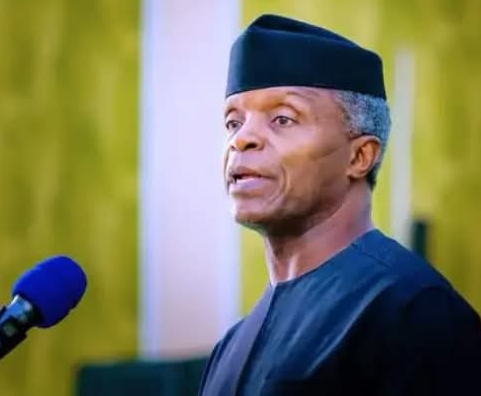
Former Vice-President Yemi Osinbajo has sparked a debate about democracy and military rule in Nigeria after declaring that even the worst democratically elected government is better than the best military regime.
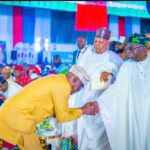
Osinbajo made the remarks on Tuesday while speaking at the 59th birthday celebration of Adamawa State Governor Ahmadu Fintiri at the Government House Banquet Hall in Yola.

According to the former vice-president, democracy gives citizens the freedom to form lawful associations, demand accountability and question government policies—opportunities that military rule may deny them.
However, his position has generated mixed reactions on social media, with Nigerians questioning whether the freedoms associated with democracy have translated into improved security, economic prosperity and responsible leadership.
Nigerians React: Is Democracy Delivering?
Some Nigerians challenged Osinbajo’s argument, saying that freedom means little when citizens struggle with insecurity, poverty and the rising cost of living.
One social media user, Victor, criticised the statement, writing: “offers you fr33dom to loot.”
Another commenter, Johnson, argued that Nigerians do not necessarily enjoy the freedom to speak openly without fear of consequences.
“Sir, in Nigeria democracy there is no freedom, people live in fear of saying the truth because they don’t want to hear that,” Johnson wrote.
Oluwasunkanmi compared the current political experience with the military era, arguing that the early years of Ibrahim Babangida’s administration were preferable to the years of APC-led government. The comment reflected the user’s personal assessment rather than an established historical conclusion.
Christopher raised a regional comparison, asking whether Burkina Faso would make the same argument about democracy, while Innocent questioned the practical value of political freedom without food.
“Freedom without food??” Innocent wrote.
Supporters of Military Rule Cite Security and Infrastructure
Other commenters defended aspects of Nigeria’s military era, pointing to infrastructure development, the creation of additional states, national integration projects, public discipline and regional peacekeeping.
One commenter, Uwaefule, argued that military governments sometimes delivered decisive leadership and stronger enforcement of public order, while also acknowledging that military rule created serious problems for Nigeria.
These arguments reflect a longstanding debate in the country over whether the perceived advantages of military administration outweighed its restrictions on civil liberties and democratic participation.
Nigeria’s military era included major political and administrative changes, but it also featured coups, prolonged authoritarian rule and restrictions on political activity. The country returned to civilian democratic government on May 29, 1999, and has remained under elected administrations since then.
Osinbajo Calls for People-Centred Governance
Beyond defending democracy, Osinbajo urged the judiciary to prioritise the rights and welfare of ordinary citizens rather than focus solely on protecting institutions.
He argued that weak institutions undermine democracy and stressed the importance of accountability, transparency and policies that directly improve people’s lives.
The former vice-president also cited social protection initiatives implemented during his tenure, including school feeding and loans for small businesses, saying the programmes were designed to support vulnerable citizens and stimulate economic activity.
He maintained that government policies must deliver tangible benefits at the grassroots to earn public confidence.
Osinbajo also praised Governor Fintiri for infrastructure development and efforts to restore peace in Adamawa State. He described the creation of new chiefdoms as a means of strengthening peace and bringing government closer to rural communities.
Taraba State Governor Agbu Kefas, who also spoke at the event, commended Fintiri for the transformation of Yola and improvements to the state’s infrastructure.
The Bigger Question for Nigeria
The debate goes beyond whether democracy or military rule is preferable. It raises questions about what Nigerians should reasonably expect from their system of government.
Democracy provides constitutional mechanisms for political participation, public accountability and the peaceful transfer of power. However, its effectiveness depends on how well institutions function, how fairly laws are enforced and whether elected leaders respond to citizens’ needs.
Military governments may take decisions through centralised command structures, but the absence of democratic checks and balances can make abuses of power more difficult to challenge.
For many Nigerians, the central issue remains whether elected governments can protect lives and property, create economic opportunities, tackle corruption and ensure that citizens can exercise their rights without fear.
As the reactions to Osinbajo’s remarks show, the debate is not simply about political systems. It is also about whether democracy is delivering the security, justice, freedom and economic relief Nigerians expect.
NewsMediang.com will continue to report on the debate over governance, public accountability and the future of democracy in Nigeria.