NCDMB Seeks Greater Asset Access for Indigenous Oil and Gas Companies

Board says financing, technology and market access are critical to achieving 70% Nigerian content target

The Nigerian Content Development and Monitoring Board (NCDMB) has called for greater access to oil and gas assets, financing, technology and markets for indigenous companies, stressing that strengthening local capacity is essential to expanding Nigeria’s participation in the global energy industry.

The Board also urged indigenous oil and gas operators and service providers to improve their technical capabilities, business systems and competitiveness to position themselves for larger projects and international opportunities.
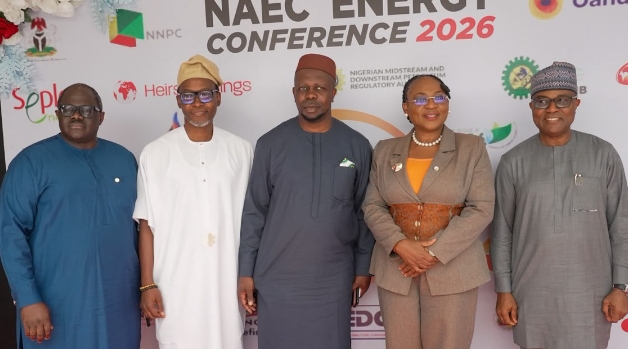
The General Manager of Corporate Communications at NCDMB, Dr. Obinna Ezeobi, made the call on October 8 while representing the Board at the 2026 Energy Conference of the Association of Energy Correspondents of Nigeria (NAEC), held at Eko Hotel and Suites, Lagos.
The conference, themed “Access to Assets: Empowering Players and Driving Growth,” focused on expanding opportunities for indigenous players across Nigeria’s energy value chain.
Ezeobi said the theme aligned with the objectives of the Nigerian Oil and Gas Industry Content Development (NOGICD) Act, which seeks to increase Nigerian participation in the oil and gas industry and create opportunities for local businesses to grow.
He explained that the Nigerian Content 10-Year Strategic Roadmap, launched in 2017, was designed to increase local content participation to 70 per cent by 2027 through five core pillars and four enabling factors.
According to him, the roadmap also prioritises access to critical industry assets for skilled Nigerian professionals while building the capacity of indigenous operating and service companies.
NCDMB highlights funding and capacity-building initiatives
Ezeobi identified several NCDMB interventions designed to help indigenous companies overcome financial, technical and operational barriers to growth.
One of the major initiatives is the Nigerian Content Intervention Fund (NCI Fund), through which more than 130 indigenous companies have accessed over $400 million.
The fund is domiciled with the Bank of Industry and the Nigerian Export-Import Bank (NEXIM Bank) and is intended to improve access to financing for businesses operating within the oil and gas sector.
He also highlighted Project 100, an initiative aimed at supporting high-potential Nigerian companies through capacity development, market access, financial linkages and tailored business support.
Other programmes include the Nigerian Content Equipment Certification (NCEC), the Nigerian Oil and Gas Parks Scheme (NOGaPS) and vendor development initiatives, all designed to deepen local participation and improve the competitiveness of indigenous firms.
The NCDMB general manager added that the Board was facilitating partnerships between Nigerian and foreign companies while encouraging regional collaboration to help indigenous businesses expand into international markets.
Nigerian content rises to 61%
Ezeobi expressed satisfaction with the progress recorded in local participation, noting that Nigerian content in the oil and gas industry had increased from five per cent in 2010 to 61 per cent after 16 years of implementing the Nigerian Content Act.
He, however, stressed that sustaining the gains would require more deliberate efforts to equip indigenous companies with the skills, technology and business structures needed to compete beyond Nigeria.
The push for greater access to assets and opportunities, he suggested, must therefore go hand in hand with improved technical capacity, stronger financing arrangements and effective partnerships.
NAEC, PETAN seek stronger indigenous participation
In his welcome address, NAEC Chairman, Ugo Amadi, called for expanded opportunities for indigenous companies to acquire and develop oil and gas assets.
He identified high entry costs, funding constraints and lengthy approval processes as major obstacles preventing local players from participating more fully in asset ownership and development.
Similarly, the Chairman of the Petroleum Technology Association of Nigeria (PETAN), Engr. Wole Ogunsanya, advocated consolidation and stronger collaboration among indigenous oilfield service companies.
He said greater cooperation would enable local firms to combine their technical capabilities, mobilise resources and undertake larger projects that might be difficult for individual companies to execute independently.
‘Access goes beyond ownership’
The Conference Chairman and Group Managing Director of Sahara Power Enterprise Group, Kola Adesina, represented by the company’s Head of Corporate Communications, Bethel Obioma, emphasised that access should not be restricted to the physical ownership of assets.
He said meaningful access also encompasses capital, partnerships, markets, technology and business opportunities.
“Access is actually much greater and more important than assets,” Adesina stated, highlighting the importance of ideas, mentorship, financing and strategic partnerships in enabling businesses to achieve transformational growth.
His remarks reinforced the conference’s central argument that expanding indigenous participation requires a broader ecosystem in which local companies can secure the resources and relationships needed to compete effectively.
Federal Government highlights gas development agenda
Also speaking at the conference, the Minister of State for Petroleum Resources (Gas), Rt. Hon. Ekperikpe Ekpo, represented by his Senior Technical Adviser, Engr. Abel Nsa, called for a shift from merely owning Nigeria’s vast gas resources to developing them and converting them into sustainable economic value.
He said the Federal Government’s Decade of Gas initiative was designed to transform Nigeria from a resource-rich country into one that fully harnesses gas for industrialisation and economic development.
The initiative prioritises the use of gas for power generation, transportation, manufacturing, fertiliser production, liquefied petroleum gas (LPG) adoption and other productive activities capable of stimulating economic growth.
The conference discussions highlighted the importance of coordinated action by government agencies, financial institutions, indigenous operators and industry stakeholders to remove barriers to investment and expand local participation.
For the NCDMB, the challenge ahead is to build on the progress already recorded under the Nigerian Content Act by ensuring that indigenous companies gain not only access to funding and opportunities but also the technical strength and commercial capacity required to compete in an increasingly globalised energy industry.