NMDPRA Commends NLNG’s Compliance, Pledges Support for Expansion of Gas Production


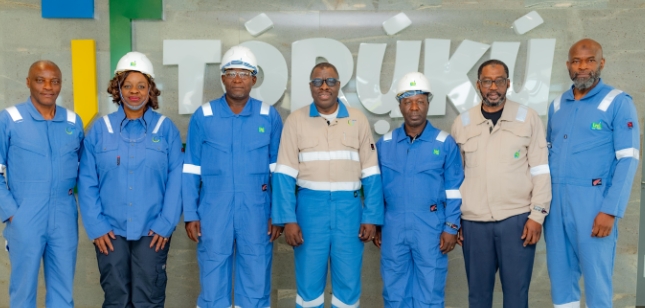
The Nigerian Midstream and Downstream Petroleum Regulatory Authority (NMDPRA) has commended Nigeria LNG Limited (NLNG) for its operational standards, regulatory compliance and contributions to the Nigerian economy, pledging continued regulatory support for the company’s expansion plans.

The Authority also expressed its readiness to provide an enabling regulatory environment to support increased gas production, strengthen domestic supply and sustain Nigeria’s position in the global liquefied natural gas (LNG) market.
The Authority Chief Executive, Rabiu Abdullahi Umar, gave the commendation during his first official visit to NLNG’s plant on Bonny Island, Rivers State, where he was received by the company’s Managing Director and Chief Executive Officer, Adeleye Falade.
The visit provided an opportunity for both organisations to discuss regulatory requirements, operational safety, production reliability and investments required to sustain NLNG’s contributions to Nigeria’s domestic gas market and international LNG supply.
Umar said the Authority remained committed to ensuring that industry operators complied with established regulations while creating an environment that encouraged responsible investments.
He emphasised that NMDPRA’s regulatory approach was anchored on firmness, transparency, fairness and timely decision-making.
According to him, the Authority is prepared to collaborate with NLNG in supporting its production expansion ambitions and increasing gas availability in the domestic market, particularly through the development of additional production trains.
“Our engagement with operators is important to ensuring that regulatory requirements are understood and possible concerns are addressed early.
“For the gas industry, maintaining these standards while creating the enabling environment that supports responsible investment and reliable supply is essential to Nigeria’s energy security and economic development,” Umar said.
NLNG highlights economic contributions, Train 7 progress
Welcoming the NMDPRA delegation, Falade described the visit as an opportunity to strengthen existing relationships and provide a first-hand understanding of the scale and complexity of NLNG’s operations.
He said the company’s operations required sustained investments in infrastructure, production facilities, regulatory compliance and logistics to guarantee reliable deliveries to customers.
Falade noted that NLNG had played a significant role in Nigeria’s gas commercialisation since its first LNG cargo departed Bonny Island in 1999.
With six operational production trains and an installed capacity of 22 million tonnes per annum (MTPA), he said the company had helped establish Nigeria as a reliable supplier in the international LNG market while generating substantial economic value for the country.
He explained that maintaining the company’s performance depended on feedgas security, asset integrity, process safety and shipping reliability.
On its expansion programme, Falade disclosed that the Train 7 project was 95 per cent complete and would increase NLNG’s installed production capacity from 22 MTPA to approximately 30 MTPA.
He described the project as a strategic investment in Nigeria’s energy future, with the potential to strengthen the country’s capacity to meet growing international demand and expand its participation in global gas trade.
However, he acknowledged that feedgas supply constraints and infrastructure challenges required sustained attention, coordinated action and investment across the gas value chain.
NLNG commits 100% LPG production to Nigerian market
Addressing Nigeria’s domestic energy requirements, Falade reiterated that NLNG dedicates 100 per cent of its liquefied petroleum gas (LPG) production to the Nigerian market.
He said the commitment was designed to improve access to cleaner cooking energy, reduce dependence on traditional fuels such as firewood and support the availability of LPG for Nigerian households.
According to him, NLNG’s contribution extends beyond supplying international markets, as the company remains focused on ensuring that Nigeria’s natural gas resources deliver tangible benefits to citizens and the wider economy.
Falade stressed that a productive relationship with NMDPRA was critical to sustaining the company’s investments, operational commitments and domestic market contributions.
He acknowledged the Authority’s responsibility to enforce regulatory standards and safeguard operational integrity across Nigeria’s midstream and downstream petroleum sectors.
“An effective regulatory environment is essential not only to sustaining existing operations but also to unlocking the investments and partnerships required to realise Nigeria’s gas ambitions.
“We therefore remain committed to constructive engagement and collaboration with the Authority in advancing the development of the country’s gas sector,” he said.
Decarbonisation and operational excellence remain priorities
Falade also highlighted NLNG’s Decarbonisation Roadmap and longer-term development aspirations, noting that the company remained focused on reliable production, domestic energy security and responsible environmental management.
He identified the competence and commitment of the company’s workforce as critical to maintaining operational performance and sustaining the confidence of customers and other stakeholders.
NMDPRA is responsible for regulating Nigeria’s midstream and downstream petroleum operations, including monitoring and enforcing compliance with the conditions of licences, permits and authorisations issued to industry operators.
NLNG said it remained committed to constructive engagement with relevant regulatory authorities, maintaining that safety, compliance and operational excellence would continue to guide its business activities.
The latest engagement underscores the importance of effective regulation, reliable feedgas supply and sustained infrastructure investment in unlocking Nigeria’s gas potential, particularly as the country seeks to strengthen domestic energy security and expand its footprint in the international LNG market.