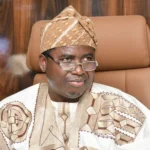
Otunla’s Leadership Drives Customs Revenue Beyond ₦165.8bn as Daily Target Is Exceeded by 533%

The Murtala Muhammed Airport Command (MMAC) of the Nigeria Customs Service (NCS) recorded an exceptional revenue performance on October 8, 2026, generating over ₦6.2 billion in a single day against a target of ₦1.16 billion. The achievement underscores the Command’s sustained drive for revenue mobilisation, operational efficiency, and regulatory compliance under the leadership of its Customs Area Controller, Comptroller Gbenga Otunla.

The Command generated ₦6,208,027,585.94 in electronic cash revenue, representing 533.1 per cent of its daily target. This remarkable feat was achieved through the processing of 260 Single Goods Declarations (SGDs) within 24 hours, reflecting the scale of revenue-generating activities at one of Nigeria’s critical aviation and trade gateways.

Beyond the impressive daily figures, the performance points to a broader institutional effort to strengthen revenue collection, improve operational processes, and enhance compliance with customs regulations.
Sustaining the Revenue Momentum
The Command’s performance during the week of October 5–9, 2026, further demonstrated this momentum. Within the period, MMAC generated approximately ₦8.82 billion from 1,252 SGDs, achieving 151.5 per cent of its weekly revenue target.
The Command also recorded cumulative revenue of approximately ₦9.69 billion for October as its collection drive continued.
More significantly, its year-to-date performance had reached over ₦165.79 billion, generated from 53,164 SGDs. This represented more than 57 per cent of the Command’s annual revenue target, highlighting its contribution to the revenue mobilisation objectives of the Nigeria Customs Service.
Balancing Revenue Collection with Trade Facilitation
For Comptroller Otunla and his team, however, effective customs administration extends beyond the pursuit of revenue targets. It also requires a careful balance between revenue generation, regulatory enforcement, and the facilitation of legitimate trade.
Operating at Murtala Muhammed Airport presents unique demands. The Command must ensure that import procedures comply with applicable regulations while supporting efficient cargo clearance and minimising avoidable delays that could disrupt supply chains and increase the cost of doing business.
Achieving this balance requires vigilance in cargo examination, accurate valuation and classification of goods, effective monitoring of declarations, and consistent enforcement of customs regulations. These responsibilities are particularly important at an international gateway where the speed and efficiency of cargo processing can influence business operations across several sectors of the economy.
The Command’s revenue performance therefore provides an important measure of its operational activities, although sustained success must also be assessed against its effectiveness in facilitating legitimate trade and securing compliance.
Leadership and Institutional Performance
As the year progresses towards its final quarter, sustaining the current revenue trajectory will remain a key priority for the Command. Maintaining the momentum will require continued attention to operational efficiency, staff performance, intelligence-led enforcement, and the identification of revenue leakages.
Under Comptroller Otunla’s leadership, the figures recorded so far offer an encouraging indication of the Command’s revenue mobilisation capacity. They also underscore the importance of a coordinated workforce and effective administrative processes in achieving institutional objectives.
For the Nigeria Customs Service, the broader lesson is that strong revenue performance is most valuable when accompanied by professional conduct, transparent procedures, effective enforcement, and the facilitation of legitimate commerce.
At MMAC, the challenge ahead is to consolidate these gains and translate them into sustained performance, reinforcing the Command’s role in advancing the Service’s revenue objectives while supporting Nigeria’s trade and economic interests.